How Did the Planets Get Their Names
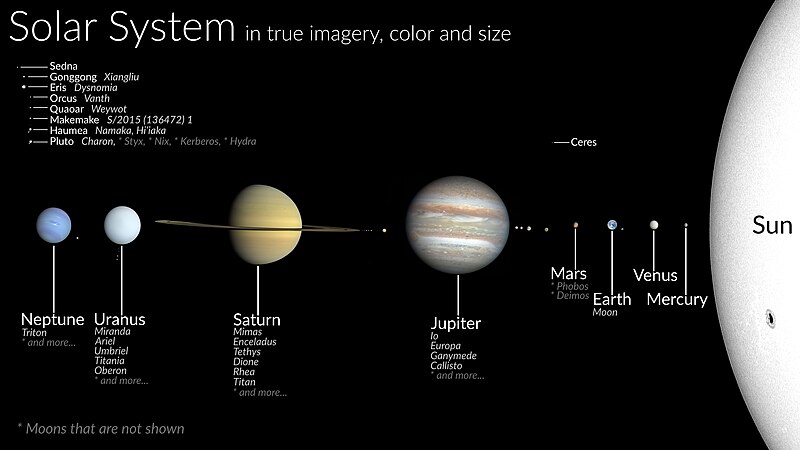
The planets got their Western names from a blend of Babylonian observation, Greek mythology, and Roman language. Five planets were visible without a telescope, and ancient people noticed that they moved differently from the fixed stars. Their names came from gods whose personalities seemed to match each planet’s appearance, speed, brightness, or position in the sky.
The familiar Roman names became standard because Roman culture, Latin scholarship, and later European education carried them forward. Uranus and Neptune arrived much later, though their names still belong to the same mythological family.
How Ancient Observers Identified the Planets
Babylonian Records
Babylonian astronomers were among the first people to record planetary movements systematically. Clay tablets from Mesopotamia describe observations of Mercury, Venus, Mars, Jupiter, and Saturn, including their rising, setting, retrograde motion, and changing brightness.
The Babylonians did not view these objects as lifeless worlds in the modern scientific sense. They connected celestial events with divine activity. Venus, for example, was associated with the goddess Ishtar. Jupiter was linked with Marduk, while Saturn had associations with Ninurta and later traditions connected with older, slower-moving powers.
Their careful records mattered enormously. Greek astronomers inherited much of this observational knowledge, even when they replaced Babylonian divine names with Greek gods.
Greek Traditions
The Greeks called the planets asteres planetai, meaning “wandering stars.” That description was wonderfully practical. Unlike ordinary stars, the planets drifted against the background constellations.
Greek names reflected the local pantheon. Mercury was Hermes, Venus was Aphrodite, Mars was Ares, Jupiter was Zeus, and Saturn was Cronus. The Greeks also recognized Earth as Gaia or Ge, although Earth was not treated as a wandering planet in the ancient geocentric model.
Roman Adoption
Roman culture absorbed Greek mythology and matched many Greek gods with Roman equivalents. Hermes became Mercurius, Aphrodite became Venus, Ares became Mars, Zeus became Iupiter, and Cronus became Saturnus.
Latin writers and astronomers helped preserve these Roman names through the Roman Empire and medieval Europe. That historical accident, more than any scientific principle, explains why English uses Roman names today.
Why Mercury, Venus, Mars, Jupiter, and Saturn Have Roman Names
Mercury
Mercury moves quickly across the sky, completing its orbit around the Sun in about 88 Earth days. The Romans named it Mercurius, after the messenger god Mercury, known for speed, travel, commerce, and cleverness. The Greek equivalent was Hermes.
Venus
Venus is the brightest planet seen from Earth, often appearing as the morning or evening star. Its striking beauty led the Romans to associate it with Venus, the goddess of love and beauty. The Greek equivalent was Aphrodite.
Mars
Mars has a reddish appearance caused by iron minerals in its surface dust. That bloodlike color encouraged an association with Mars, the Roman god of war. Greek traditions connected the planet with Ares, although Mars held a more important and complex place in Roman culture than Ares did in Greece.
Jupiter
Jupiter is the largest planet in the solar system and shines brightly in the night sky. Its size and commanding presence suited Jupiter, the Roman king of the gods. The Greek equivalent was Zeus, the ruler of Mount Olympus.
Saturn
Saturn appears fainter than Jupiter and moves more slowly across the sky. The Romans associated it with Saturnus, an ancient agricultural god and father figure in their mythology. Greek tradition connected Saturn with Cronus, one of the Titan gods and the father of Zeus.
| Planet | Roman name association | Greek equivalent |
|---|---|---|
| Mercury | Mercury, messenger god | Hermes |
| Venus | Venus, goddess of love | Aphrodite |
| Mars | Mars, god of war | Ares |
| Jupiter | Jupiter, king of the gods | Zeus |
| Saturn | Saturn, agricultural god | Cronus |
Why Uranus and Neptune Follow Different Naming Patterns
Uranus
Uranus was discovered with a telescope by William Herschel in 1781. It was the first planet unknown to ancient observers, so no established Roman name existed.
The planet was eventually named Uranus, a Latinised form of the Greek Ouranos, the primordial god of the sky and father of Cronus. This creates an unusual mismatch: Uranus has a Greek-origin name, while the five inner visible planets mainly use Roman forms.
The name also broke with the tradition of naming planets after Roman gods, though Ouranos had been rendered into Latin scholarship as Uranus.
Neptune
Neptune was discovered in 1846 after astronomers predicted its position from irregularities in Uranus’s orbit. Its deep blue appearance encouraged a connection with Neptune, the Roman god of the sea. The Greek equivalent was Poseidon.
Neptune therefore returned to a Roman naming pattern, even though its discovery belonged to the age of mathematical astronomy, observatories, and precision telescopes.
Naming Differences
Uranus and Neptune are not named according to a strict scientific system. Their names emerged from historical convention, mythology, and the preferences of astronomers in Europe. Pluto, once classified as the ninth planet and now recognized as a dwarf planet, continued the tradition with the Roman god of the underworld.
How Mythological Traits Shaped Planetary Names
Ancient naming was imaginative, but it was not random. Brightness, color, apparent speed, and motion all influenced interpretation. Mercury’s rapid movement suggested a messenger. Mars’s red surface suggested war. Saturn’s slow progress gave it a stately, elder quality.
Divine associations also reflected the culture observing the sky. Babylonian, Greek, and Roman people saw many of the same objects, yet attached different gods and stories to them. The planets stayed put; the mythology changed.
How Greek and Latin Names Became Modern Standards
Greek science strongly influenced Roman scholarship, while Latin later became the language of European education, religion, and academic writing. Over centuries, Greek names were translated, adapted, or replaced by Roman equivalents.
English inherited those Latin forms through medieval and Renaissance texts. That is why students learn Jupiter rather than Zeus and Mars rather than Ares. The pattern is historical, not universal. Other cultures use different names based on their own languages and traditions.
How Modern Planet Naming Differs From Ancient Traditions
Modern astronomy still preserves the classic mythological names, but newly discovered objects follow formal rules. The International Astronomical Union oversees official naming for many celestial bodies.
What Else Should Readers Know About Planet Names?
Earth is the major exception among the traditional planets. Its English name comes from Old English and Germanic words related to ground or soil, not from a Roman god. The Roman world used Terra, while Greek tradition used Gaia.
The word “planet” itself comes from the Greek idea of wandering stars. It describes motion, not mythology. That small detail captures the whole history: observation came first, stories followed, and science later refined both.
FAQ
Why do most planets have Roman names?
Roman names became dominant because Latin scholarship carried them through Europe and into modern education.
Did the Greeks name the planets first?
The Greeks gave the visible planets Greek divine identities, but Babylonian astronomers recorded their movements earlier.
Why is Uranus not named after a Roman god?
Uranus comes from Ouranos, the Greek sky god. Its name reflects a later naming decision rather than the older Roman pattern.
Conclusion
Planet names preserve an old conversation between people and the sky. Babylonian astronomers measured motion, Greek thinkers connected wandering lights with gods, and Roman culture gave those names the Latin forms that eventually reached English. Modern astronomy now uses catalog numbers, orbital data, and spectroscopy, yet the ancient names remain.
See also: How Did Celestial Bodies Get Their Names
Would you like to receive similar articles by email?

Paul Tomaszewski
Paul Tomaszewski is a science & tech writer as well as a programmer and entrepreneur. He is the founder and editor-in-chief of CosmoBC. He has a degree in computer science from John Abbott College, a bachelor's degree in technology from the Memorial University of Newfoundland, and completed some business and economics classes at Concordia University in Montreal. While in college he was the vice-president of the Astronomy Club. In his spare time he is an amateur astronomer and enjoys reading or watching science-fiction. You can follow him on LinkedIn and Twitter.


You May Also Like

Dorado Constellation Guide

83 Black Holes Found at the Edge of the Universe