
How Did Phobos and Deimos Get Their Names
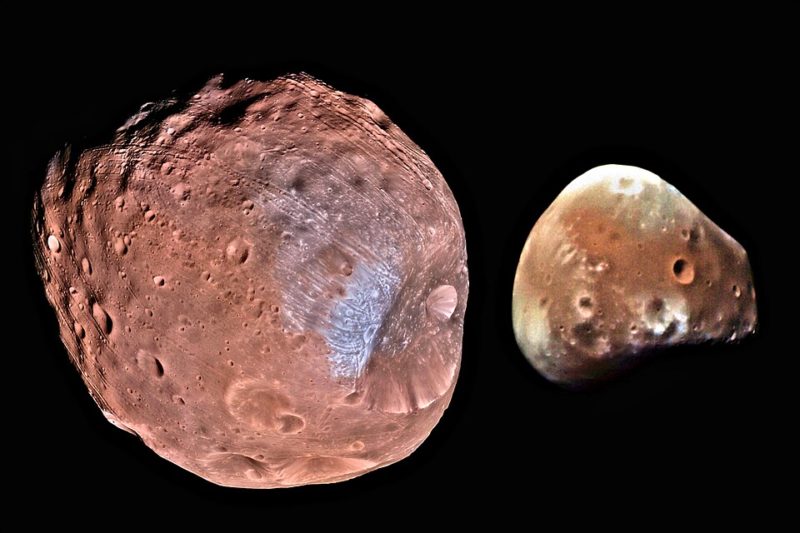
Phobos and Deimos were named after the twin sons of Ares, the god of war, in Greek mythology, which translated as ‘fear’ and ‘terror.’ Astronomer Asaph Hall picked these names in 1877 when he discovered two tiny moons orbiting Mars. The connection between Mars and Ares made the names appropriate. The following explores the history, naming and later application of these names.
The Mythological Twins
The Proposer
American astronomer Asaph Hall discovered both Martian moons, Phobos and Deimos, in 1877 during his tenure at the U.S. Naval Observatory in Washington, DC, employing the 66‑cm refractor, then among the largest telescopes in the world. He didn’t pick the names arbitrarily; Hall knew classical mythology and, after establishing that Mars had not one but two natural satellites, he turned toward figures that corresponded to the planet Mars’ ancient martial reputation as per the suggestion of Henry Madan.
The Source
Phobos and Deimos, the martian moons, draw their names from Homer’s Iliad, where the twins drive Ares’ chariot through the din of battle. In Greek, φόβος (Phobos) translates to “fear” or “panic,” while δεῖμος (Deimos) conveys “dread” or “terror,” reflecting the darker mood associated with the red planet. These names resonate with Mars’ identity, linking them to its warlike nature, thus making them a fitting choice for its moons. This connection highlights a broader trend in astronomy, where ancient literature serves as a rich source of names for celestial bodies, including those in the Mars orbit.
The Meaning
Phobos, a natural satellite of Mars, represents acute fear, much like the initial jolt experienced in combat. In contrast, Deimos embodies the slower dread that sets in before a battle, serving as a steadier source of panic. These dual moons, bound to Ares, dramatically accompany the red planet, which is already associated with war in various cultures.
The Acceptance
Once Hall suggested the names in 1877, other astronomers rapidly adopted them in papers, ephemerides, and observatory reports; alternative names never gained traction. Gradually, international naming traditions became more official, and when the International Astronomical Union (IAU) took control of planetary nomenclature in the 20th century, it retained the names Phobos and Deimos as is.
Naming Conventions
Planetary Tradition
Major planets in Western practice use Roman gods’ names, and their moons often borrow related mythological characters from Greek or Roman tales or from neighboring mythologies. Mars, named for the Roman war god, inevitably has satellites named for his battle cohorts. Phobos and Deimos extend the same idea used for Jupiter’s and Saturn’s moons. They build families of names around a central myth theme.
Modern Rules
Today, the International Astronomical Union (IAU) establishes and approves all official names for moons, planets, and minor bodies within our solar system.
New rules dictate that a name should be unique, easily distinguishable from the competition, and appropriate globally. It must tie to an obvious theme, usually mythological but occasionally literary or historical, and it cannot duplicate or nearly duplicate a name already used for something. That is why “Phobos” and “Deimos” nestle next to their formal designations, Mars I and Mars II, with no other moons sharing them.
Conclusion
Phobos and Deimos bear more than terror and dread in their title. They connect ancient Greek myth, early telescopic observations, and contemporary Martian science in a single elegant strand.
Their names demonstrate how we mix art and reality. Astronomers may strive for definitive naming conventions, but they always tip their hats to the poets, the ancient myths and the previous theories.
Frequently Asked Questions
How did Phobos and Deimos get their names?
Phobos and Deimos, the dual moons of Mars, were named after the twin sons of Ares. Their names translate to ‘fear’ (Phobos) and ‘terror’ or ‘panic’ (Deimos), fitting for the red planet’s persona as the Roman god of war.
Who chose the names Phobos and Deimos?
Astronomer Henry Madan proposed the names of the moons Phobos and Deimos in 1878, shortly after Asaph Hall discovered these martian moons in 1877 at the U.S. Naval Observatory.
What do the names Phobos and Deimos mean in mythology?
Phobos and Deimos, the dual moons of Mars, are named after the personifications of fear and terror in Greek mythology. Their association with Ares reflects the violent, warlike image of the red planet, enhancing the mythological motif surrounding Mars.
How do the names Phobos and Deimos help us understand Mars?
Their names further bolster Mars’ reputation as a planet of war. Phobos and Deimos, the dual moons of Mars, meaning ‘fear’ and ‘terror,’ resonate with the planet’s brutal mythic past and with how humans once perceived the red planet’s personality long before orbiters unveiled its austere reality.
Would you like to receive similar articles by email?

Paul Tomaszewski
Paul Tomaszewski is a science & tech writer as well as a programmer and entrepreneur. He is the founder and editor-in-chief of CosmoBC. He has a degree in computer science from John Abbott College, a bachelor's degree in technology from the Memorial University of Newfoundland, and completed some business and economics classes at Concordia University in Montreal. While in college he was the vice-president of the Astronomy Club. In his spare time he is an amateur astronomer and enjoys reading or watching science-fiction. You can follow him on LinkedIn and Twitter.


You May Also Like

Galactic Archaeology: Unveiling the Secrets of the Universe
Eta Aquariid Meteor Shower 2025: Viewing Guide and Tips
