How Did Asteroid Pallas Get Its Name
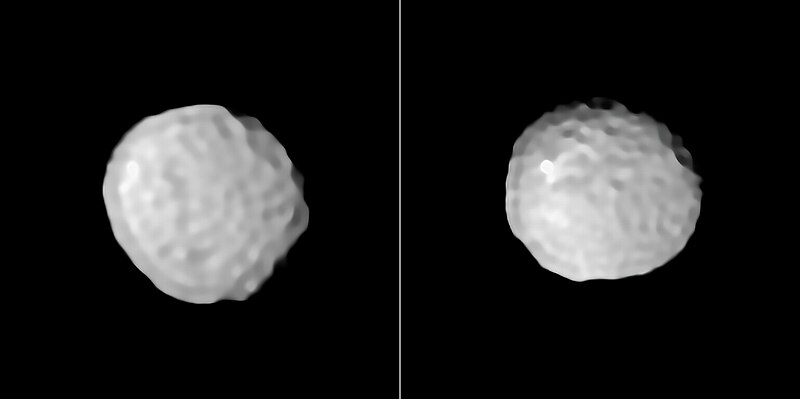
Pallas got its name from Pallas Athena, which is another name for the Greek goddess Athena. This was a tribute to both myth and science following its discovery in 1802. The German astronomer Heinrich Wilhelm Olbers discovered the object and supported the name. Moreover, this name suited the convention for early asteroids of being named after classical deities. Today, Pallas is designated as 2 Pallas, the second asteroid discovered. Its name ties together the history of astronomy and ancient culture.
The Name’s Source
The name Pallas derives from ancient Greek pallás, commonly translated as ‘maiden’ or ‘young girl’. Ancient writers reused “Pallas” for several very different figures. Because of this, any claim about “who Pallas was” needs careful context: Titan, Giant, maiden, prince, and above all an epithet of Athena. Hesiod’s Theogony, along with Homer and Apollodorus, each pin the name to their own storytelling necessities. In fact, that blend is what late Latin and then English came to inherit when “Pallas” entered classical and Renaissance literature.
The Titan
In Hesiod’s Theogony, Pallas, known as the Titan Pallas, is a second-generation Titan. He is the offspring of Crius and the sea-goddess Eurybia. He marries Styx, the underworld river goddess whose waters bind the gods’ most inescapable promises.
Their offspring, Zelus (zeal), Nike (victory), Cratus (force), and Bia (might), are abstract powers personified. Zeus relies on them as agents of his authority. This clan falls within the larger arc of the Titanomachy, the battle between Titans and Olympians, where Pallas and his family play crucial roles.
Styx and her children take Zeus’s side early on, which helps account for why these embodiments of might and accomplishment align themselves with the new order rather than the old Titan regime.
The Giant
Another Pallas emerges from the ranks of the Giants, those earth-born foes of Olympus in the Gigantomachy. Ancient art and texts, such as Apollodorus, commonly have him facing Athena on the battlefield.
One thread of the myth says Athena slays the Giant Pallas and then makes his hide her aegis or shield, fusing savage, primordial might into measured, emblematic defense.
Athena’s triumph is not merely corporeal; it reveals reason, wisdom, and the sovereign might of law subduing something grander and looser.
The Maiden
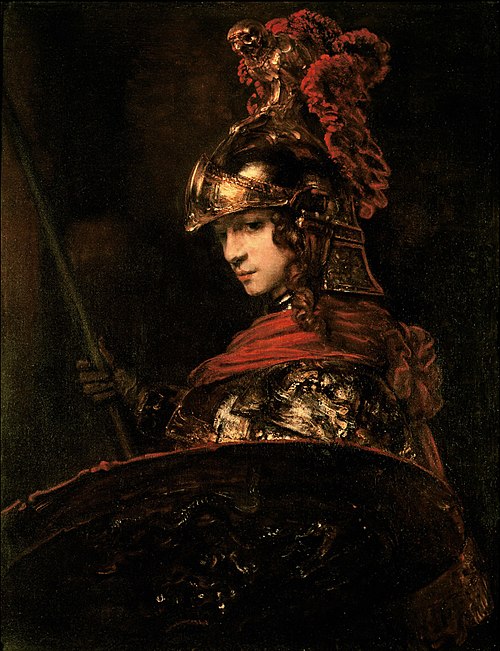
Another tradition makes Pallas a girl, a playmate or foster sister of Athena. According to Apollodorus, Athena was nurtured by Triton, who had a daughter Pallas. The two were educated together in the art of war.
While engaging in a sham fight that becomes all too real, Athena inadvertently slays Pallas. Remorseful, she assumes the name “Pallas Athena,” bearing her friend’s name in remembrance and remorse.
The Prince
In Roman epic, “Pallas” emerges once more as a mortal prince, the son of King Evander in Virgil’s Aeneid. Evander dispatches him to battle alongside Aeneas. Therefore, the name moves from gods or monsters to a young aristocrat in a very mortal conflict.
Turnus slays Pallas in battle and removes his sword-belt. Aeneas later catches sight of it adorning Turnus and, in an outpouring of sorrow and fury, kills him. That single scene grounds the emotional toll of the war and Pallas becomes a metonym for lost youth and the steep price of Rome’s chosen path to founding.
The Epithet
Most often, “Pallas” serves as an epithet for Athena herself. Homer, Hesiod, and later poets deploy “Pallas Athena” so frequently that “Pallas” and “Athena” can seem interchangeable.
As an epithet, it encapsulates her warrior and guardian attributes, city walls, shields, strategies, and the intelligence to wield violence judiciously.
Latin authors preserved the form “Pallas,” and Renaissance translators carried it into English with that same mix of war and wisdom.
Celestial Legacy
Pallas’ name illustrates how myth, language, and contemporary astronomy converge in a single object. When German astronomer Heinrich Wilhelm Olbers discovered the asteroid in 1802, he named it “Pallas” to suit the tradition of Greek-Roman mythology for new astronomical objects.
Astronomically, 2 Pallas was the second discovered asteroid, shortly after Ceres. It also helped establish the concept of an “asteroid belt” between Mars and Jupiter. Its orbit, size, and brightness indicated that this area was not empty but contained a huge population of small objects. The application of the mythic name to such a prominent object cemented how “Pallas” came to be associated not only with Athena but with the expanding canon of minor planets. This included the titans of mythology and their stories.
Recent attention remains high. Ground-based telescopes, adaptive optics and space observatories continue to tweak models of Pallas’s shape, spin and surface chemistry. Furthermore, mission concepts have proposed flybys or orbiters to study its geology and internal structure, since a visit to Pallas would sample a different dynamical niche in the belt than Ceres or Vesta. Each fresh data point adds another stratum onto the epic scientific and cultural saga that accompanies the name.
Conclusion
The name “Pallas” didn’t just appear arbitrarily. It rose up out of ancient Greek language, primordial myth, and nascent astronomy. Nineteenth-century astronomers connected a new main belt discovery to an ancient goddess and her forgotten friend.
Frequently Asked Questions
How did Pallas get its name?
Pallas, named for the title Pallas Athena, refers to the Greek goddess Athena. This mythological name was chosen by its discoverer, Heinrich Wilhelm Olbers, in 1802 when he identified the sizeable asteroid now designated 2 Pallas.
What does the name “Pallas” mean in Greek?
Greek ‘Pallas’ is frequently associated with terms such as ‘maiden’ or ‘youthful’, reflecting the goddess Athena’s formidable nature as a warrior. This connection highlights Athena’s role in ancient Greek tales and her title Pallas.
Why was an asteroid named after Pallas Athena?
Nineteenth century astronomers liked classical mythology names. Olbers selected Pallas Athena, a title reflecting the goddess Athena’s wisdom and strategic warfare. He wanted to pay tribute to a powerful divine figure, making it an appropriate namesake for a newly discovered celestial body of great prominence.
Would you like to receive similar articles by email?

Paul Tomaszewski
Paul Tomaszewski is a science & tech writer as well as a programmer and entrepreneur. He is the founder and editor-in-chief of CosmoBC. He has a degree in computer science from John Abbott College, a bachelor's degree in technology from the Memorial University of Newfoundland, and completed some business and economics classes at Concordia University in Montreal. While in college he was the vice-president of the Astronomy Club. In his spare time he is an amateur astronomer and enjoys reading or watching science-fiction. You can follow him on LinkedIn and Twitter.

You May Also Like

What Is a Bok Globule?

Things To Consider for Landscaping That Fits the Climate