How Did Dwarf Planet Orcus Get Its Name
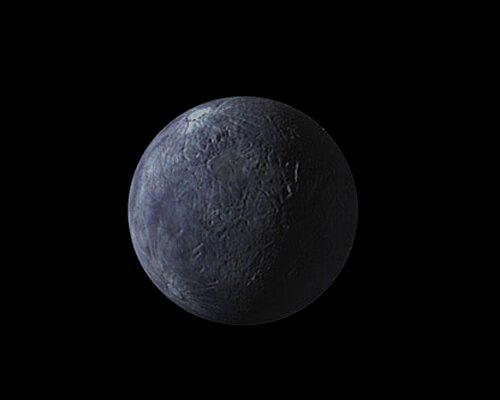
The answer is pleasantly mythic: dwarf planet Orcus was named after an ancient underworld deity, a fitting choice for a distant icy body that travels in a Pluto-like orbit beyond Neptune. The name was proposed by its discovery team and officially assigned by the International Astronomical Union in 2004. Orcus is often called the “anti-Pluto” because both objects occupy a 2:3 orbital resonance with Neptune, although they move through opposite parts of their orbits.
There is one important distinction, though. Orcus is widely described as a dwarf planet candidate, but the IAU has not formally added it to a definitive list of officially recognized dwarf planets. Its size, shape, and planetary status remain subjects of scientific discussion.
What Does Orcus Mean in Mythology?
Etruscan Origins
Orcus began in Etruscan mythology, where he was an underworld god associated with death, punishment, and the consequences of broken promises. The figure later entered Roman tradition, though the mythology became tangled over time. Roman writers sometimes treated Orcus as an underworld ruler, while other traditions connected him with the place of punishment itself.
This makes the name slightly more complicated than a simple translation of “underworld god.” The mythological Orcus was related to Pluto and Hades, yet he was not always identical to them. Ancient mythology was not a tidy database. Gods merged, names shifted, and local traditions overlapped.
Roman Underworld
In Roman culture, Orcus could function as an alternate name for Pluto, the ruler of the dead. Pluto itself came from the Greek Plouton, meaning “wealth-giver,” a reference to the riches hidden beneath Earth. Orcus carried a darker tone.
The Roman god Pluto was increasingly associated with the benevolent or regal side of the underworld, whereas Orcus was more closely linked with death and retribution. That distinction helped make Orcus an evocative name for a remote trans-Neptunian object.
Broken Oaths
Orcus was especially associated with punishing people who violated oaths. That detail matters because it gives the name a sharper identity than merely “another Pluto.” The dwarf planet’s name suggests an underworld connection, but also judgment, secrecy, and a stern cosmic personality.
Why Did Astronomers Choose the Name Orcus?
Underworld Naming Tradition
Astronomers have long used mythology when naming planets, moons, and minor planets. The convention became especially useful for large objects beyond Neptune. Because Pluto was already linked with the underworld, other substantial Kuiper Belt objects could draw from related mythological traditions.
The IAU’s naming guidelines for distant solar system bodies provide the broader framework. These conventions help keep astronomy’s growing catalog from becoming a pile of arbitrary labels.
Pluto Connection
Orcus has an orbital period close to Pluto’s and follows the same basic 2:3 resonance with Neptune. For every three orbits completed by Neptune, Orcus and Pluto complete roughly two. Their paths are also eccentric, carrying them between perihelion and aphelion rather than around the Sun in near-perfect circles.
That relationship made an underworld name feel almost inevitable. As Universe Today explains, the discovery team selected Orcus because the object’s orbital behavior closely echoed Pluto’s.
Orcas Island Nod
There was also a private layer to the choice. Mike Brown has said that Orcus was partly a nod to Orcas Island, a place associated with him and his wife. That personal connection does not replace the mythological reasoning, but it gives the name a human fingerprint. Astronomy is full of grand celestial symbolism, yet sometimes a naming decision also carries a favorite landscape quietly inside it.
How Did the IAU Approve the Name?
Discovery Team Proposal
Michael Brown, Chad Trujillo, and David Rabinowitz discovered Orcus on February 17, 2004. The object was initially recorded under the provisional designation 2004 DW, as documented in the NASA JPL Small-Body Database.
A discovery does not immediately produce a polished public name. Astronomers first need enough observations to establish the object’s orbit, confirm that it is not a duplicate observation, and assign it a permanent number.
Provisional Designation
The label 2004 DW identified when the object was reported and where it fell in the sequence of discoveries that year. It was useful, but hardly memorable. Once the orbit became secure, the object received the permanent minor-planet number 90482.
This process is worth remembering because “discovered” and “named” are separate stages. A distant Kuiper Belt object may spend months or years as a string of letters and numbers before its identity settles.
Official Recognition
The name Orcus was assigned by November 22, 2004. The discovery history and naming timeline show how quickly this object moved from an anonymous detection to a recognized member of the outer Solar System catalog.
The approval of the name Orcus did not officially declare it a dwarf planet. Classification depends on evidence about size, mass, shape, and whether the body is in hydrostatic equilibrium. Orcus is commonly grouped with large trans-Neptunian objects and plutinos, but the naming decision and dwarf-planet classification are different scientific questions.
Why Is Orcus Called the Anti-Pluto?
Shared Neptune Resonance
Orcus and Pluto are both plutinos, meaning they occupy a 2:3 orbital resonance with Neptune. Their orbits are protected by that resonance, which helps prevent close encounters with the planet Neptune despite crossing similar regions of the Solar System.
Opposite Orbital Phase
The “anti-Pluto” nickname comes from orbital phase, not from a literal opposition across the Sun. Orcus and Pluto tend to occupy broadly opposite portions of their resonant orbits. When one is nearer a particular section of its path, the other is generally elsewhere.
The comparison is a useful way to make orbital mechanics less abstract. Space is not a static diagram of planets lined up in neat rows. Resonance, inclination, eccentricity, and timing shape the architecture.
A Useful Comparison
Pluto remains larger and better studied, especially after the New Horizons mission. Orcus, however, offers a valuable counterpart. Its existence shows that Pluto is not a solitary oddity, and that the Kuiper Belt contains several bodies with complex planetary characteristics.
What Is Orcus’s Place Beyond Neptune?
Orcus is a large Kuiper Belt object orbiting in the outer Solar System. Estimates place its diameter at roughly 910 km, though measurements depend on its albedo and thermal properties. Its surface appears dark and icy, with observations indicating water ice and possible methane, ethane, ammonia, and complex carbonaceous compounds.
The outer Solar System naming and classification overview places objects like Orcus within a broader population of icy bodies rather than treating each one as an isolated curiosity. That wider context matters. Orcus is a clue to how the planets formed, migrated, and left behind a frozen debris field.
How Do Orcus and Vanth Add Scientific Context?
Orcus has a large moon named Vanth, discovered in 2005 through Hubble Space Telescope observations. Vanth is unusually substantial relative to Orcus, making the Orcus-Vanth system more comparable to Pluto and Charon than to a typical planet-and-tiny-moon arrangement.
Vanth’s mass and orbit may eventually clarify Orcus’s density, internal structure, and history. Spectra showing crystalline water ice also raise questions about surface renewal, perhaps through impacts or ancient cryovolcanism.
How did the moon Vanth get its name?
Vanth, the moon of the dwarf planet Orcus, was named in 2009 after the Etruscan psychopomp (guide of souls) a female winged figure who escorted the dead to the underworld.
The name was proposed by the discovery team led by Mike Brown and chosen because Orcus is the Etruscan/Roman equivalent of Pluto—ruler of the underworld—making Vanth a thematically fitting companion. The naming follows the International Astronomical Union’s convention for plutinos (objects in 3:2 resonance with Neptune) to receive mythological names associated with the underworld.
FAQ
Is Orcus officially a dwarf planet?
It is widely considered a dwarf planet candidate, but the IAU has not formally confirmed that classification.
Who discovered Orcus?
Michael Brown, Chad Trujillo, and David Rabinowitz discovered it on February 17, 2004.
Why is Orcus connected with Pluto?
Both objects are plutinos in a 2:3 resonance with Neptune and occupy broadly opposite orbital phases.
What is Vanth?
Vanth is Orcus’s large moon and an important clue to the system’s mass, density, and formation.
Conclusion
Orcus received its name because mythology, orbital dynamics, and personal meaning happened to converge. The underworld deity matched the Pluto connection, the orbit inspired the “anti-Pluto” idea, and Orcas Island added a private touch. Behind that memorable name sits a serious scientific subject: a cold Kuiper Belt object that complicates how we think about dwarf planets, moons, and the architecture of the Solar System.
Would you like to receive similar articles by email?

Paul Tomaszewski
Paul Tomaszewski is a science & tech writer as well as a programmer and entrepreneur. He is the founder and editor-in-chief of CosmoBC. He has a degree in computer science from John Abbott College, a bachelor's degree in technology from the Memorial University of Newfoundland, and completed some business and economics classes at Concordia University in Montreal. While in college he was the vice-president of the Astronomy Club. In his spare time he is an amateur astronomer and enjoys reading or watching science-fiction. You can follow him on LinkedIn and Twitter.


You May Also Like

How Did Saturn’s Moon Dione Get Its Name
Gemini Constellation Guide