How Did Uranus’ Moon Oberon Get Its Name
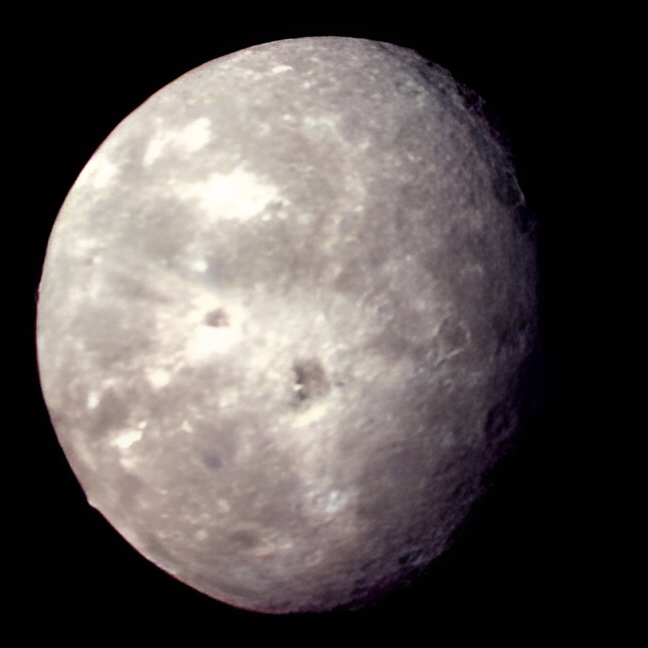
Oberon takes its name from the king of the fairies in Shakespeare’s A Midsummer Night’s Dream, a name suggested by John Herschel in 1852, decades after his father William Herschel first spotted the moon in 1787. That single fact carries a lot of weight, because it marks the moment astronomy stopped reaching for Greco-Roman gods and started borrowing from English literature instead. The Uranian system is the odd one out among planetary moons, and Oberon is the character who set the tone.
Where Does the Name Oberon Come From?
Shakespeare connection
Every one of the main satellites of Uranus is named for a character out of Shakespeare or Alexander Pope. No Titans, no Olympians. The Folger Shakespeare Library has devoted an entire podcast episode to how A Midsummer Night’s Dream and The Tempest ended up stamped across the outer solar system, which tells you the literary side finds this as strange and delightful as astronomers do.
Fairy king character
The Oberon of the play is a difficult husband, a schemer, and the ruler of the fairies. He quarrels with Titania over a changeling boy, sends Puck off with a love potion, and generally causes chaos in an Athenian wood. Titania orbits Uranus too, closer in and slightly larger, which means the two are still circling one another in a sense. Astronomers rarely admit to enjoying that sort of thing. They enjoy it anyway.
John Herschel’s proposal
William Herschel never named the moon. He simply reported it. His son John, working through the Uranian satellites in 1852, assigned the literary names we now use, and the choice was cemented once William Lassell adopted the same scheme. NASA’s own profile of the moon credits the discovery to the elder Herschel and the naming to the younger, a division of labor spanning sixty-five years.
Who Discovered Oberon and When?
William Herschel, 1787
On January 11, 1787, British astronomer William Herschel found two moons circling the planet he had discovered six years earlier. Oberon and Titania, both on the same night, with a reflector he had ground himself. A retrospective on that night’s observations notes just how difficult the sighting was at that aperture, given how faint the outermost moon of the system appears from Earth.
Early designations
Before the Shakespearean names stuck, the satellite carried a Roman numeral. Oberon was Uranus IV, counting outward, and older catalogs still list it that way. The historical identifier survives in technical archives, including the NASA planetary data entry for Uranus IV.
Herschel also claimed four additional moons that turned out not to exist.
Confirmation by later observers
The two Herschel moons went largely unconfirmed for decades, partly because few telescopes could reach them. Lassell’s work in the 1840s and 1850s changed that, and his discovery of Ariel and Umbriel forced the numbering question. The record traces how he and John Herschel coordinated the literary approach rather than letting the system fragment into competing schemes.
Why Uranus Broke the Greek Mythology Rule
Shakespeare and Pope
Here is the awkward truth. Uranus is itself a Greek god, the only major planet named that way rather than from the Roman pantheon, so the moons were never going to be tidy no matter what anyone chose. John Herschel leaned into the inconsistency. NASA’s summary of the Uranian moons calls them the literary moons, drawn from Shakespeare and from Pope’s The Rape of the Lock.
Lassell’s Ariel and Umbriel
Both of Lassell’s finds came from Pope, not Shakespeare, which is why Ariel and Umbriel sound different from Miranda and Oberon. Ariel appears in both writers, conveniently. The five main satellites break down like this:
- Oberon, fairy king, A Midsummer Night’s Dream
- Titania, fairy queen, same play
- Ariel, airy spirit, The Tempest and The Rape of the Lock
- Umbriel, dusky gnome, The Rape of the Lock
- Miranda, exiled daughter, The Tempest
Modern IAU practice
The convention held. Every one of the 29 known moons of the ice giant follows it, and the IAU Working Group for Planetary System Nomenclature enforces the pattern for any future discovery. Nobody is smuggling a Titan into this system now.
How Surface Features on Oberon Are Named
Craters from tragic heroes
Craters on Oberon honor tragic figures and locations from Shakespeare’s plays. Hamlet, Macbeth, Lear, Othello, Romeo, Coriolanus, Falstaff. The largest, Hamlet, spans roughly 210 km across a heavily cratered and ancient surface, and several of the large craters show dark material pooled on their floors, possibly organic compounds mixed with water ice.
Chasmata and other formations
Non-crater features draw on wider legend. Mommur Chasma takes its name from Oberon’s forest in medieval French romance, and the nomenclature record for the Huon feature shows how folklore attribution works alongside the Shakespearean core. There is also an unnamed mountain near the limb, about 6 miles high, likely a central peak from a huge impact.
Voyager 2 mapping
Everything we know about Oberon’s surface at close range comes from one spacecraft on one day. Voyager 2 met Uranus on January 24, 1986, and its flyby covered only about forty percent of the moon at usable resolution. Geological mapping of the Oberonian southern hemisphere still rests on those images. The northern hemisphere remains, functionally, a blank.
Naming Timeline at a Glance
| Year | Event |
|---|---|
| 1781 | William Herschel discovers Uranus, the seventh planet |
| 1787 | Herschel finds Oberon and Titania on January 11 |
| 1840s–50s | Lassell confirms the moons, adds Ariel and Umbriel |
| 1852 | John Herschel assigns the Shakespearean and Pope names |
| 1986 | Voyager 2 flyby returns the first surface images |
What the Name Reveals About Astronomy’s Literary Turn
Naming a planetary body is a claim about culture, not just a label. The expert breakdown from BBC Sky at Night makes the point that the Uranian system deliberately stands apart from classical convention, and I suspect that was John Herschel signaling something about English science asserting its own tradition. A quiet act of cultural confidence, dressed up as bookkeeping.
FAQ
Was Oberon named by William Herschel?
No. His son John proposed the name in 1852.
Which play is Oberon from?
A Midsummer Night’s Dream, where he rules the fairies.
What was Oberon called before?
Uranus IV, based on its distance from the planet.
Is Oberon the largest moon of Uranus?
Second largest by diameter and mass, behind Titania.
Conclusion
The name traveled a long road: an Elizabethan stage, a telescope in Slough, a son finishing his father’s work, and finally a spacecrafts flyby of a cratered world 580,000 km out from a tilted planet. Fairy royalty on an icy mantle over a rocky core. Shakespeare would have found that funny.
Would you like to receive similar articles by email?

Paul Tomaszewski
Paul Tomaszewski is a science & tech writer as well as a programmer and entrepreneur. He is the founder and editor-in-chief of CosmoBC. He has a degree in computer science from John Abbott College, a bachelor's degree in technology from the Memorial University of Newfoundland, and completed some business and economics classes at Concordia University in Montreal. While in college he was the vice-president of the Astronomy Club. In his spare time he is an amateur astronomer and enjoys reading or watching science-fiction. You can follow him on LinkedIn and Twitter.


You May Also Like
Lepus Constellation Guide
NGC 7822: A Cosmic Question Mark