How Did Jupiter’s Moon Io Get Its Name
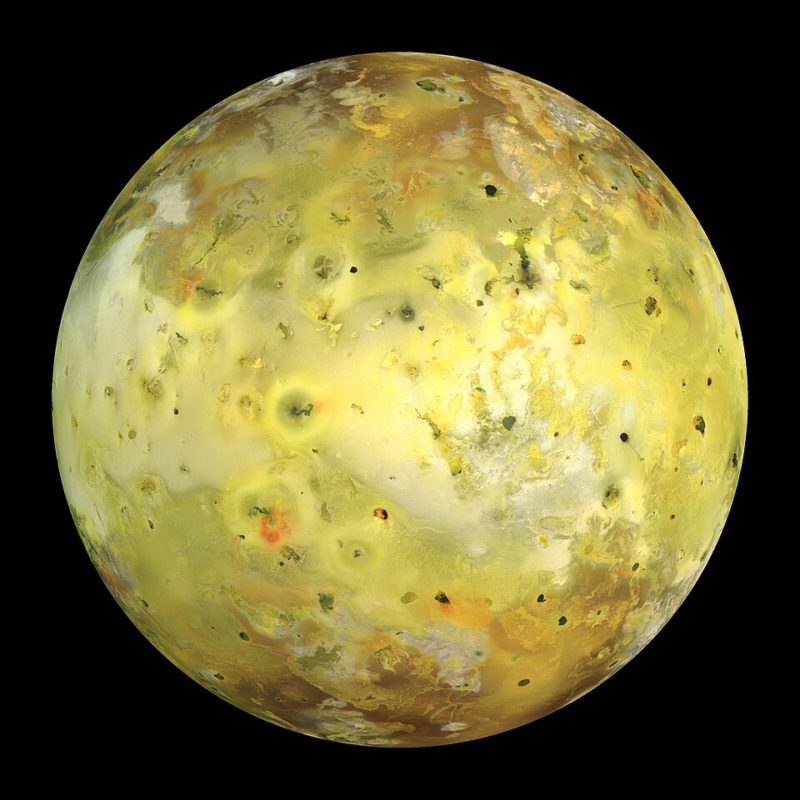
Jupiter’s innermost large moon, Io, gets its name from a mortal woman in Greek mythology who caught the roving eye of Zeus and paid dearly for it. The naming fits a pattern. Every one of the four Galilean moons carries the name of a lover or companion tangled up in the affairs of Zeus, whom the Romans called Jupiter. And Io, the closest of the bunch, happens to be the most volcanically restless body in the entire solar system, which makes the mythological choice feel almost prophetic. This article traces the story of that name, from the ancient priestess to the German astronomer who fought for decades to get the naming convention recognized.
Who Is Io in Greek Mythology?
Before there was a moon, there was a woman. Io was a figure caught in one of those messy, painful episodes that Greek mythology handled so well, and understanding her story explains why astronomers eventually reached for it.
The Priestess of Hera
Io served as a priestess of Hera at Argos, which is a detail loaded with irony given what happened next. She was devoted to the queen of the gods. Faithful, respected, tied to the very deity who would come to torment her. That’s the setup nobody saw coming.
Zeus and the Transformation
Zeus noticed her. He usually did. To hide the affair from his jealous wife, Zeus transformed Io into a white heifer, a cow, hoping Hera wouldn’t catch on. Hera wasn’t fooled. She demanded the heifer as a gift, then set the hundred-eyed giant Argus to guard the poor creature so Zeus couldn’t reverse the spell.
Wanderings and Eventual Freedom
What followed was a long, tortured journey. After Argus was slain, Hera sent a gadfly to sting Io endlessly, driving her across continents in her cow form. She wandered through lands and seas, some of which took her name, before finally reaching Egypt where Zeus restored her to human shape. Freedom came at last. It came late, and it came exhausted.
How Did the Moon Io Get Its Name?
The Mythological Connection
The moon Io was named to match its parent planet. Since Jupiter is the Roman version of Zeus, king of the gods, it made poetic sense to name his moons after the mortals and nymphs entangled in his romantic escapades. Io, the priestess-turned-heifer, was one of the most famous. Naming a satellite orbiting Jupiter after one of Zeus’s lovers keeps the whole jovian system thematically bound together, almost like a family tree carved into the sky.
Why This Deity Suited the Moon
Here’s where things get interesting for anyone who loves a good coincidence. Io the mythological figure was defined by torment and relentless, forced motion. Io the moon turns out to be defined by relentless internal turmoil too, thanks to tidal forces that never let it rest. Squeezed and stretched by Jupiter’s immense gravity and by its neighboring moons, this volcanic moon endures a tidal response that keeps its interior molten. The name captures a restless spirit either way.
Who Discovered Io and When?
Galileo Galilei’s 1610 Observation
Galileo Galilei first spotted Io in January 1610, along with the three other large moons, using his improved telescope. He recognized these points of light were orbiting Jupiter, not the Earth, which handed devastating support to the heliocentric model of the solar system. Galileo, ever the political operator, named them the Medicean Planets after his patrons, the powerful Medici family of Florence. He also labeled them by number. Jupiter I through IV.
The Simon Marius Naming Dispute
The name Io didn’t come from Galileo at all. The German astronomer Simon Marius claimed to have observed the same moons around the same time, and in his 1614 work he assigned them mythological names suggested to him by Johannes Kepler. For centuries Marius was dismissed, even accused of stealing Galileo’s discovery. Modern historians have largely rehabilitated him, and it’s his naming scheme, not Galileo’s Medicean labels, that we still use today.
How the Galilean Moons Were Named
The Four Lovers and Companions of Zeus
The four Galilean moons follow a single organizing idea. Each honors someone romantically linked to Zeus. Here’s how the mythology maps onto the moons, moving outward from Jupiter:
- Io – the priestess of Hera transformed into a heifer, closest to the planet
- Europa – the Phoenician princess Zeus carried off in the form of a bull
- Ganymede – the beautiful Trojan youth abducted to serve as cupbearer to the gods
- Callisto – the nymph turned into a bear, later placed among the stars
Europa, Ganymede, and Callisto
Each of these worlds became a story in its own right. Europa hides a suspected ocean beneath its icy shell, which is why missions like Europa Clipper are heading there to hunt for conditions that might support life. Ganymede is the largest moon in the solar system, bigger even than Mercury. Callisto, the outermost of the four, wears one of the most heavily cratered surfaces we know. Different fates. Same mythological family.
Why the Naming Convention Took Centuries to Stick
For a long stretch, astronomers simply used the numbers Galileo assigned. Marius’s mythological names floated around in astronomical literature but never fully took hold, partly because his reputation was under a cloud. The numbered system worked fine until people started discovering more moons, at which point counting became a headache.
| Naming System | Origin | Fate |
|---|---|---|
| Medicean Planets | Galileo, honoring the Medici | Abandoned |
| Roman numerals (I–IV) | Galileo, by position | Used for centuries, then retired |
| Mythological names | Marius, via Kepler | Standard today |
By the mid-19th century, as the jovian system revealed itself to be far more crowded than anyone imagined, the mythological names finally won out. They were memorable, they were poetic, and they scaled better than an ever-growing list of Roman numerals. The International Astronomical Union later cemented this approach as the official standard for naming moons across the solar system.
How Io’s Name Reflects Its Volcanic Character
Oddly enough, the ancients couldn’t have known how well the name would age. Io is the most volcanically active object we’ve ever found, riddled with hundreds of active volcanoes spewing plumes of sulfur and sulfur dioxide hundreds of miles into space. Its surface constantly repaves itself with fresh lava flows, erasing craters almost as fast as they form.
The engine behind all this is tidal heating. As Io orbits, Jupiter’s gravity and the tug of Europa and Ganymede flex the moon’s interior, generating enough friction to keep a subsurface magma ocean simmering. Spacecraft like Juno, with instruments such as its infrared mapper, have captured stunning views of this chaos. A restless woman driven across the world became a restless moon that can never sit still. The parallel writes itself.
FAQ
Is Io named after a god or a mortal?
Io was a mortal priestess in Greek mythology, not a goddess, which makes her a little unusual among astronomical names.
Who actually named the moon Io?
Simon Marius, following a suggestion from Johannes Kepler, though Galileo discovered it first and preferred numbers.
What does Io orbit?
Io orbits Jupiter as the innermost of the four large Galilean moons.
Conclusion
The story of how Io got its name winds through betrayal, transformation, a bitter scientific rivalry, and a few centuries of astronomers dragging their feet before the poetry won. A mortal woman punished with endless wandering lent her name to a moon that burns and churns without pause. If you’re curious how other worlds earned their labels, the tangled history of how Jupiter got its name is worth a look, as are the mythological threads behind the naming of Mercury and the war-god origins of Mars. The sky, it turns out, is a library of old stories waiting to be read.
Would you like to receive similar articles by email?

Paul Tomaszewski
Paul Tomaszewski is a science & tech writer as well as a programmer and entrepreneur. He is the founder and editor-in-chief of CosmoBC. He has a degree in computer science from John Abbott College, a bachelor's degree in technology from the Memorial University of Newfoundland, and completed some business and economics classes at Concordia University in Montreal. While in college he was the vice-president of the Astronomy Club. In his spare time he is an amateur astronomer and enjoys reading or watching science-fiction. You can follow him on LinkedIn and Twitter.


You May Also Like
Stargazing Calendar for September 2026
How Comet Nucleus Ice Sublimates Into Coma And Tails