How Did Asteroid Hygiea Get Its Name
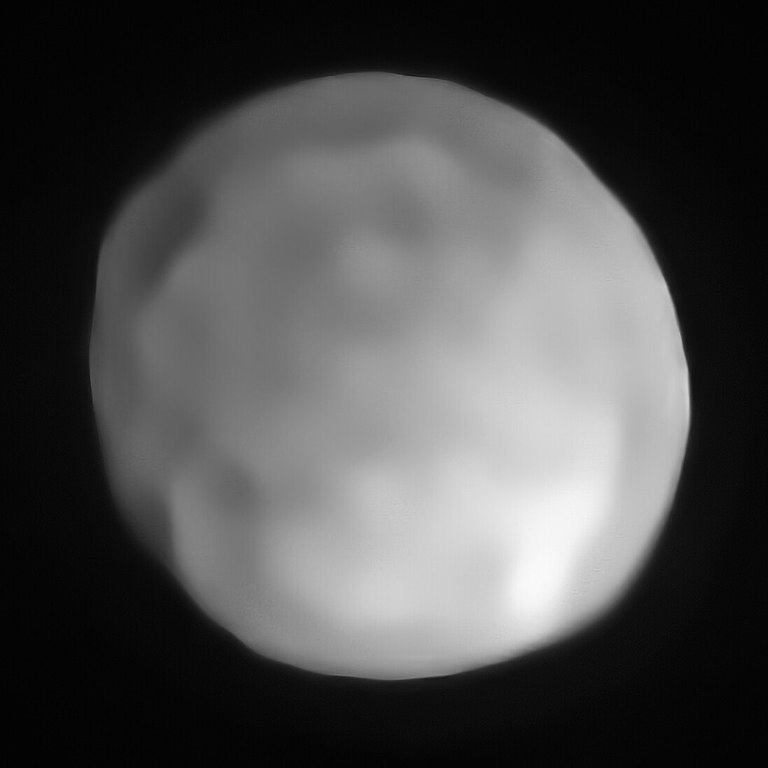
People tend to assume asteroid names were tossed out casually in the 1800s, almost like someone pointing at a faint speck through a telescope and picking whatever sounded elegant. Hygiea was more deliberate than that. Asteroid 10 Hygiea got its name from Hygieia, the Greek goddess of health, and the object was discovered in Naples by Annibale de Gasparis in 1849, with the naming itself generally traced to observatory director Ernesto Capocci.
That matters because the name ties together three different maps at once: Greek mythology, early asteroid naming customs, and the messy period in astronomy when newly found bodies were still being called “planets” before the modern minor-planet system settled down. Hygiea sits right in that transition, which is part of why it still draws scientific interest now.
What is the name origin?
Greek goddess
The root of the name is classical, not technical. In Greek mythology, Hygieia was the daughter of Asclepius, the god of medicine, and she represented health, cleanliness, and preservation of well-being. If the spelling looks slightly off, that is normal. The asteroid is written Hygiea, while the goddess often appears as Hygieia or Hygeia in English sources.
A quick way to keep it straight:
- Hygiea is the asteroid
- Hygieia is the Greek goddess
- the modern word hygiene comes from the same mythic root
That old mythological habit shows up all over early astronomy. Ceres, Pallas, Juno, Vesta. The first wave of asteroid names had a classical accent, and nobody in that era thought it was odd.
Naming custom
This was standard nineteenth-century behavior. Early discoverers and observatories usually leaned on Greco-Roman mythology, especially female deities, which Asteroid Day’s overview of asteroid naming explains pretty well. The naming was part scholarship, part fashion, part institutional prestige. You were not just discovering a body in the solar system. You were placing it into a cultural tradition that European astronomers already understood.
Naples fit that world perfectly. Classical learning mattered. Symbolism mattered. A name like Hygiea sounded learned, respectable, and immediately legible to astronomers reading catalogs across Europe.
Early records
The interesting wrinkle is who actually chose it. The discovery was made by de Gasparis, but later historical work points to Capocci, head of the Naples observatory, as the person who selected the name. The Royal Society’s discussion of John Herschel’s correspondence is especially useful here, because it ties the naming to the intellectual network of the time rather than treating it like a random label.
So, no, this was not some loose nickname that stuck by accident. It came out of a real observatory culture.
Who discovered it and when?
Annibale de Gasparis
The discoverer was Annibale de Gasparis, the Italian astronomer whose name is woven through mid-nineteenth-century asteroid work. He was based in Naples, at what is now the Capodimonte observatory, and he became one of the era’s great asteroid hunters. That city had a run of discoveries that made it look, for a while, like an asteroid factory.
Discovery date
NASA’s Small-Body Database records Hygiea’s discovery date as April 12, 1849. At the time, objects like this were often announced as new planets, which sounds strange now but was normal then. Taxonomy was still catching up to observation. Astronomy does that a lot, frankly. The sky changes more slowly than our definitions do.
Designation history
The number came later, once the sequence of discoveries needed a stable catalog system. Hygiea became 10 Hygiea because it was the tenth asteroid discovered. That numeral is not decorative. It is historical bookkeeping, the astronomy kind that quietly shapes everything.
Why is the number 10 important?
Number sequence
The “10” means Hygiea entered the record as the tenth recognized asteroid. In early asteroid history, the numbering sequence was a status marker and an indexing tool at the same time. It told astronomers where the object sat in the unfolding map of the solar system.
Minor planet status
Back then, these bodies blurred the line between “planet” and “asteroid.” Today, Hygiea is classified as a minor planet and a main-belt asteroid, not a full planet. That does not make it trivial. It just places it in the modern framework, where orbital context and physical shape matter more than old naming habits.
Astronomy catalogs
Catalogs are where names become durable. Once Hygiea was numbered and recorded, it stopped being merely a fresh discovery and became a fixed entity in astronomy. That is the quiet power of catalogs. They turn sightings into knowledge.
Why do scientists care about it?
Main-belt class
Hygiea lives in the main asteroid belt between Mars and Jupiter, and it belongs to the dark, carbon-rich C-type class. That alone makes it useful. C-type bodies preserve clues about early solar system material, the kind of stuff planetary scientists love because it is less processed and more ancient.
Size rank
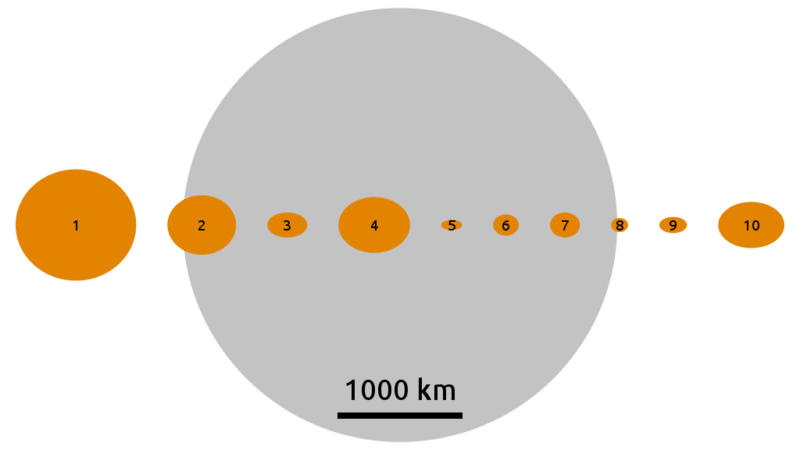
It is one of the largest asteroids known, usually placed fourth by size after Ceres, Vesta, and Pallas, with a mean diameter of about 407.12 km. That puts Hygiea in an awkward, fascinating middle ground: too substantial to ignore, not famous enough to dominate headlines.
A few reasons it keeps showing up in serious science:
- It is the largest member of the Hygiea family, an asteroid family likely formed by a major collision.
- Its round shape has raised questions about whether gravity pushed it toward hydrostatic equilibrium.
- Its dark surface may preserve primitive material from the early solar system.
Family namesake
This is the deeper pull. Hygiea is the namesake of the Hygiea family, one of the big asteroid families in the belt. Scientists care about family structure because it helps reconstruct old collisions, fragmentation histories, and the long traffic pattern of the belt. People imagine endless smashups out there. The reality is calmer, more orbital, more like a crowded but disciplined system with very long timelines.
Could it qualify as a dwarf planet?
Possibly, but not officially today.
That distinction matters. A 2019 set of European Southern Observatory observations using the Very Large Telescope and the SPHERE instrument suggested Hygiea has a nearly spherical shape and lacks the giant impact basin many expected. That revived the argument that it may meet the shape requirement for dwarf planet status, much as Ceres does.
Still, the International Astronomical Union has not formally classified Hygiea as a dwarf planet. So the honest answer is candidate, maybe, scientifically intriguing, yes. Officially settled, no.
FAQ
Was Hygiea named after the modern idea of hygiene?
Indirectly, yes. Both words come from the same mythological figure, Hygieia, the goddess of health.
Did de Gasparis also choose the name?
He discovered the object, but historical evidence points to Ernesto Capocci as the person who selected the name.
Is Hygiea a planet?
No. In modern astronomy it is a main-belt asteroid and minor planet, though it remains a dwarf-planet candidate.
Conclusion
Hygiea got its name from a Greek goddess, entered astronomy through a Naples discovery in 1849, and carries the number 10 because it was the tenth asteroid recognized. That is the direct answer. The more interesting one is that Hygiea sits at the crossroads of mythology, catalog history, and modern planetary science, which is why this one dark rock still manages to stir up fresh insights more than a century and a half later.
Would you like to receive similar articles by email?

Paul Tomaszewski
Paul Tomaszewski is a science & tech writer as well as a programmer and entrepreneur. He is the founder and editor-in-chief of CosmoBC. He has a degree in computer science from John Abbott College, a bachelor's degree in technology from the Memorial University of Newfoundland, and completed some business and economics classes at Concordia University in Montreal. While in college he was the vice-president of the Astronomy Club. In his spare time he is an amateur astronomer and enjoys reading or watching science-fiction. You can follow him on LinkedIn and Twitter.


You May Also Like
Stargazing Calendar for October 2025
How Did Asteroid Vesta Get Its Name