How Did Jupiter’s Moon Ganymede Get Its Name
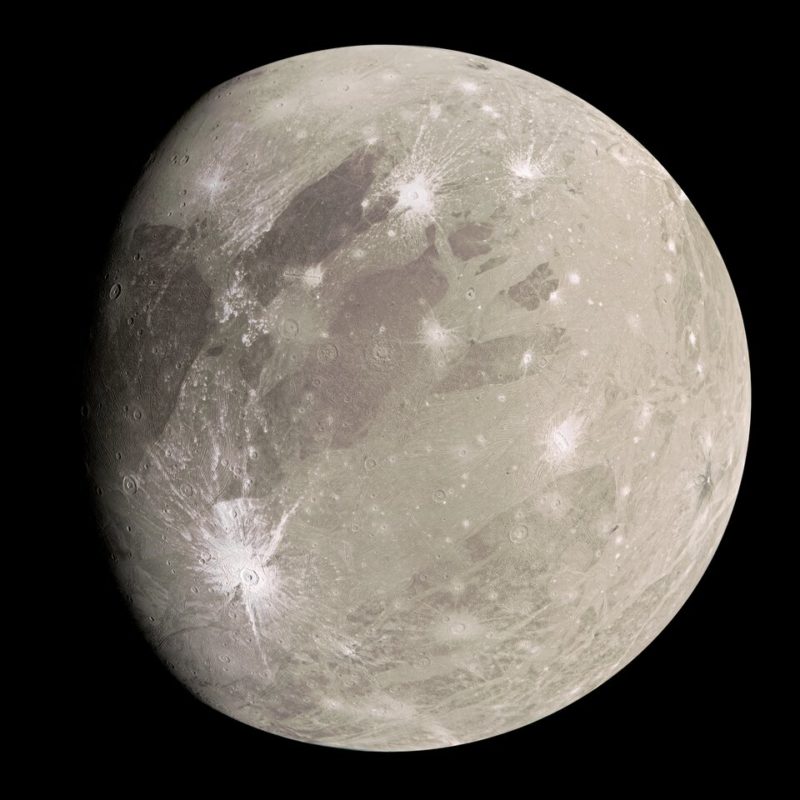
Jupiter’s largest moon carries the name Ganymede after a Trojan prince from Greek mythology, a young man so striking that Zeus himself carried him off to Mount Olympus to serve as cupbearer to the gods. The name wasn’t Galileo’s idea, even though he spotted the moon first in 1610. That credit belongs to a rival astronomer named Simon Marius, who proposed the mythological naming scheme that eventually stuck. This guide walks through the myth, the discovery, and the quiet centuries-long process that turned a Greek legend into a label for a world orbiting a gas giant.
Who Was Ganymede in Greek Mythology?
Before the telescope, before the moon, there was the boy.
The Trojan Prince
Ganymede was a mortal, and not just any mortal. He was a prince of Troy, described in Homer’s accounts as the most beautiful of living men. The detailed account of the Trojan prince paints him as almost impossibly handsome, the kind of beauty that gets you noticed by the wrong (or right) deity, depending on how you read it.
Abduction by Zeus
Here the story turns. Zeus, or Jupiter to the Romans, became so taken with the young prince that he transformed into an eagle and swept him up into the heavens. The full mythological breakdown of his abduction describes this dramatic snatch from the mortal world, one of the more famous kidnappings in classical lore. That eagle, by the way, later got its own constellation.
Cupbearer of the Gods
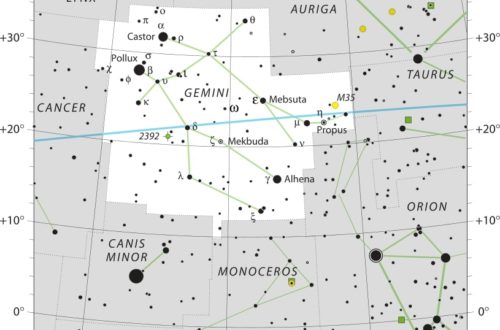
And what does a beautiful mortal do once he’s on Olympus? He pours the drinks. Ganymede became the divine cupbearer, serving nectar to the gods, granted immortality as a reward. The Greeks tied him to the constellation Aquarius, the water-bearer, which is a fitting cosmic promotion for a boy who spent eternity filling goblets.
Who Discovered This Jovian Moon?
Galileo Galilei, 1610
When Galileo pointed his crude telescope at Jupiter in January 1610, he noticed something odd. Four tiny points of light seemed to shift positions night after night. He’d found the first moons known to orbit another planet, a discovery that quietly demolished the idea that everything circled the Earth.
The Galilean Moons
Those four moons, Io, Europa, Ganymede, and Callisto, are now called the Galilean moons in his honor. The Planetary Society’s overview of the Galilean satellites explains how this quartet became the poster children for the Copernican revolution.
Early Designation Systems
Galileo, ever the political operator, wanted to name them the “Medicean Stars” after his patrons, the powerful Medici family. He also numbered them with Roman numerals based on their distance from Jupiter. Ganymede was simply Jupiter III. Functional, sure. Poetic, not so much.
How Did the Moon Officially Get Its Name?
Simon Marius Proposal
Around the same time, a German astronomer named Simon Marius claimed he’d observed the moons independently, possibly even a bit earlier. The dispute got ugly, and Galileo publicly accused him of plagiarism. Yet history has been kinder to Marius on one front. His 1614 work, documented in the Linda Hall Library’s account of Mundus Iovialis, is where the mythological names first appeared in print.
Kepler’s Influence
Marius didn’t dream up the names alone. He credited Johannes Kepler with the suggestion of naming the moons after lovers and companions associated with Zeus. The BBC’s discussion of the naming and Kepler’s role notes how this collaboration produced a naming logic that felt both literary and systematic.
Adoption by Astronomers
For roughly three centuries, though, most astronomers ignored the mythological names and stuck with Galileo’s dry numbering. It wasn’t until the mid-20th century that the names Marius proposed became standard. The Delaware Gazette’s expert breakdown of how the names endured captures how a discredited rival ended up winning the naming war by default.
Why Are Jupiter’s Moons Named After Myths?
Lovers and Companions of Zeus
The theme is deliberate. Jupiter’s moons carry names of figures connected romantically or personally to Zeus. Ganymede fits perfectly, being one of the god’s most famous beloved companions. Notably, Ganymede is male, which trips up people who assume all Jovian moons take female names.
IAU Naming Rules
Today the International Astronomical Union governs celestial naming, and Jupiter’s satellites follow a mythological convention:
- Moons must connect to Zeus, Jupiter, or their associated figures in Greek and Roman myth.
- Prograde and retrograde orbital groups sometimes follow spelling conventions to signal their orbital direction.
- New moons get provisional designations first, then formal names once orbits are confirmed.
The Broader Jovian Family
Jupiter now boasts many dozens of confirmed moons, and the mythological well runs deep. Here’s how the original quartet stacks up:
| Moon | Roman Numeral | Mythological Tie |
|---|---|---|
| Io | Jupiter I | Priestess loved by Zeus |
| Europa | Jupiter II | Phoenician princess abducted by Zeus |
| Ganymede | Jupiter III | Trojan prince, divine cupbearer |
| Callisto | Jupiter IV | Nymph loved by Zeus |
How the Naming Reflects Science Culture
The naming lore isn’t a rigid rulebook so much as a living tradition, and I think that’s what gets missed in casual retellings. It reflects who was observing, what era they lived in, and which cultural touchstones they reached for. When people flatly claim “all Jupiter’s moons are named after myths,” it’s true enough, but it flattens a messy, human history of rivalry, collaboration, and centuries of scientific stubbornness. Naming was never neutral bookkeeping. It carried ego, patronage, and eventually a shared curiosity that outlasted the arguments.
What Makes Ganymede More Than a Name
Frankly, the name is just the doorway. Ganymede is the largest moon in the solar system, bigger than Mercury, and it’s the only moon known to generate its own magnetic field. Beneath its icy crust, scientists infer a vast subsurface ocean, detected through magnetometer and gravity data rather than any visible feature. That makes it a serious candidate in the hunt for habitable environments beyond Earth, and a prime target for missions carrying ice-penetrating radar. A mythic prince pouring drinks for the gods, and beneath the ice, possibly an ocean deeper than anything on our own planet.
FAQ
Is Ganymede named after a man or a woman?
A man. He was a male Trojan prince, which makes him an outlier among Jupiter’s often female-named satellites.
Did Galileo name Ganymede?
No. Galileo discovered it but preferred numbering the moons. Simon Marius, drawing on Kepler’s suggestion, proposed the name Ganymede.
What is Ganymede’s connection to Aquarius?
In myth, the cupbearer role links him to the water-bearer constellation, Aquarius.
Why did it take so long for the name to stick?
Astronomers used Galileo’s numbering system for about three centuries before formally adopting the mythological names in the 20th century.
Conclusion
Ganymede’s name traveled a long road, from a Trojan prince snatched up by an eagle-shaped god, through a bitter rivalry between two 17th-century astronomers, to a formal designation that took hundreds of years to settle. Simon Marius planted the seed, Kepler shaped the theme, and time did the rest. What began as a story about beauty and divine favor now labels an ocean world that may reshape how we think about life among the stars. Not bad for a name that almost lost out to a Roman numeral.
Would you like to receive similar articles by email?

Paul Tomaszewski
Paul Tomaszewski is a science & tech writer as well as a programmer and entrepreneur. He is the founder and editor-in-chief of CosmoBC. He has a degree in computer science from John Abbott College, a bachelor's degree in technology from the Memorial University of Newfoundland, and completed some business and economics classes at Concordia University in Montreal. While in college he was the vice-president of the Astronomy Club. In his spare time he is an amateur astronomer and enjoys reading or watching science-fiction. You can follow him on LinkedIn and Twitter.


You May Also Like
Canadian Space Agency and Its Key Missions
How Did Dwarf Planet Gonggong Get Its Name