How Did Jupiter’s Moon Europa Get Its Name
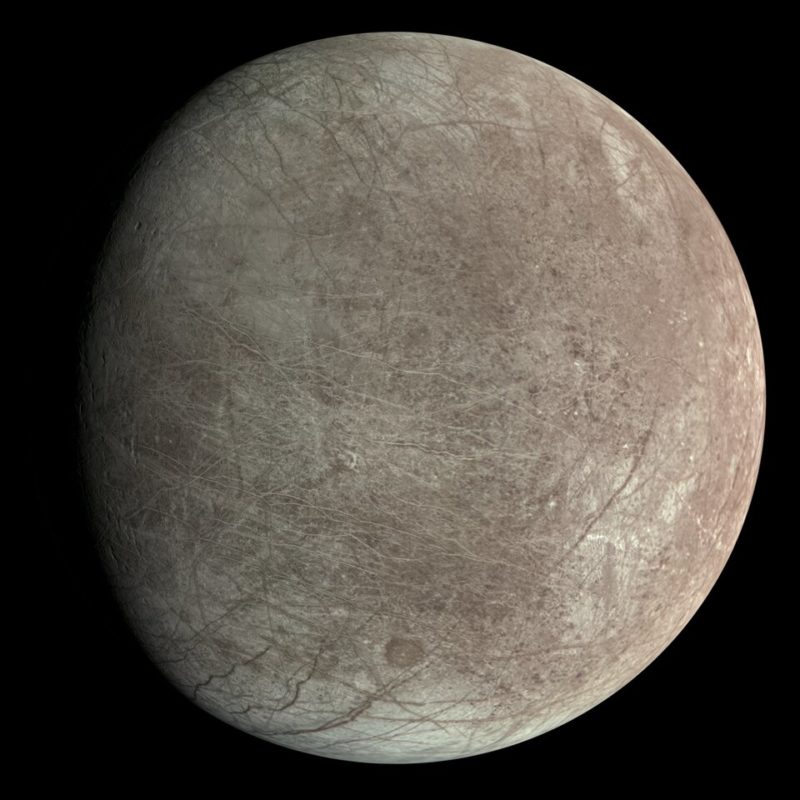
Ever wondered why a frozen moon orbiting the largest planet in our solar system carries the name of a woman from ancient Greek stories? The moon Europa got its name from a Phoenician princess in Greek mythology, a beautiful noblewoman whom Zeus, king of the gods, fell for and abducted while disguised as a white bull. The name was suggested by the astronomer Johannes Kepler and later published by Simon Marius, who claimed to have spotted the moon around the same time as Galileo Galilei in early 1610. What follows is the tangled, oddly human story behind how this icy world earned its mythological title.
Where Did the Name Europa Come From?
The name reaches back thousands of years, long before anyone pointed a telescope at Jupiter.
Greek Mythological Roots
In the old tales, Europa was no minor character. She was royalty, and her story became one of the more famous abduction myths in Greek mythology. The name itself is thought to mean something like “broad-face” or “wide-eyed,” though scholars still argue over the exact translation and whether it carries Phoenician roots.
The Phoenician Princess
Europa was the daughter of a Phoenician king, which places her origin in what we’d now call the eastern Mediterranean. Her family lineage matters here. Her brother Cadmus went searching for her and, according to legend, ended up founding the city of Thebes. So the myth wasn’t just a romance. It was woven into the founding stories of whole civilizations.
Connection to Zeus
Here’s where the drama kicks in. Zeus spotted Europa gathering flowers near the shore and, being Zeus, decided he had to have her. He transformed into a gentle white bull, coaxed her onto his back, then swam off to Crete. There she bore three sons, including King Minos, who ties her forever to Cretan civilization. The Roman equivalent of Zeus is Jupiter, and that connection is exactly why her name landed on a moon orbiting the planet Jupiter.

Who Discovered Europa and When?
Galileo Galilei, 1610
In January 1610, Galileo aimed his crude telescope at Jupiter and noticed four tiny points of light shifting position night after night. He’d found the four largest moons of the giant planet. He announced the discovery in his famous pamphlet, Sidereus Nuncius or “The Starry Messenger”, which shook up astronomy overnight.
The Galilean Moons
Those four worlds, Io, Europa, Ganymede, and Callisto, are collectively known as the Galilean satellites. Europa is the smallest of the bunch, yet arguably the most fascinating, thanks to the subsurface ocean scientists suspect lies beneath its icy crust.
Rivalry with Simon Marius
Galileo didn’t call it Europa, though. He preferred a numbering system, labeling it “Jupiter II.” He also tried naming the moons the “Medicean Stars” to flatter his wealthy patrons. Meanwhile, a German astronomer named Simon Marius claimed he’d observed the same moons independently, sparking a bitter priority dispute that lasted for years.
Who Actually Named Europa?
Simon Marius’s Contribution
Marius published the mythological names we still use today. In his own writing, he explained the reasoning behind naming each of the Galilean moons after figures romantically tied to Jupiter. While NASA credits Marius with the naming, the idea wasn’t entirely his own.
Johannes Kepler’s Suggestion
The actual inspiration came from Johannes Kepler, the brilliant mathematician who suggested naming the moons after the lovers of Zeus. Marius took the suggestion and ran with it. Fair enough, since Kepler wasn’t the one doing the observing.
Delayed Adoption of the Name
Oddly enough, these names didn’t stick right away. For centuries, astronomers largely used Galileo’s Roman numeral system. The mythological names weren’t widely adopted until the 19th and 20th centuries, a delay of well over two hundred years. Talk about slow-moving bureaucracy.
How Are Jupiter’s Moons Named?
The Lovers of Zeus Theme
The naming logic follows a clear theme. Because Jupiter is the Roman king of gods, his moons carry names of characters associated with Zeus, mostly his lovers and companions. Europa fits perfectly, being one of his most famous romantic conquests.
International Astronomical Union Rules
Today, the naming of every planetary satellite falls under the authority of the International Astronomical Union, or IAU. This body sets the official conventions, and for Jupiter, discoverers propose names drawn from Zeus’s extensive circle of lovers and descendants.
Here’s how the four Galilean moons stack up:
| Moon | Discovery Order | Mythological Tie to Zeus |
|---|---|---|
| Io | Jupiter I | A priestess loved by Zeus |
| Europa | Jupiter II | A princess abducted by Zeus |
| Ganymede | Jupiter III | A youth carried off by Zeus |
| Callisto | Jupiter IV | A nymph loved by Zeus |
Naming the Later Discoveries
As telescopes improved, dozens more Jovian satellites turned up. The IAU stuck with the theme, drawing on the following pool of characters:
- Lovers and consorts of Zeus
- Descendants and children of Zeus
- Figures from the broader Greek and Roman mythological family tree
Why Was the Naming Convention Chosen for Jupiter?
Frankly, it made poetic sense. The planet already bore the name of the king of the gods, so surrounding him with his mythological entourage felt natural. There’s a certain elegance in having Jupiter, the massive planet, encircled by figures who were drawn into his orbit in the old stories. The metrics of astronomy meet the drama of mythology, and the result sticks in the memory far better than “Jupiter II” ever could.
How the Name Fits Europa’s Character Today
There’s a quiet irony worth noting. The mythical Europa was carried across the sea by Zeus, and the icy moon Europa is now believed to hide a vast, salty ocean beneath its frozen surface. Water, in both cases. Missions like the Europa Clipper spacecraft are heading there to study that subsurface ocean, hunting for conditions that might support extraterrestrial life. A princess associated with water, orbiting a planet named for her abductor, hiding an ocean of her own. You couldn’t script it better.
FAQ
Is the moon Europa named after the continent Europe?
Not directly. Both names trace back to the same mythological figure, though the continent and the moon acquired their names through separate historical paths.
Did Galileo name Europa?
No. Galileo discovered it but called it “Jupiter II.” Simon Marius published the name Europa, based on Kepler’s suggestion.
What does the name Europa mean?
It’s often translated as “broad-face” or “wide-eyed,” with possible Phoenician linguistic roots debated among scholars.
Conclusion
So the frozen world we now watch so closely owes its name to a chain of curious minds, from Kepler’s clever suggestion to Marius’s stubborn publishing, all rooted in a myth about a Phoenician princess and a shape-shifting god. It took centuries for the name to catch on, but it fits beautifully. As we send spacecraft to explore this icy moon and its hidden ocean, Europa keeps her ancient story alive, quietly circling Jupiter the way she once crossed the sea.
Would you like to receive similar articles by email?

Paul Tomaszewski
Paul Tomaszewski is a science & tech writer as well as a programmer and entrepreneur. He is the founder and editor-in-chief of CosmoBC. He has a degree in computer science from John Abbott College, a bachelor's degree in technology from the Memorial University of Newfoundland, and completed some business and economics classes at Concordia University in Montreal. While in college he was the vice-president of the Astronomy Club. In his spare time he is an amateur astronomer and enjoys reading or watching science-fiction. You can follow him on LinkedIn and Twitter.


You May Also Like

Corvus Constellation Guide
Why Is Venus the Hottest Planet?