How Did the Earth Get Its Name?
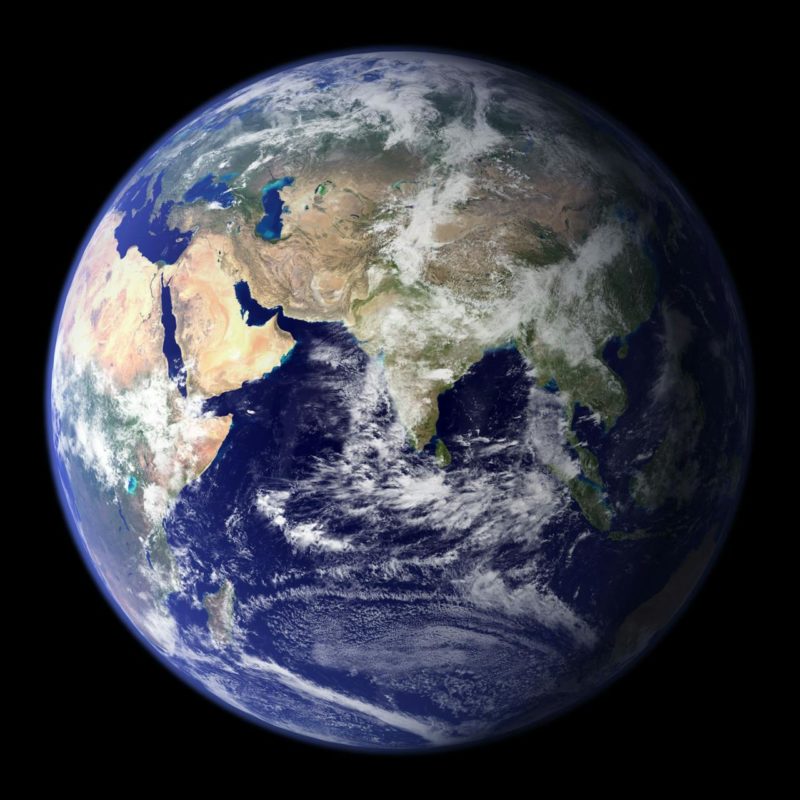
Peering into the origins of how earth got its name leads to a rich linguistic and cultural history. The word “Earth” comes from Old English and Germanic origins, meaning ground or soil. Contrast that with other planets named after Roman deities, Earth’s name shows a more immediate connection to the ground we walk on.
Learning about the history of Earth’s name provides a lens through which to view how humanity has related to Earth over the course of history.
What Is the Etymology of Earth?
Etymology is the study of where words come from and how their definitions have evolved over time. This all contributes to our understanding of the name “Earth,” giving us a glimpse into its historical roots and its importance today.
Origin in Old English
In Old English, “Earth” was referred to as “eorþe” or “ertha,” evoking the spirit of land and soil. Our early civilizations were intimately tied to the earth. This bond was essential for their agriculture and their very survival.
Looking at the evolution of “eorþe” into our modern “Earth” demonstrates the process of change while still keeping its original meaning intact.
The Proto-Germanic Influence
The word “Earth” has etymological roots in the Proto-Germanic word “erda,” which became dominant in several Germanic languages. You can catch a glimpse of this Proto-Germanic influence in words for Earth around the world. For instance, German employs “Erde” and Dutch “aarde,” emphasizing their mutual language background.
Connection to Indo-European Roots
The Indo-European root “er” indicates a much deeper historical relationship, connecting the word “Earth” to a wide variety of languages in the Indo-European family. This root is found in cognate or related terms in many other languages.
How did we come to call our planet Earth?
From the Romans to the Bhils to the Chinese, across ancient cultures, the Earth was known by different names, each name filled with significance. In fact, the Greeks called it Gaia, representing the maternal aspects of the Earth. In much the same way, the Romans used the term Terra to describe their understanding of the physical manifestation of the planet, meaning “land” or “soil.
Egyptian and Mesopotamian creation myths raise the Earth up as the main character. It’s frequently referred to as the mother of all life.
Mythological figures such as Gaia and Terra greatly influenced the process of naming Earth. Likening Earth to goddesses emphasizes its life-giving powers across different mythologies.
Historical Context of Earth’s Naming
Early Civilizations Naming Practices
Civilizations such as the Babylonians and Egyptians were critical in laying the groundwork for our current naming conventions on Earth. The Babylonians had a special cosmological viewpoint influenced by everything around them. Instead, they envisioned the Earth as a flat disc, suspended over endless waters.
In Egyptian mythology, the Egyptians considered Earth to be represented by the god Geb. That unique perspective is what makes it so important to their own cultural storylines. These civilizations poured Earth into their myths and legends, showing its importance in their understanding of the world.
Unlike any other planet, Earth uniquely lacks a name derived from Greek or Roman mythology, further emphasizing the special cultural significance its name holds.
Role of Literature and Culture
At least as early as Milton, literature has depicted Earth as an active character, often as an aggressor. Waves of cultural movements have changed attitudes creating a deeper understanding of humanity’s relationship with Earth.
Art and literature bring this dynamic to life. Instead, they depict Earth, not just as earth in the sense of land or soil, as the etymological root of the word “terra” suggests, but as something central to human identity.
This never-ending depiction stresses the strong bond between humanity and our planet, Earth.
Should Earth Be Capitalized?
The capitalization of Earth in English essentially comes down to grammar. Proper nouns, which we usually denote with a capital letter, include common nouns like Earth when they refer to home. This is in accordance with the common proper noun rule, where all proper nouns, including names of celestial bodies, are capitalized.
The rule according to the Associated Press style guide is that you always capitalize “Earth” when referring to the planet. In a parallel vein, the NASA style guide states that “the capitalization of Earth and other planets is appropriate when referring to them in a scientific context.
Rules for Capitalizing Earth in English
- Capitalize “Earth” when using it as the proper noun for our planet as a celestial body.
- Use lowercase “earth” when referring to soil or ground.
Examples of proper usage include: “Earth is the third planet from the Sun,” and “The earth beneath our feet was rich and fertile.
Usage in Scientific Writing
In scientific literature, consistency in terminology is of the utmost importance. “Earth” is capitalized here to differentiate it in the non-astrophysical context. This is not consistent with general usage, where lowercase is the rule.
Conclusion
Figuring out how Earth got its name takes you down a rabbit hole of history, language, and culture. The name “Earth,” in all of its wondrous multiplicity, draws us back to those ancient roots and that common human experience. Whether it is in English or other languages, the differences serve as a reminder of the cultural diversity that makes our planet so fascinating.
Frequently Asked Questions
How did the Earth get its name?
Earth gets its name from the Old English and Germanic words for “ground.” It is one of the few planets not named after a Greek or Roman god.
What is the etymology of the word “Earth”?
The name “Earth” comes down to us from the Old English word “eorþe” and Germanic “erde,” which both mean “ground” or “soil.
Why isn’t Earth named after a god?
Earth wasn’t named by ancient astronomers. Its name comes from the soil, an homage to its importance to humanity.
Is “Earth” always capitalized?
Earth is capitalized when referring to the planet. When used as a synonym for soil or ground, it is in lowercase.
How does Earth’s name reflect human experience?
The name “Earth” reflects the planet’s significance as our home and provider of nourishment, with origins in deep linguistics.
Would you like to receive similar articles by email?

Paul Tomaszewski
Paul Tomaszewski is a science & tech writer as well as a programmer and entrepreneur. He is the founder and editor-in-chief of CosmoBC. He has a degree in computer science from John Abbott College, a bachelor's degree in technology from the Memorial University of Newfoundland, and completed some business and economics classes at Concordia University in Montreal. While in college he was the vice-president of the Astronomy Club. In his spare time he is an amateur astronomer and enjoys reading or watching science-fiction. You can follow him on LinkedIn and Twitter.


You May Also Like
Perseid Meteor Shower Viewing Tips
October Camelopardalid Meteor Shower Guide