How Did Pluto’s Moon Charon Get Its Name
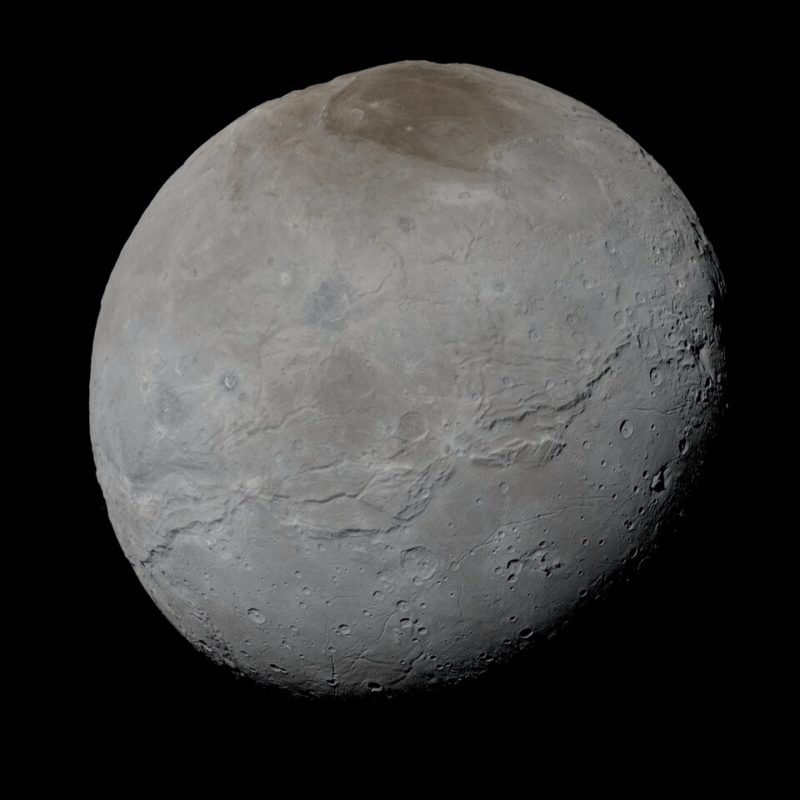
Charon got its name because James W. Christy, the astronomer who spotted it in 1978, wanted to honor his wife Charlene (nicknamed “Char”) and needed the result to survive review by the International Astronomical Union. Adding the “-on” suffix familiar from physics terms like electron and proton gave him “Charon,” which, by lucky accident, matched the Greek ferryman who carried the dead across the river Styx into the realm of Pluto.
Personal sentiment and classical mythology landed in the same word. That double justification is exactly why the name stuck.
Who Named Charon, and Why?
James Christy, 1978
The story begins with slightly imperfect photographic plates. Working at the U.S. Naval Observatory station in Flagstaff, Arizona, Christy was measuring Pluto’s position on images taken with the 1.55-meter (Kaj Strand Astrometric Reflector) astrometric reflector when he noticed something irritating: a bulge on one side of the dwarf planet, appearing and disappearing on a schedule. Bad seeing, most people would have shrugged. He didn’t. The archival account from Lowell Observatory of how that elongation was interpreted makes the point well; the smudge repeated with a 6.4-day rhythm, which is a moon, not a flaw in the emulsion.
Colleague Robert S. Harrington ran the orbit calculations, and the announcement went out on July 7, 1978. NASA’s retrospective on the discovery of Pluto’s moon Charon lays out the sequence in more detail than most textbooks bother with.
Charlene, the “Char-“
Christy had been sitting on the name for weeks. He wanted “Charlene” in there somehow, and his wife’s nickname gave him “Char.” Then came the suffix. Physics vocabulary supplied it. As the fortieth-anniversary feature from Sky at Night Magazine recounts, he checked a dictionary afterward, half expecting nothing, and found Kharon staring back at him.
Kharon, the ferryman
The ferryman collected an obol from the dead and rowed them across the Styx. Pluto, ruler of that underworld, already carried the theme. So the moon that never leaves Pluto’s side, locked face to face with it forever, became the boatman. Britannica’s entry on Charon in astronomy treats this mythological fit as the official justification, and the IAU accepted it on those grounds.
How the Underworld Theme Shaped the Choice
Pluto, god of the dead
Naming conventions in the outer solar system are not free-for-alls. Once Pluto anchored the system in Roman and Greek chthonic myth, everything downstream had to answer to it.
Styx crossing logic
- Charon, the ferryman, orbiting the god of the dead at roughly 19,640 km (NASA)
- Nix, goddess of darkness and mother of Charon in some traditions
- Hydra, the many-headed serpent guarding the underworld waters
- Kerberos and Styx, the hound and the river, added after the Hubble Space Telescope found them
Later moon names
The pattern held for decades, and the USGS Gazetteer of Planetary Nomenclature for the Pluto system remains the working record of what’s official and what isn’t.
When Did the Name Become Official?
Provisional label S/1978 P1
Before approval, the moon carried the flat designation S/1978 P1. Satellite, year, parent body, sequence. No poetry in it.
IAU approval, 1985
Christy’s suggestion sat in committee for years while astronomers debated whether Pluto and Charon even qualified as a planet-satellite pair. Formal acceptance was given on January 1986, right after the 1985 General Assembly discussion.
How Do You Pronounce Charon?
“SHAR-on” versus “KAIR-on”
Two camps, both defensible.
| Pronunciation | Reasoning | Who uses it |
|---|---|---|
| SHAR-on | Derived from Charlene, “Char” | Christy, most planetary scientists in the U.S. |
| KAIR-on | Classical Greek Kharon, hard K | Classicists, many European astronomers |
Christy’s preference
He said “SHAR-on,” obviously. It was his wife’s name.
What astronomers use now
Mission teams mostly follow the discoverer. NASA’s planetary overview of Charon documents both the mythological and personal reasoning without picking a winner, which feels about right.
What the Naming Story Reveals About Discovery
Personal names in science
Frankly, I find the whole episode more revealing about people than about the Kuiper Belt. The biographical record of Christy’s career at the Naval Observatory reads like standard astrometry work until one blurred image turns into a wife’s nickname orbiting a dwarf planet forever.
Elongated photographic plates
Discovery here wasn’t a moment of revelation. It was a man refusing to discard data that looked wrong.
Moon or double system
Charon is about 1,212 km (NASA) across against Pluto’s 2,377 km (NASA), and their barycenter sits outside Pluto’s surface. That’s a double dwarf planet system by any honest reading, tidally locked, one face to one face.
FAQ
Did Christy name it after his wife or the myth?
Both, deliberately. He built the name from “Char” and then found the myth fit.
Is Charon a planet?
No. It orbits Pluto, though the system behaves like a binary.
Conclusion
A blurred image, a nickname, a suffix borrowed from particle physics, and a ferryman. Science rarely gets an origin story that tidy.
Would you like to receive similar articles by email?

Paul Tomaszewski
Paul Tomaszewski is a science & tech writer as well as a programmer and entrepreneur. He is the founder and editor-in-chief of CosmoBC. He has a degree in computer science from John Abbott College, a bachelor's degree in technology from the Memorial University of Newfoundland, and completed some business and economics classes at Concordia University in Montreal. While in college he was the vice-president of the Astronomy Club. In his spare time he is an amateur astronomer and enjoys reading or watching science-fiction. You can follow him on LinkedIn and Twitter.


You May Also Like

September Lyncid Meteor Shower Guide

How Did Dwarf Planet Quaoar Get Its Name