How Did Dwarf Planet Ceres Get Its Name
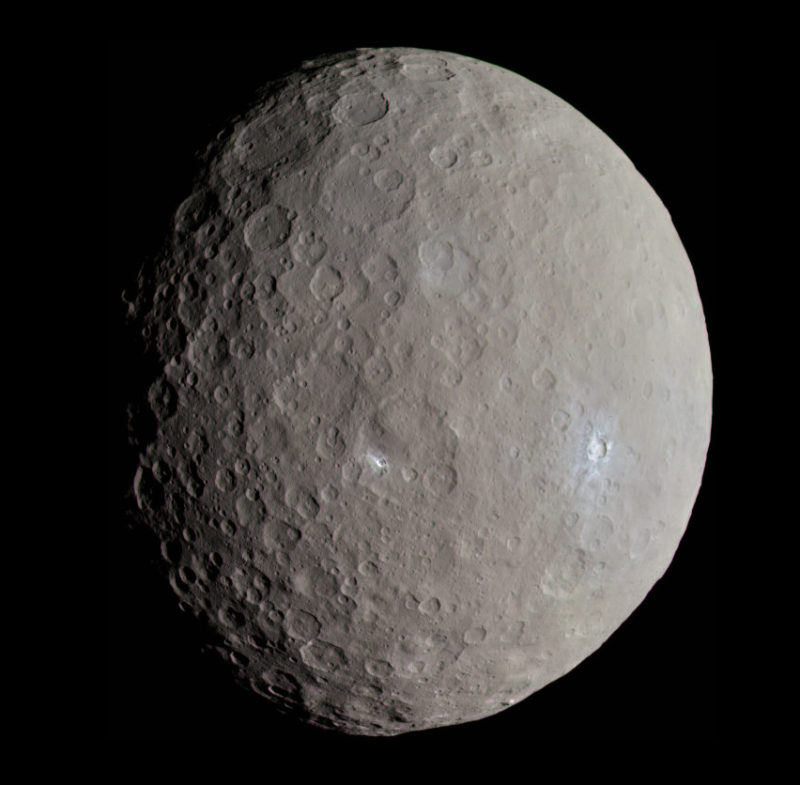
Ceres, the largest object in the asteroid belt between Mars and Jupiter, received its name from Roman mythology. Named after the Roman goddess of agriculture, Ceres embodies the creative, fruitful side of husbandry and the fertility that accompanies it.
This dwarf planet was discovered by Italian astronomer Giuseppe Piazzi. He first observed Ceres on January 1, 1801, while searching for a predicted planet between Mars and Jupiter. He named it after the Roman goddess of agriculture. Opting for a mythological name also carries on the long-established practice of naming celestial bodies after gods and goddesses.
The discovery of Ceres marked the beginning of the study of the asteroid belt, a region filled with rocky objects orbiting the Sun between Mars and Jupiter.
This historical context deepens our understanding of Ceres beyond its astronomical importance.
Origin of Ceres’ Name
Historical Context of Naming
In the early 19th century, astronomers were bound by tradition to name newly discovered celestial bodies using established conventions. Although they were not required to, they frequently chose names from myth, demonstrating a longstanding tradition of connecting celestial discoveries to human culture and history.
Italian astronomer Giuseppe Piazzi discovered Ceres in 1801. He picked the name in tribute to the Roman goddess of agriculture and fertility. The decision was largely based on Ceres’ mythological connection to food and grain.
Piazzi originally proposed the name “Ceres Ferdinandea” in honor of King Ferdinand III of Sicily, but the royal portion of the name was eventually dropped outside Italy.
Piazzi’s choice established a precedent for naming other objects in the newly discovered asteroid belt, favoring mythological themes. Many asteroids discovered later in the 19th century also received names from classical mythology, continuing the tradition Piazzi helped establish.
Etymology and Pronunciation
The name “Ceres” has its origin in Latin. It etymologically relates to Latin words like “cerealis” and “cereus,” stressing the concepts of cultivation and agriculture, one of the goddess’s primary realms.
The name “Ceres” is pronounced “SEER-eez” in American English, but again this varies by culture and is a reflection of rich cultural and linguistic heritage. In classical Latin pronunciation, the name would have sounded closer to “KEH-res.”
Mythological Background
Ceres in Roman Mythology
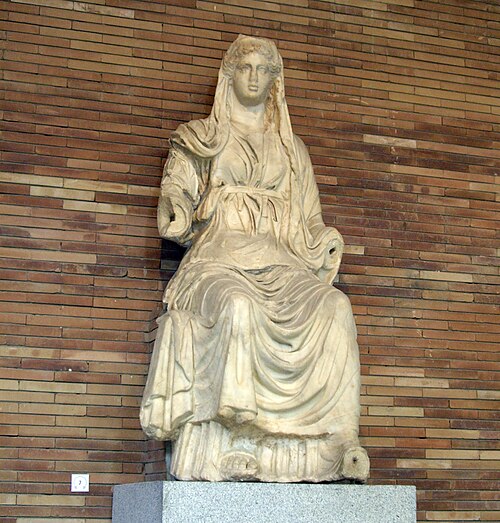
Ceres loomed large as one of the principal deities of Roman mythology, worshipped as the goddess of grain and agriculture. Her influence went far beyond the fields, representing the primary, nurturing traits associated with women and motherhood.
She acted as a mediator between the gods and the everyday plebeians. Many myths emphasized her power, especially the story of her search for her daughter Proserpina, which was used to explain the changing of the seasons, symbolizing cycles of growth, loss, and renewal.
Greek Counterpart of Ceres
Ceres’ Greek equivalent, Demeter, had similar qualities, both goddesses representing fertility and the harvest. Roman adaptations added unique cultural features to the goddess Ceres. They underscored her essential role in enforcing the law, preserving public order, and ensuring the safety of the citizenry.
Conclusion
Dwarf planet Ceres has a name deep in mythology, honoring its place in Roman society. This choice reflected the spirit of discovery during the 19th century when astronomers sought names with rich stories for celestial bodies. The name Ceres links astronomy with human history and culture, serving as a reminder of where we all come from and our innate curiosity. To discover more cosmic content, read our other celestial pieces and unlock the mysteries of the universe.
Frequently Asked Questions
How did Ceres get its name?
Ceres was named after the Roman goddess of agriculture and grain. The name perfectly describes its nurturing and life-sustaining character.
What is the mythological background of Ceres?
In Roman mythology, Ceres is the goddess of agriculture, the harvest, and fertility. She is the Roman equivalent to the Greek goddess Demeter.
What attributes are associated with Ceres?
Ceres is commonly shown holding a scepter, a basket of flowers or fruits, and a garland of wheat. These represent her as a goddess of fertility and abundance.
Who discovered Ceres, and when?
Dwarf planet Ceres was discovered by Italian astronomer Giuseppe Piazzi on January 1, 1801. It was the first asteroid discovered.
What is the iconography related to Ceres?
Ceres is usually depicted with her attributes of harvest such as sheaves of wheat. These symbols represent her position as a goddess of agriculture and fertility.
Would you like to receive similar articles by email?

Paul Tomaszewski
Paul Tomaszewski is a science & tech writer as well as a programmer and entrepreneur. He is the founder and editor-in-chief of CosmoBC. He has a degree in computer science from John Abbott College, a bachelor's degree in technology from the Memorial University of Newfoundland, and completed some business and economics classes at Concordia University in Montreal. While in college he was the vice-president of the Astronomy Club. In his spare time he is an amateur astronomer and enjoys reading or watching science-fiction. You can follow him on LinkedIn and Twitter.


You May Also Like
What Is the Council of Giants?

704 Interamnia: A Giant Asteroid