How Did the Asteroids Get Their Names
Asteroids don’t earn names through fame, size, or a cosmic popularity contest. An asteroid’s discoverer can suggest a name after its orbit is secure and it receives a permanent number; the International Astronomical Union (IAU) reviews the proposal before it becomes official. Until then, astronomers track it by a provisional designation, a practical code rather than a proper name.
How does an asteroid receive an official name?
The naming process unfolds in stages. A new sighting first has to be linked to repeated observations, then its path around the Sun must be established well enough for astronomers to identify it again. The name comes later.
Discovery and provisional designation
When an object is newly discovered, the Minor Planet Center (MPC), which collects and circulates observations of asteroids and comets, assigns it a provisional designation. This code usually includes the year, a letter marking the half-month of discovery, and further letters or numbers that distinguish it from other finds.
That first designation is useful, but it isn’t proof that the object has been fully tracked. More observations help astronomers calculate its orbit and rule out mistaken or duplicate sightings. Even a small object glimpsed through a telescope needs a dependable trail before it can be placed in the catalogues.
Orbit confirmation and numbering
Once enough observations establish the asteroid’s orbit, the MPC assigns a permanent number. Numbering follows the order in which objects’ orbits are confirmed, not necessarily the order in which they were first spotted. A permanent number identifies the body in astronomical records; it does not mean that it already has an official name.
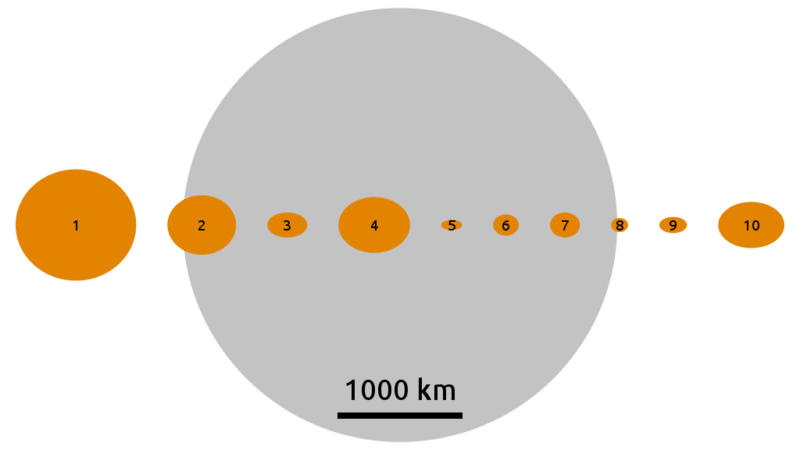
Ceres, first recognized in 1801, is numbered 1 Ceres. It is also classified as a dwarf planet, a separate distinction from its name and number. Many numbered asteroids remain unnamed.
Proposal and IAU approval
After numbering, the discoverer may submit a name with an explanation of its significance. The IAU’s Working Group for Small Body Nomenclature (WGSBN) reviews proposals and publishes approved names in its bulletins. The working group inherited the naming role of the earlier Committee on Small Body Nomenclature, as the number of discoveries made centralized review increasingly important.
Who can propose an asteroid name?
Discoverer’s naming window
The discoverer has the first opportunity to propose a name, but not an unlimited one. The discoverer’s naming window lasts 10 years after the object receives its permanent number. The proposal needs a short rationale, so a name can’t simply be tossed into the solar system because it sounds good.
This privilege is tied to the credited discovery, not to an auction, a popularity vote, or the size of the asteroid. Someone may be honored by an asteroid name without the object being especially large or famous.
IAU review
The IAU review checks whether a proposed name follows the rules and can be distinguished from existing names. Approval is not automatic. If a proposal is unsuitable or confusing, it may be rejected or require revision before it appears in the official record.
What rules must proposed names follow?
Length and pronunciation
Names should be pronounceable, non-offensive, and no longer than 16 characters. The rules favor names that can be used consistently across international astronomical records, where an obscure spelling or a near-match with another object can cause trouble.
Restrictions and conflicts
Commercial names are not accepted, and a proposed name must not duplicate or closely resemble one already in use. Names associated primarily with political or military activity face a 100-year waiting period after the person’s death or the event. These limits are less fussy than they may sound: one reliable naming convention keeps scientific catalogues readable across borders and generations.
What do asteroid names usually honor?
Early discoveries drew heavily on Greek and Roman mythology. Ceres, Pallas, Juno, Vesta, and Hygiea, among the first asteroids found, carry classical names. As discoveries multiplied, the old mythological well ran dry, and naming widened to include people, places, and cultural references.
Today, names may honor scientists, observers, writers, musicians, or geographical features, among other subjects. The asteroid belt between Mars and Jupiter also contains names reflecting the varied interests and histories of the discoverers. NASA has noted the occasional offbeat choice, including Mr. Spock, a name inspired not by the Star Trek character but by the discoverer’s cat. A name is a tribute or a small piece of history, not a ranking of celestial importance.
How do provisional designations and numbers differ from names?
A provisional designation identifies an object while its observations and orbit are being tracked. A permanent number marks an asteroid whose orbit is sufficiently established for reliable identification. An official name is a separate, approved label that may be added after numbering.
So an asteroid can have a provisional designation but no permanent number, or a permanent number but no name. The number and the verified orbit do the essential work in science; the proper name makes the record easier to remember. Both matter, in different ways.
How did asteroid naming change over time?
In the 19th century, astronomers began with names drawn largely from classical mythology. As telescopes and observing programs revealed more objects, naming became less uniform. Discoveries and records multiplied, and informal practices could create duplicate names or confusion about which object was meant.
The modern system adds a formal sequence of tracking, numbering, proposal, and review. That can feel bureaucratic, but the alternative is a messy catalogue in which names obscure rather than clarify. The name is the fun part; the number and orbit are what keep the science straight.
FAQ
Can anyone buy the right to name an asteroid?
No. Commercial naming proposals are not accepted. The discoverer has a time-limited opportunity to propose a name, and the IAU reviews it.
Does an asteroid’s size determine its name?
No. There is no rule linking an asteroid’s size to the person or subject it honors. The name reflects an approved proposal, not a measure of status.
Is a provisional designation the asteroid’s official name?
No. It is a temporary tracking code assigned before the object receives a permanent number and, potentially, an approved name.
Conclusion
Asteroid names grew from classical mythology into a carefully managed international system. A discoverer proposes; the IAU reviews; and the object’s designation, number, and approved name each serve a distinct purpose. That distinction may seem fussy, until thousands of celestial bodies need to be tracked without confusion.
Would you like to receive similar articles by email?

Paul Tomaszewski
Paul Tomaszewski is a science & tech writer as well as a programmer and entrepreneur. He is the founder and editor-in-chief of CosmoBC. He has a degree in computer science from John Abbott College, a bachelor's degree in technology from the Memorial University of Newfoundland, and completed some business and economics classes at Concordia University in Montreal. While in college he was the vice-president of the Astronomy Club. In his spare time he is an amateur astronomer and enjoys reading or watching science-fiction. You can follow him on LinkedIn and Twitter.

You May Also Like
Monocerotid Meteor Shower Guide

PPE for Metalworking: Basics You Need To Know