Smart Tips for Getting Better at Rock Climbing
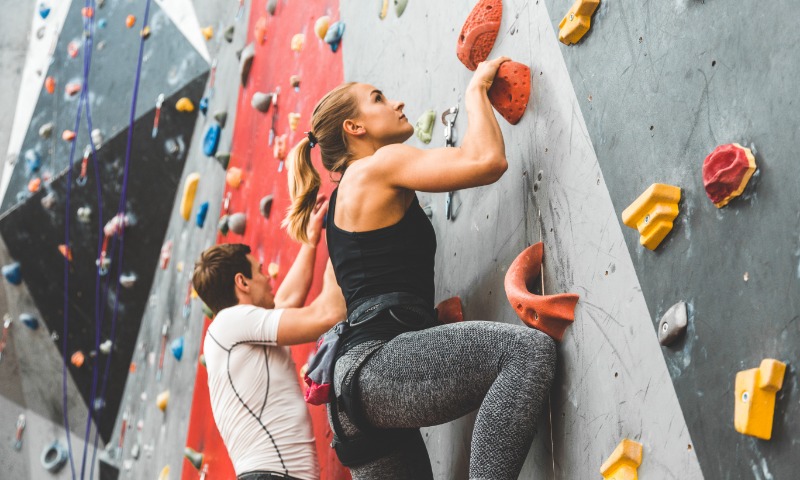
Rock climbing has a funny way of making you feel incredibly capable one minute and completely humbled the next. For example, you might cruise through one route. Then, you may spend the next 20 minutes staring at a single move and wonder how anyone could possibly get their body from here to there.
That challenge is also part of what makes climbing so rewarding. Getting better isn’t only about becoming stronger; it’s about learning how to move more efficiently and building confidence on the wall. In addition, it’s about figuring out how to approach problems. Explore some smart tips for getting better at rock climbing below.
Focus on Technique Before Chasing Higher Grades
It’s tempting to measure your progress entirely by climbing grades. While sending a harder route feels great, constantly pushing your limit doesn’t necessarily give you the best opportunity to improve your technique.
Spend some of your climbing sessions on routes that feel comfortable enough that you can think about how you’re moving. Instead of simply reaching the top, pay attention to your feet, body positioning, grip, and how much energy you’re using.
Repeat Routes With a Purpose
Once you’ve completed a route, don’t immediately move on. Try it again and look for places where you could make the movement smoother or use less energy.
You could challenge yourself to climb without readjusting your feet, for example. Another attempt might focus on keeping your arms relaxed between moves or finding better resting positions.
Get Serious About Your Footwork
Your feet deserve far more attention than you probably give them. Precise foot placement allows you to trust your legs and maintain your balance. As a result, you avoid wasting energy repositioning yourself once you’re already committed to a move.
One simple drill is “silent feet.” Choose an easier route and try to place each foot on its hold without making noise. Avoid scraping the wall or repositioning after you’ve stepped down.
Actually Watch Your Feet
A common mistake is looking away from a foothold before your foot has completely landed. Keep watching until your shoe makes contact, then gradually transfer your weight onto it.
This habit becomes especially valuable as footholds get smaller. Instead of hoping your foot lands in roughly the right spot, you’ll become more deliberate about exactly where you’re placing it.
Remember That Climbing Isn’t All About Arm Strength
If your forearms feel completely destroyed after a couple of routes, you might assume you need to spend more time strengthening your upper body. Strength certainly matters, but efficient climbing requires your entire body to work together.
Your legs can generate much of your upward movement, while your core helps you maintain tension and control your position. Learning why climbing isn’t all about arm strength can help you stop treating every difficult move like a pull-up. Instead, you can start thinking about how your feet, hips, and core can make it easier.
Let Your Legs Do More of the Work
Instead of thinking about pulling yourself toward the next hold, imagine standing up toward it. Push through your foothold and allow your leg to create height. Then, before asking your arms to do more work, make sure your legs have done their part.
Pay attention to your hips, too. Rotating one hip toward the wall can improve your reach and help you maintain a more efficient body position, especially when a hold initially feels just out of reach.
Learn How To Conserve Energy
Better climbers don’t necessarily have unlimited endurance. They’re often simply better at deciding when they need to use their strength and when they can relax.
Keeping your arms straighter when possible is one of the simplest ways to conserve energy because it reduces the amount of time your muscles spend holding you in a bent-arm position. When you find a comfortable position, use it as an opportunity to relax your grip. Furthermore, shake out an arm and prepare for what’s coming next.
Strengthen Your Body Away From the Wall
Climbing itself can be fantastic training, but supplemental workouts can help support your progress. Rather than only doing endless pull-ups, think about the physical demands climbing places on your entire body.
Core exercises can help you maintain body tension, particularly on overhanging routes. Lower-body exercises can also support your ability to push through footholds. In addition, mobility work may make certain positions feel more accessible.
Don’t Rush Into Finger Training
Hangboards can look like the obvious shortcut to stronger fingers, especially when everyone at the climbing gym seems to have an opinion about them. However, newer climbers shouldn’t feel pressured to add advanced finger training immediately.
Give yourself time to develop techniques and climbing-specific conditioning first. If you eventually introduce more demanding training, do it progressively rather than suddenly adding a huge amount of extra stress.
Practice Falling in a Controlled Environment
Fear can influence the way you climb even when you don’t consciously feel scared. For instance, you might hesitate before committing to a move, grip holds harder than necessary, or avoid shifting your weight because you’re worried about coming off the wall.
If you’re climbing in a gym, talk to qualified staff about how to safely practice falls for the type of climbing you’re doing. Becoming more comfortable with falling in an appropriate environment can make it easier to focus on movement. As a result, you can stop constantly thinking about staying attached to the wall.
Give Yourself Enough Recovery Time
More climbing isn’t automatically better climbing. If your fingers, forearms, or shoulders are exhausted every time you start a session, you’re probably not giving yourself the best opportunity to practice high-quality movement.
Rest also gives your body time to adapt to the demands of climbing. Pay attention to lingering soreness and discomfort, and don’t treat every session like it needs to be a maximum-effort workout.
Stay Curious When You Get Stuck
One of the best habits you can develop as a climber is replacing “I’m not strong enough” with “What could I do differently?” Sometimes you really do need more strength. Yet, other times a small change in your feet or hips can completely transform a move.
Experiment with different positions instead of repeating the exact same failed attempt. Climbing is a physical workout, but it’s also a puzzle, and learning to enjoy the problem-solving process makes improving a lot more fun.
Make Consistency Your Biggest Goal
You don’t have to become obsessed with climbing grades or train like you’re preparing for a competition. Regular, intentional practice will take you much further than occasionally pushing yourself until you can barely hold onto the wall.
Show up, pay attention to how you’re moving, and give yourself permission to work on the basics. Progress in rock climbing isn’t always dramatic. However, when better footwork and smarter movement finally click, you’ll suddenly find yourself reaching holds that once seemed impossible.
Would you like to receive similar articles by email?

Dr. Jade Marie Tomaszewski
Dr. Jade Marie Tomaszewski is a pathologist-in-training at McGill University, where she also did her degree in MSc Pathology. She obtained her medical degree (MD) from the University of the Philippines, after completing a BSc in Molecular Biology and Biotechnology. In her (little) spare time, she enjoys spending time with family, curling up with a book and a large mug of tea, and trying out new recipes in the kitchen. You can follow her on LinkedIn and Twitter.

You May Also Like

The Best Methods for Underground Utility Location

Best and Worst Food Items To Bring Camping