Gamma Ursae Minorid Meteor Shower Guide
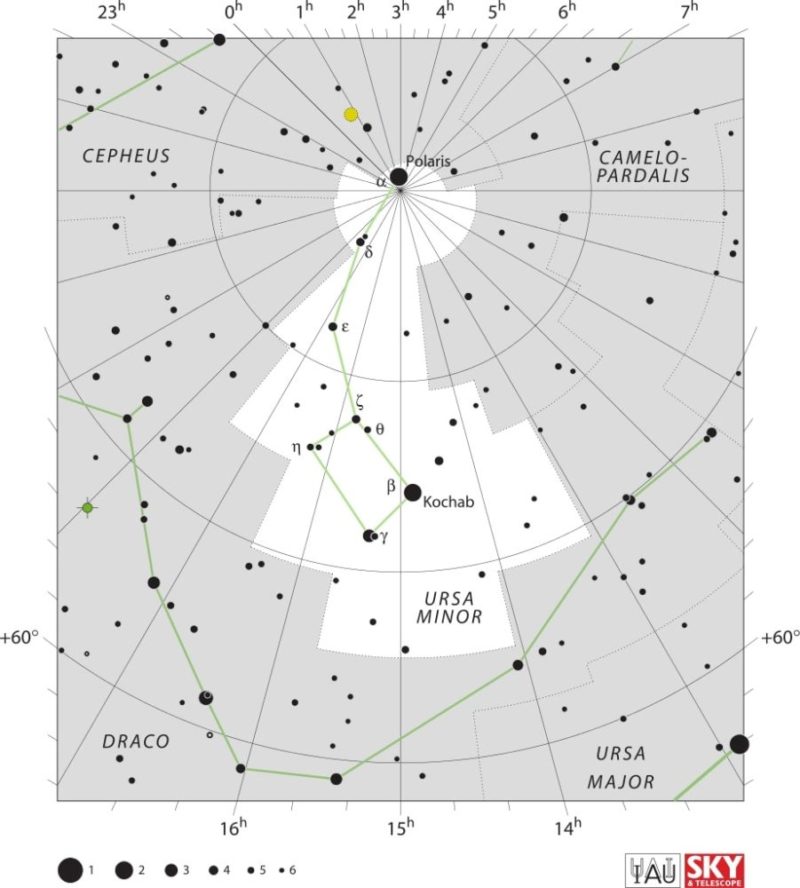
The Gamma Ursae Minorid meteor shower is a minor annual event where meteors appear to come from the constellation Ursa Minor, often called the Little Dipper.
Since most meteors are short-lived and dim, a location away from light pollution improves your chances of seeing them. Peak activity is expected around January 18 each year.
Timing, viewing tips, and what to expect are all detailed ahead, so read on and get ready!
What Are the Gamma Ursae Minorids?
The Gamma Ursae Minorid meteor shower is one of the most overlooked annual events in the night sky. Astronomers are looking forward to exploring its slight but distinctive features. Unlike most well-known meteor showers that deliver showers of fireworks, the gamma Ursae Minorids are quite subtle.
They provide a meager few meteors—only three or so per hour at most. What makes this shower unique is its short-lived activity every winter. When is the Gamma Ursae Minorids? It usually occurs between January 15 and January 22, peaking around January 18.
It is very important to astronomers for the knowledge it gives us about small, older debris streams. This understanding allows us to piece together the story of our solar system’s history.
Their Unique Cosmic Signature
Gamma Ursae Minorid meteors tend to have a gentle, diffused brightness. They travel at modest speeds of 31 km/s and leave nice, long, straight trails across the sky. As the name suggests, most seem to radiate from the constellation of Ursa Minor, or the Little Dipper, in the northern hemisphere.
In part due to the low hourly rate, each meteor is a little gem that seems more precious, particularly viewed from dark, moonless skies.
Tracing Their Parent Comet
Meteor showers begin when the Earth intersects with a cloud of debris left behind by a comet or asteroid. As of 2023, the gamma Ursae Minorids are associated with a still undiscovered parent body.
Our planet passes through this dust left over from the formation of the solar system. These small pieces of debris vaporize in our atmosphere, producing bright streaks.
Finding Their Radiant Point
The radiant point is the spot from which meteors appear to originate. For this shower, it is close to the constellation of Ursa Minor, the Little Dipper.
Best Ways to See Them
The Gamma Ursae Minorid meteor shower captivates stargazers every year with its soft but consistent performance. Experiencing this particular meteor shower at its peak involves understanding the best location, when to be there, and how to plan your astrophotography shot. Here’s what we recommend for the general public to enjoy the darkest night sky possible.
Perfect Night Sky Conditions
Perfect night sky conditions are crucial for a great experience. Clear, dry nights with little or no clouds are ideal. Having calm conditions is important as well, since a little wind can blow in haze or dust.
The Moon’s phase is important—having a new Moon or a Moon that’s still below the horizon will provide the darkest skies. Look at the forecast, both cloud cover and when the moon will rise before you go out. Since even a thin crescent Moon can wash out the faintest meteors, try to plan for the darkest window you can find.
Mark Your Calendar: Peak Times
The peak is on January 18. Don’t forget to allow your eyes time to adapt for about 30 minutes, and ensure you have warm clothing and a red flashlight for optimal astrophotography!
Conclusion
Watching the Gamma Ursae Minorids means seeing a lesser known spectacle unfolding in the January sky. For the average person they will see just a handful of meteors per hour. The leisurely tempo lends itself to relaxing, drinking warm coffee and enjoying the evening with good company.
Stargazing nights provide an opportunity to unplug and step away from technology and hectic work weeks. So step outside this January, find yourself facing north, and enjoy the peace. Have a suggestion or a good tale from your skywatch? We’d love to hear about it—tell us all about it!
Frequently Asked Questions
What is the Gamma Ursae Minorid meteor shower?
The Gamma Ursae Minorids are a very small annual meteor shower that becomes active every January. These meteors are best observed radiating from the radiant point in the constellation Ursa Minor, known as the Little Dipper.
How many meteors can I expect to see during the peak?
At peak activity during this annual meteor shower, expect to see around 3 meteors per hour. As with all faint showers, patience and dark skies are your best friend for visibility.
Do I need special equipment to watch the Gamma Ursae Minorids?
To observe the Gamma Ursae Minorids, which is one of the annual meteor showers, you only need your eyes, a comfortable seat, and a nice, dark sky, as binoculars or telescopes aren’t beneficial for viewing incoming meteors.
Are the Gamma Ursae Minorids dangerous or harmful?
No, the Gamma Ursae Minorids are not dangerous or harmful. Don’t worry, these meteors burn up high in our atmosphere and never reach the ground, making this annual meteor shower quite safe and fun to watch.
See also:
- Previous meteor shower: Quadrantid Meteor Shower
- Next meteor shower: Alpha Centaurid Meteor Shower
Would you like to receive similar articles by email?

Paul Tomaszewski
Paul Tomaszewski is a science & tech writer as well as a programmer and entrepreneur. He is the founder and editor-in-chief of CosmoBC. He has a degree in computer science from John Abbott College, a bachelor's degree in technology from the Memorial University of Newfoundland, and completed some business and economics classes at Concordia University in Montreal. While in college he was the vice-president of the Astronomy Club. In his spare time he is an amateur astronomer and enjoys reading or watching science-fiction. You can follow him on LinkedIn and Twitter.


You May Also Like
NGC 1850: An Intriguing Double Star Cluster
Southern Delta Aquariid Meteor Shower Viewing Tips