Gamma Normid Meteor Shower Guide
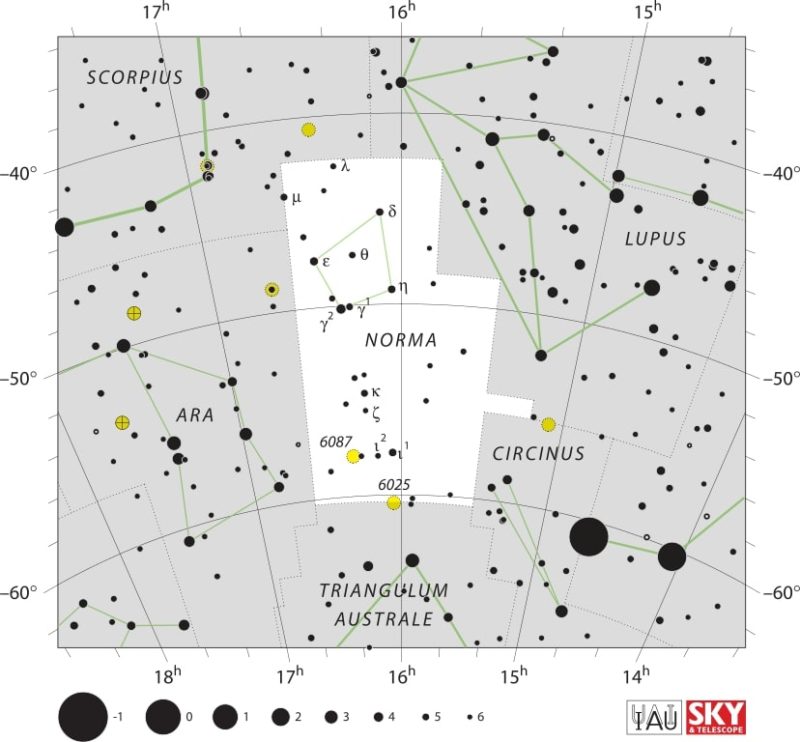
The captivating Gamma Normid meteor shower spectacularly strikes each year, primarily visible from the Southern Hemisphere. Look for high activity by mid-March! It appears in the sky close to the constellation Norma.
In average years, people see maybe half a dozen meteors an hour, but it varies from year to year. The meteors from the gamma Normids are rather faint, so dark, clear skies are extremely beneficial.
Because of this, very few meteors are visible. Yet for the folks down in the southernmost states, the odds are slightly more in your favor, though still underwhelming compared to more prolific showers. Understanding when and where to look can greatly improve your experience!
What Is the Normid Meteor Shower Guide?
The Gamma Normids meteor shower is an under-the-radar, but very interesting, annual celestial event. It begins on February 25 and ends by March 28, with the most vigorous activity peaking around March 14.
Unlike more famous showers, the Gamma Normids fly under the radar, but for those in the Southern Hemisphere, this event brings a quiet charm to the night sky. The meteors seem to come from the direction of the Norma constellation, near the location of the bright star Gamma Normae.
Though the shower’s activity is low-key, it is uniquely rewarding to sky watchers who enjoy understated celestial performances.
Tracing Their Cosmic Origin
Meteor showers usually occur when Earth passes through debris left by a comet or asteroid. For Gamma Normids, the parent body is not well established, which adds to their mystery.
As Earth passes through these dusty streams, the particles burn up high in the atmosphere, producing short flashes of light known as meteors.
Distinct Traits of Normid Meteors
Normids are weak, low brightness meteors. They tend to shoot across the sky at an angle.
Usually, they leave behind long, persistent trails that can extend over a significant portion of the sky.
Their Unique Orbital Path
The orbit of the Gamma Normids takes their radiant to a location in the southern hemisphere, directly in the constellation of Norma. This eccentricity means they are most easily observed from the Southern Hemisphere.
People living north of 30° latitude tend to get cheated, as the radiant is low to the ground or behind the horizon during the activity period.
Understanding Their ZHR
Zenithal hourly rate, or ZHR, indicates how many meteors you could observe if you were in perfect viewing conditions. For Gamma Normids, that’s roughly 6 meteors an hour.
While this is indeed low compared to other showers, for dedicated observers, it is a sight still very much appreciated. ZHR will vary depending on your location and the sky transparency.
Spotting the Gamma Normids
March 14 offers the most promising opportunity to view gamma Normids at their peak brightness.
Find Your Dark Sky Spot
- Search for large, open spaces with a dark and clean horizon.
- Stay away from city lights and glowing street lamps.
- Download dark sky apps or visit websites to discover parks or reserves created specifically for stargazing.
- Local astronomy clubs frequently hold public star parties—these are great places for beginners.
Essential Viewing Gear (Or Not!)
- You may want to bring a blanket or sleeping bag, or a folding recliner for comfort.
- Snacks & warm beverage A warm beverage in the wintertime makes a great morning even better.
- Wear many layers of clothing. It can be really cold at night or in the early morning, even in typically warm areas.
- For meteor watching, the naked eye is best. Binoculars or telescopes not required.
Patience: A Stargazer’s Best Friend
- Remember, meteors fall in bursts, so patience is key.
- Take advantage of breaks to stretch, snack, or simply look around and appreciate the night sky.
- The catch with meteor showers is they’re often unpredictable. It’s just that some nights are a little more hectic than others.
Share Your Celestial Sightings
- Take notes or photos of what you see.
- Share stories and pictures online or with local clubs.
- Stargazing is often better with friends or family.
Conclusion
To best view the Gamma Normid meteor shower, people in the southern hemisphere have quite a treat. These rapid-fire streaks fill the sky with a dazzling display you won’t see every evening. Viewing the gamma normids can ignite a passion for space that lasts.
Take a buddy, head to your local dark site, recline and enjoy the show. No complicated equipment required. So, keep looking up and keep wondering. For more news and advice about other showers, stay tuned.
Frequently Asked Questions
What are the Gamma Normids?
The Gamma Normids are a very weak meteor shower, often overshadowed by more active meteor showers like the Leonids. Their radiant is located in the constellation Norma, which is better observed from the Southern Hemisphere during this annual event.
Can I see the Gamma Normids from the United States?
Unfortunately, the Gamma Normids meteor shower are not well visible from northern places such as the United States, making this particular meteor shower essentially invisible from most of the continental United States.
How many meteors can I expect to see during the Gamma Normids?
When active, the Gamma Normid meteor shower typically showcases 6 meteors per hour at their peak, which is a significant drop compared to more popular annual meteor showers like the Perseids or Geminids.
See also:
- Previous meteor shower: Alpha Centaurid Meteor Shower
- Next meteor shower: Lyrid Meteor Shower
Would you like to receive similar articles by email?

Paul Tomaszewski
Paul Tomaszewski is a science & tech writer as well as a programmer and entrepreneur. He is the founder and editor-in-chief of CosmoBC. He has a degree in computer science from John Abbott College, a bachelor's degree in technology from the Memorial University of Newfoundland, and completed some business and economics classes at Concordia University in Montreal. While in college he was the vice-president of the Astronomy Club. In his spare time he is an amateur astronomer and enjoys reading or watching science-fiction. You can follow him on LinkedIn and Twitter.


You May Also Like

Choosing the Right Material for Medical Device Enclosures

Things To Consider for Landscaping That Fits the Climate