How Technology Is Changing the Future of Motor Vehicle Accident Prevention
Technology is redefining road safety by introducing powerful innovations that aim to reduce both the frequency and severity of car accidents. Modern vehicles are now enhanced with integrated systems that help drivers avoid collisions. These systems also help them respond more effectively to hazards. From emergency intervention features to AI-powered driving aids, these developments are creating safer streets for everyone. One of the most important goals of these advances is motor vehicle accident prevention. For those who have experienced a motor vehicle accident, understanding these advancements highlights the ways technology is working to prevent future incidents.
Safety mandates and industry standards are accelerating the adoption of innovative measures, while real-time vehicle-to-vehicle communication is making roads smarter. AI and machine learning analyze driver behavior and traffic, helping detect risks before accidents occur. As self-driving cars become common, the potential to reduce human error, the main cause of collisions, increases yearly.
Advanced Driver-Assistance Systems (ADAS)
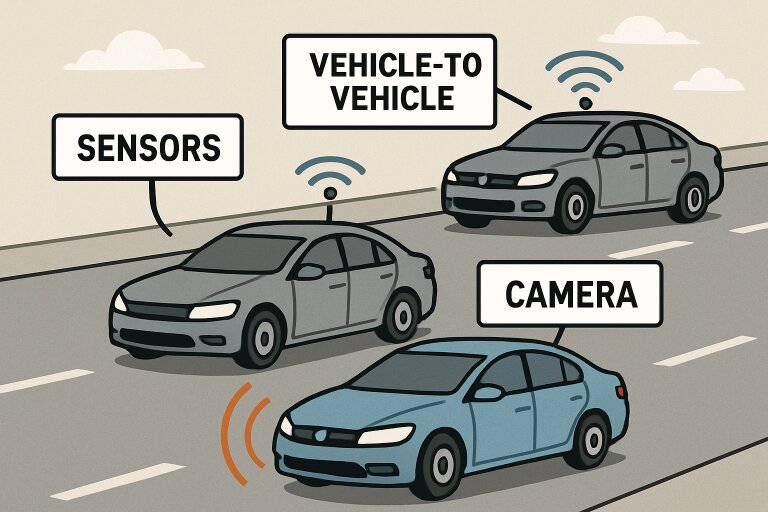
Advanced driver-assistance systems (ADAS) are a cornerstone of recent automotive innovation. Among the most prominent technologies are automatic emergency braking (AEB), adaptive cruise control, and lane-keeping assist. These features work together to identify dangers, such as sudden obstacles, drifting from a lane, or imminent collisions, and help drivers avoid them before they escalate. According to the Insurance Institute for Highway Safety, AEB alone can decrease front-to-rear crashes by more than 40%. This technology leverages networks of sensors, radar, and cameras mounted on vehicles to continuously scan their surroundings. As ADAS becomes increasingly standard in new vehicles, the risk of accident-related injuries and fatalities is expected to decrease.
Artificial Intelligence in Motor Vehicle Accident Prevention
Artificial intelligence is revolutionizing how vehicles anticipate and respond to danger on the road. Machine learning algorithms process data from vehicle systems, weather conditions, driver actions, and even local traffic patterns to identify potential threats. These systems can then issue alerts or even take direct action when risk factors rise. As a result, vehicles and drivers can maneuver safely out of harm’s way. However, AI-driven innovation is not limited to luxury cars; more mainstream brands are adopting predictive safety features that adapt to individual drivers’ habits and behaviors.
Regulatory Mandates and Standards
Government regulations are helping drive the adoption of life-saving vehicle technology. In the United States, for example, the National Highway Traffic Safety Administration (NHTSA) requires that all new passenger cars and light trucks must include advanced emergency braking systems by 2029. These rules are designed to ensure that even the most basic models come equipped with proven safety features. Consequently, roadways become safer on a broad scale. Legal mandates serve to level the playing field for safety innovations, pushing manufacturers to prioritize motor vehicle accident prevention equally across their fleets. Likewise, similar safety initiatives can be found in Europe and Asia, in response to global statistics that highlight human error as the single greatest contributor to serious traffic accidents.
Vehicle-to-Vehicle (V2V) Communication
Vehicle-to-vehicle (V2V) communication is emerging as a transformative solution for motor vehicle accident prevention. By wirelessly sharing data such as vehicle speed, direction, and road position, V2V-equipped cars can anticipate potential collisions and warn drivers to take evasive action before danger is imminent. Studies have shown that V2V technology could prevent 80% of accidents that are not caused by impaired driving or mechanical failure, according to the U.S. Department of Transportation. As this connectivity grows, inter-vehicle communication is expected to play a central role in allowing traffic to flow more safely and efficiently, even in challenging driving environments.
Autonomous Vehicles and Their Impact
Autonomous or self-driving vehicles represent the next great leap forward in motor vehicle accident prevention. These vehicles rely on intricate combinations of sensors, artificial intelligence, machine learning, and V2V communication systems to monitor their surroundings, assess hazards, and react instantaneously—often much faster than a human driver could. Complete automation eliminates common sources of error, such as distracted driving or delayed reaction times, that contribute to millions of collisions each year. Thus, industry experts believe that as autonomous vehicles become more prevalent, the reduction in crashes could be dramatic, potentially transforming the future landscape of road safety.
Challenges and Considerations
Despite the potential, significant challenges stand in the way of widespread adoption. System reliability remains a key hurdle; false positives or missed detections could undermine trust in these technologies. Cybersecurity is another concern, as connected vehicles can be potentially vulnerable to digital attacks that could disrupt system performance or compromise safety. Additionally, road and traffic infrastructure must evolve to support emerging technologies. This enables systems such as V2V and autonomous navigation to operate effectively. Public skepticism, fueled by high-profile accidents and uncertainty about machine decision-making, must also be addressed before mass adoption can take place. Continued collaboration between automakers, regulators, technology developers, and the public is essential for successful and safe implementation.
Conclusion
The rapid evolution of automotive technology is fundamentally changing how society approaches motor vehicle accident prevention. Modern systems make vehicles more responsive, more aware, and vastly safer by reducing opportunities for human error and delivering split-second interventions during emergencies. While challenges remain, ongoing research and regulatory support suggest a future where roads are safer, crashes are far less frequent, and accident prevention is integrated into every journey.
Would you like to receive similar articles by email?

Paul Tomaszewski
Paul Tomaszewski is a science & tech writer as well as a programmer and entrepreneur. He is the founder and editor-in-chief of CosmoBC. He has a degree in computer science from John Abbott College, a bachelor's degree in technology from the Memorial University of Newfoundland, and completed some business and economics classes at Concordia University in Montreal. While in college he was the vice-president of the Astronomy Club. In his spare time he is an amateur astronomer and enjoys reading or watching science-fiction. You can follow him on LinkedIn and Twitter.


You May Also Like
Which Toyota Has the Best Resale Value
4 Pricing Strategies To Try at Your EV Charging Station