Exoplanet Habitability Guide: Key Factors Explained
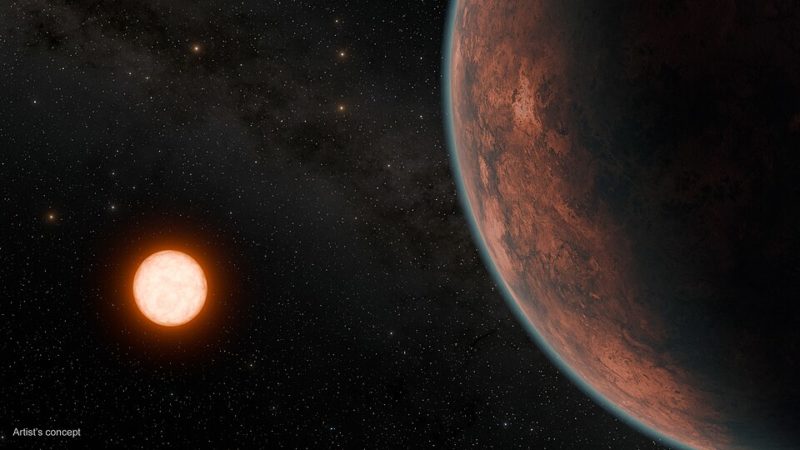
Most people grab the easy answer first and stop at distance from the star. That’s not enough. Planetary habitability for exoplanets is really set by a stack of conditions working together: a star that stays reasonably calm for a very long time, an orbit that does not shove the climate into chaos, enough gravity to keep an atmosphere, enough internal heat to recycle gases and minerals, and access to liquid water for more than a brief geological cameo.
Earth, Mars, and Venus make the point without much drama. One stayed clement. One dried out. One cooked itself. So when astronomers talk about a habitable exoplanet, they are not asking whether a planet sits in the habitable zone and calls it a day. They are asking whether the whole system can keep surface conditions stable across billions of years, which is a nastier and more interesting question.
What sets the best odds for life?
Three things keep showing up, no matter how offbeat the model gets or how much science fiction tries to improvise around it:
- A liquid water window that lasts
- A climate that resists runaway shifts
- A long-lived energy source, usually stellar but sometimes internal
Liquid water window
Liquid water is still the best place to start. It is a universal solvent for the chemistry we understand, and pressure matters as much as temperature. A world can have the right stellar flux and still fail because its atmosphere is too thin, its water is locked as ice, or its surface gets pushed into a steam bath. Even big oceans are not an automatic win. I suspect ocean worlds with no exposed land may struggle to run the same nutrient and carbon cycling that helps Earth’s biosphere avoid stagnation.
Stable climate span
A nice climate for 10 million years is cute. Life, especially complex life forms, probably wants more runway than that. Long-term stability usually means some version of a thermostat, where volcanic outgassing, weathering, cloud feedbacks, and atmospheric chemistry stop the planet from sliding too far toward a snowball state or a Venus-style runaway greenhouse.
Long-lived energy
Energy does not have to mean sunshine alone. Surface life as we imagine it usually leans on starlight. Subsurface organisms could use chemical gradients and internal heat. Still, for the habitable planets people chase in telescope data, a reliable star is the main prize. You want a power source that does not flare like a maniac and does not burn through its main-sequence life too quickly.
Which stars support long-term surface water?
The star sets the stage, and some stars are simply easier to live with than others.
| Star type | Best trait | Main risk |
|---|---|---|
| F-type | Brighter, wider habitable zones | Shorter stable lifespan |
| G-type | Sun-like balance | Moderate UV activity, finite window |
| K-type | Long-lived and often steadier | Still can be active early on |
| M-type | Very common, easy targets for detection | Flares, stellar winds, tidal locking, early desiccation |
Star type
K-dwarfs, the orange dwarfs, increasingly look like the sweet spot. They live far longer than Sun-like stars and are often calmer than M-dwarfs. G-type stars clearly work because we are standing on the evidence. M-dwarfs are trickier. They dominate the galaxy, which makes them irresistible to astrobiology, but their planets often orbit close in, where the stellar environment gets rough.
Radiation levels
Radiation is where the romance starts to crack. X-rays, ultraviolet output, stellar winds, and coronal mass ejections can erode a planetary atmosphere over time. Work on active M-dwarf habitability and more recent studies of stellar magnetism shaping exoplanet environments both point the same way: a close-in rocky exoplanet can be pounded hard enough to lose water and air unless other protections compensate.
Stellar lifespan
Time matters. A star may host liquid water for a while and still fail the bigger test if the stable window is too short. F-type stars raise that concern. M-dwarfs last almost absurdly long, but their violent youth can strip a young world before biology gets much of a foothold. K-dwarfs again look unusually attractive.
How do orbits keep climates stable?
Distance range
The classic habitable zone remains useful, just not magical. NASA’s overview of the habitable zone is still the clean baseline: too close and surface water tends toward loss or runaway heating, too far and it freezes unless greenhouse warming steps in. That said, the habitable zone is a map, not a verdict.
Eccentricity limits
A stretched orbit changes everything. High eccentricity means fierce seasonal forcing, unstable oceans, and in some cases repeated freeze-bake cycles. Giant neighbors matter here. A badly placed Jupiter-class planet can pump eccentricity through resonances and quietly wreck an otherwise promising world.
Tidal effects
A locked planet is not automatically dead. If the atmosphere is thick enough and winds can move heat, the day side and night side may stay civilized. Thin-air worlds are another story. Studies of atmospheric collapse on tidally locked exoplanets show how gases can condense out on the cold side, which is a nasty failure mode and one people gloss over far too often.
Planet size and composition
Rocky vs gas-rich
You generally want a terrestrial planet, not a mini-Neptune wearing a misleading radius. Gas-rich worlds may sit in habitable zones and still lack any workable surface. Radius alone can fool you, so density and mass are essential.
Mass sweet spot
Mass and atmosphere are joined at the hip. Too small, and the planet struggles to hold volatiles or sustain internal heat. Too large, and it may carry a crushing atmosphere or transition into something more like a gas dwarf. A rough sweet spot around Earth-like values, say about 0.8 to 1.5 Earth masses, remains a sensible working range. New size-focused modeling from Stanford is pushing that screening logic further.
Core structure
Core size, mantle composition, and heat flow decide whether a planet can run a dynamo, recycle crust, and keep volcanism alive. That is not trivia. It is infrastructure. A magnetic field helps, although I would not treat it as a hard gate. Even so, evidence for exoplanet magnetism is becoming less hypothetical, with recent observations suggesting a magnetic shield on an exoplanet.
Atmosphere, water, and internal heat
Greenhouse balance
The atmosphere is climate control, radiation filter, and chemical warehouse all at once. Too little greenhouse warming and you drift Mars-ward. Too much, and you get Venus all over again. Nitrogen, carbon dioxide, water vapor, clouds, and pressure broadening all pull on the final temperature.
Water inventory
Water is king, but balance matters. A dry planet fails one way. A world with global oceans several km deep may fail another, especially if high-pressure ice walls off the seafloor and chokes nutrient exchange. Surface water, shallow cycling, and access to bioessential elements are part of the same story.
Tectonic cycles
Internal activity keeps a planet from becoming chemically static. Volcanism replenishes gases. Weathering removes them. The long carbonate-silicate cycle is the big climate governor in modern astrophysics, and research on plate tectonics for Earth-like exoplanets keeps feeding that argument. Plate tectonics may not be the only route, but a dead interior is rarely encouraging.
Broader limits on where life could persist
Planetary habitability also depends on the neighborhood. Crowded stellar systems can destabilize orbits. High-radiation galactic regions may increase sterilizing events. The protoplanetary disk that built the world sets volatile abundance from the start, which means planet formation history never really leaves the room.
There is another wrinkle. Surface Earth-like life is not the only game worth exploring. A habitable moon, a buried ocean under ice, or a chemically rich locked world with strange circulation could host habitats very unlike our lifestyle assumptions. An exo-geoscience view of “euhabitable” planets makes this point nicely. Still, none of that is proof of extraterrestrial life. It only widens the search.
How do scientists rank promising worlds?
Astronomers need triage because the catalog is huge and telescope time is not free.
- The Earth Similarity Index compares bulk traits such as radius, density, and temperature against Earth.
- The Planetary Habitability Index asks broader questions about solvent, energy, chemistry, and substrate.
- The Biological Complexity Index pushes toward whether multicellular organisms might have a chance, not merely microbes.
Comparative work on habitability metrics and models is useful, but these are filters, not judges. A planet can score well and still be awful.
What questions should we ask next?
The next wave is less about finding planets and more about characterizing atmospheres, clouds, and surface conditions. Does the planet show water vapor, carbon dioxide, methane, or free oxygen? Are those gases in chemical disequilibrium? Are we seeing a biosphere, or just photochemistry playing tricks? Telescope innovation is finally pushing those questions from fantasy toward data.
FAQ
Is the habitable zone enough?
No. It is a first cut. A world can sit in the right distance band and still be airless, overheated, frozen, or chemically sterile.
Are M-dwarf planets hopeless?
No, just difficult. Some may keep thick atmospheres or deep oceans, but the stellar radiation problem is real.
Does a magnetic field decide everything?
No. It helps protect the atmosphere from erosion, yet atmospheric thickness, replenishment, and interior activity matter too.
Conclusion
So, what factors determine planetary habitability for exoplanets? Not one factor. Not even close. The best candidates combine a calm, long-lived star, a stable orbit, a rocky body with the right mass, a durable atmosphere, accessible water, and enough internal activity to keep the climate from drifting off a cliff.
That is why habitable exoplanets are so compelling. The search is not just about another Earth. It is about discovering which combinations of physics, chemistry, and time let life results emerge at all.
Would you like to receive similar articles by email?

Paul Tomaszewski
Paul Tomaszewski is a science & tech writer as well as a programmer and entrepreneur. He is the founder and editor-in-chief of CosmoBC. He has a degree in computer science from John Abbott College, a bachelor's degree in technology from the Memorial University of Newfoundland, and completed some business and economics classes at Concordia University in Montreal. While in college he was the vice-president of the Astronomy Club. In his spare time he is an amateur astronomer and enjoys reading or watching science-fiction. You can follow him on LinkedIn and Twitter.


You May Also Like

Health-Friendly Living – Paying Attention to Everyday Habits

Lynx Constellation Guide