5 Pricing Strategies To Try at Your EV Charging Station
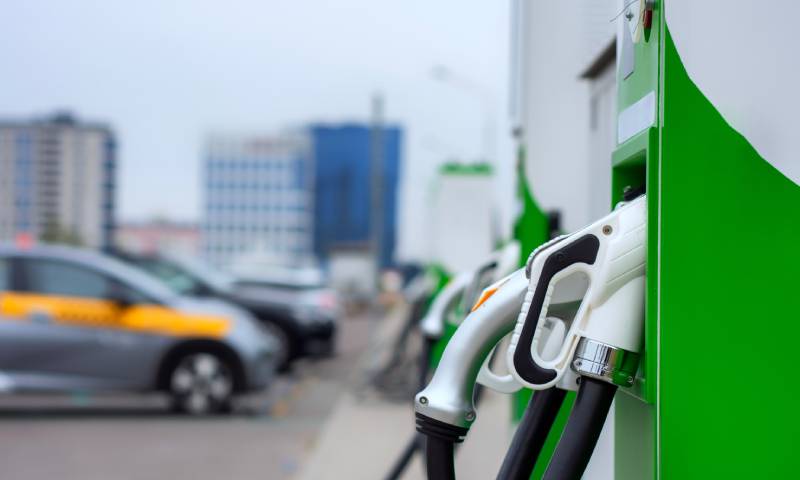
As EV adoption keeps climbing (global EV sales topped 17 million in 2024, according to the International Energy Agency), running a charging station can be a smart business move. However, as more stations pop up, it becomes essential to stand out. An effective way to attract customers and ensure profitability is to get creative with your pricing. Below, we explore four pricing strategies to try at your EV charging station. We also show how they can work for you.
1. Peak vs. Off-Peak Pricing: Leveraging Time and Demand
Electricity demand fluctuates throughout the day, making peak vs. off-peak pricing a practical strategy for EV charging stations. Charge a higher rate during peak hours when usage is at its highest and offer discounted rates during off-peak periods to incentivize drivers to charge during less busy hours.
For example, if your station is busiest from 5 PM to 8 PM, schedule a reduced pricing rate during the early afternoon or late evening. Not only does this help manage electricity demand but also encourages steadier usage throughout the day. Plus, one of the benefits of switching to an electric vehicle is the money it saves on energy costs. Drivers will appreciate the chance to save money by simply adjusting their charging habits.
2. Flat Rate vs. Per kWh Pricing: Finding the Right Fit
Some EV drivers prefer the predictability of flat-rate pricing, knowing exactly what they’ll pay regardless of how much energy their vehicle draws. Others prefer per-kWh pricing, which ensures they only pay for what they actually consume.
To strike a balance, consider offering both options. For instance, you could charge $8 for a flat session fee, or allow customers to opt for a per-kWh rate like $0.30 per kWh. By giving drivers a choice, you cater to their preferences while maintaining your revenue goals. These figures are illustrative—real U.S. public rates average about $0.42 per kWh and range from roughly $0.30 to $0.53 per kWh depending on speed and region. For current state-by-state costs, see AAA’s EV Charging Prices.
3. Membership and Loyalty Programs: Rewarding Frequent Customers
Membership programs create repeat customers which is a great way to increase EV station traffic and ensure profitability. Consider offering a monthly subscription plan where members get perks such as reduced per-kWh rates or exclusive discounts on charging sessions. For instance, a plan costing $20 per month could provide members with 20% off standard pricing. You could even reward drivers with points for every session. These points can later be redeemed for free charging or other rewards.
4. DC vs. Level 2 Charging: Pricing Based on Speed
Charging speeds vary, and customers often value faster charging, especially if they’re short on time. DC fast chargers, which can reach a full charge in under an hour, deliver significantly faster results compared to Level 2 chargers. That’s why charging a higher rate for the convenience DC chargers provide is reasonable.
For example, you might set your DC fast charger rate at $0.40 per kWh, whereas your Level 2 charger could cost $0.25 per kWh. This price differentiation reflects the added value of speed while still offering affordable options for drivers with more time on their hands.
5. Idle and Time-Based Fees
Some drivers leave their car plugged in long after it’s full, tying up a charger other paying customers could use. Charging an idle or time-based fee—for example a per-minute rate once a session is complete—frees up stalls and adds revenue. Tesla’s Supercharger network, for instance, bills an idle fee when a car stays connected after charging finishes. Many independent operators now imitate this model. Pair it with per-kWh pricing so drivers who charge and go aren’t penalized.
Fuel Your Success with Smart Pricing Strategies
With so many pricing strategies to try at your EV charging station, the possibilities are endless. Whether you’re leveraging time-of-use rates, experimenting with fast-charging premiums, or introducing a loyalty program, these approaches will help position your station as a trusted choice for drivers.
Would you like to receive similar articles by email?

Paul Tomaszewski
Paul Tomaszewski is a science & tech writer as well as a programmer and entrepreneur. He is the founder and editor-in-chief of CosmoBC. He has a degree in computer science from John Abbott College, a bachelor's degree in technology from the Memorial University of Newfoundland, and completed some business and economics classes at Concordia University in Montreal. While in college he was the vice-president of the Astronomy Club. In his spare time he is an amateur astronomer and enjoys reading or watching science-fiction. You can follow him on LinkedIn and Twitter.


You May Also Like
The Lincoln MKZ’s Panoramic Sunroof
What Is Hydrotreated Vegetable Oil? HVO Fuel Explained