Esthetician Recommendations Based on Client Face Shape
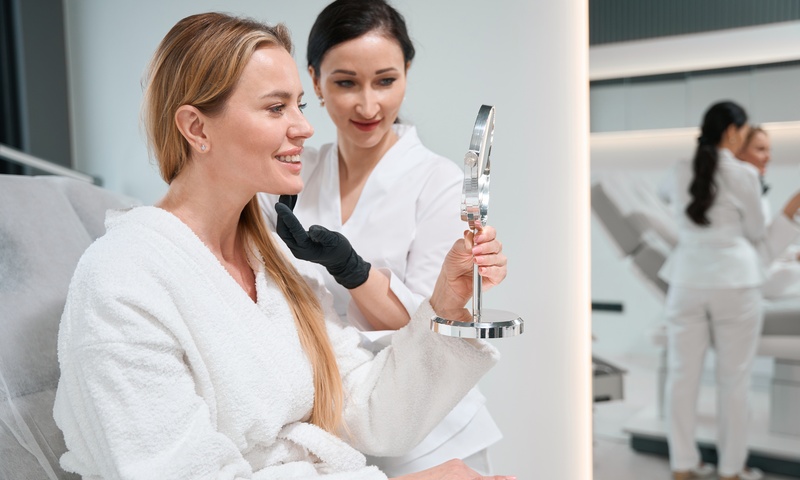
Face shape is a key factor in determining the most flattering beauty treatments for each client. Professional estheticians must consider bone structure, facial proportions, and natural features when recommending services like brow shaping, lash treatments, and facial contouring.
Understanding how different treatments complement various face shapes ensures clients achieve their desired aesthetic goals while enhancing their natural beauty. Here is a quick introduction to face shapes and recommendations for treatments based on each.
Identifying Different Face Shapes
Identifying face shapes and corresponding treatments is an important part of cosmetology training. Estheticians can identify face shapes by measuring the width of the forehead, cheekbones, and jawline in relation to face length. Oval faces feature balanced proportions with slightly wider cheekbones than the forehead and jaw. Round faces display equal width and length measurements with soft, curved lines throughout.
Square faces show equal width across the forehead, cheekbones, and jawline with angular features. Heart-shaped faces present a wider forehead that gradually narrows to a pointed chin. Each face shape has different treatments that complement the facial structure.
Oval Face Treatments
Oval-faced clients can wear most brow shapes successfully due to their naturally balanced proportions. Estheticians should maintain the natural arch and avoid over-plucking to preserve the face’s harmonious structure. Lash treatments can focus on enhancing natural length and volume without dramatic alterations.
Facial treatments should emphasize maintaining existing balance rather than creating dramatic changes. Light contouring techniques can enhance cheekbones without disrupting the face’s natural proportions.
Round Face Techniques
Clients with round faces benefit from treatments that create vertical lines and add definition. Estheticians should suggest higher, more angular brow arches to elongate the face visually. These brow techniques for face shapes help counteract the face’s natural roundness and create more structured features.
Lash treatments should emphasize length over volume to avoid widening the eye area further. Focus on contouring the temples and jawline to create sharper angles and reduce the appearance of fullness.
Square Face Softening Methods
Square-faced clients need treatments that soften harsh angles and create gentler lines. Brow shaping should feature soft, curved arches rather than sharp angles to complement the face’s natural structure.
Lash treatments can add softness through curling and volumizing techniques. Facial treatments should focus on softening the jawline and temples while highlighting the cheekbones to create more feminine contours.
Heart Face Balancing Approaches
Heart-shaped faces require treatments that balance the wider forehead with the narrower chin area. Brow shaping should avoid high arches that emphasize forehead width, instead opting for straighter, fuller brows.
Lash treatments can add volume to lower lashes to draw attention toward the chin area. Facial contouring should minimize forehead width while adding fullness to the jawline and chin region.
Other Face Shapes to Consider
Beyond the five shapes above, three additional face shapes commonly appear in practice. Knowing their defining features lets estheticians make well-rounded recommendations rather than forcing every client into one of the shapes already covered.
Diamond faces are widest at the cheekbones—the forehead and jaw are both narrower, and the chin tapers to a point. Estheticians should soften the cheekbones with gentler contouring and choose brow shapes that add subtle width at the forehead and jaw rather than emphasizing the cheek line.
Oblong faces (sometimes called rectangle) are noticeably longer than they are wide, with a fairly straight outline from forehead to jaw. Treatments should create the impression of width and reduce visual length—fuller brows and contouring across the temples and jawline help balance the elongated proportions.
Triangle (or pear) faces are widest at the jawline, with a narrower forehead above. Estheticians can balance the lower face by drawing attention upward—adding volume or lift to the upper lash line and brows, and keeping contouring minimal along the jaw.
Each of these shapes shares the same principle as the others: measure the proportions, then choose treatments that work with the structure instead of against it. For a full comparison of all seven common types, see this face shapes chart.
Conclusion
Clients achieve better results when estheticians consider their unique facial shapes and recommend appropriate services accordingly. This personalized approach builds trust and ensures client satisfaction with their aesthetic treatments. Professional estheticians who master face shape analysis can provide superior service and achieve consistently excellent results for their diverse clientele.
Would you like to receive similar articles by email?

Danuta Smoluk
Danuta Smoluk is a teacher with over three decades of experience teaching both children and adults. She specializes in teaching the Polish language to English-speakers. She has a master's degree in primary and early childhood education from WSP Słupsk (currently Pomeranian University in Słupsk) and had her degree validated by University of Toronto. Aside from education, she also has an interest in real estate and home improvement. She has planned and supervised many house renovations. She loves interior design, cooking, and gardening.


You May Also Like
From Theory to Chair: The Three Phases of Cosmetology Training
The Hidden Causes of Tooth Surface Stains