Enhanced Rock Weathering: Methods, Benefits, and Limits
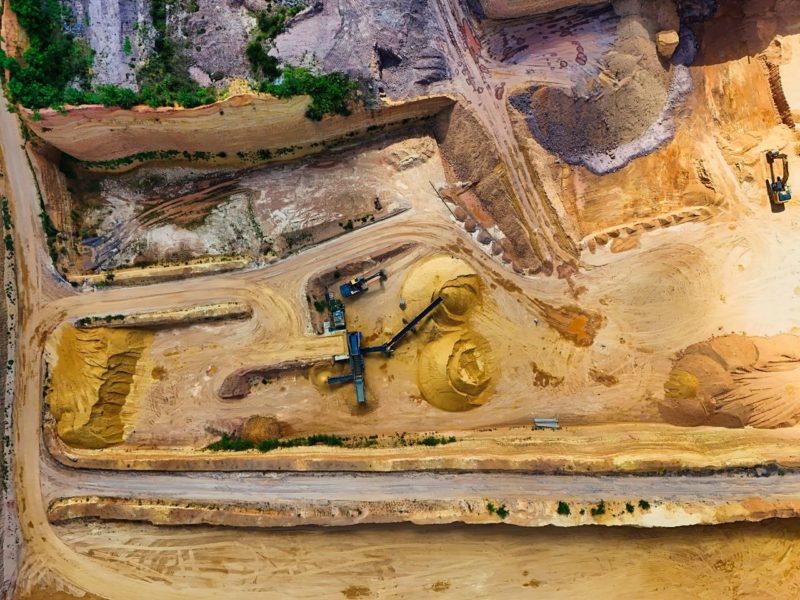
Enhanced rock weathering (ERW) removes carbon dioxide by spreading finely crushed, reactive rock across soils or other environments, where water and carbonic acid accelerate mineral dissolution. The resulting bicarbonate, carbonate, and dissolved ions can move into waterways or remain stored in minerals. It is a plausible carbon removal method, but not a magic wand. Its performance depends on rock chemistry, particle size, soil biogeochemical properties, climate, transport energy, and honest measurement.
The basic idea fits within the natural geologic carbon cycle. Human intervention simply tries to make a very slow process happen faster, at a useful scale. The IPCC’s explanation of enhanced weathering places it among carbon dioxide removal approaches that increase the exposure of reactive minerals to atmospheric carbon dioxide.
What Is Enhanced Rock Weathering?
Natural Weathering
Natural silicate weathering begins when rainwater absorbs carbon dioxide and forms weak carbonic acid. That acidic water reacts with silicate minerals, gradually breaking them down. Over geological time, this process transfers atmospheric carbon into dissolved bicarbonate and eventually carbonate minerals in the ocean.
The trouble is speed. Natural weathering operates over thousands to millions of years. ERW uses rock grinding and deliberate distribution to increase surface area, allowing water, roots, microbes, and acids to reach fresh mineral surfaces more efficiently.
Reactive Rock Dust
Basalt is often discussed because it contains calcium, magnesium, and iron-bearing silicates. These elements can benefit some soils, particularly acidic agricultural soils, although the result varies sharply by feedstock and location. Magnesium silicate minerals may weather quickly, while other rocks dissolve much more slowly.
Particle size matters. Finer rock powder generally increases mineral dissolution rates, yet it also raises dust, handling, energy, and runoff concerns. A useful application rate must be calculated from soil acidity, crop needs, mineral composition, and the rock’s trace-element profile. Simply spreading more material is not a serious climate strategy.
Carbonate Formation
As silicate minerals dissolve, calcium and magnesium can combine with dissolved inorganic carbon to form carbonate minerals. Some carbon remains in soil or sediments through in situ mineral carbonation. Some travels as dissolved bicarbonate. The pathway is chemically durable, though its permanence and net carbon benefit depend on what happens after the material leaves the field.
How Does It Remove Carbon Dioxide?
Soil Reactions
In soil, carbonic acid attacks exposed rock surfaces. A simplified reaction involving a magnesium silicate produces dissolved magnesium and bicarbonate ions. Plants, microbes, root respiration, soil moisture, temperature, and acidity all influence the weathering rate.
That is why laboratory performance cannot be copied directly into a farm field. Soil compaction, drainage, clay formation, organic matter, and seasonal rainfall shape actual mineral dissolution rates. A basalt application in a humid tropical region may behave very differently from one in a dry agricultural basin.
Bicarbonate Pathways
Dissolved bicarbonate can move through drainage water into rivers and eventually the ocean. In that setting, the carbon may remain as stable bicarbonate ions for long periods, while the added alkalinity can help counter ocean acidification. This is sometimes described as solution weathering or alkalinity enhancement.
The ocean endpoint creates a serious monitoring problem. Operators may measure soil chemistry accurately while struggling to prove how much carbon dioxide ultimately reached a durable reservoir. The Yale research update on enhanced weathering highlights these uncertainties in monitoring, reporting, and verification.
Mineral Storage
Some carbon becomes locked into carbonate minerals, which can remain stable for thousands of years or longer. Yet secondary clays, iron oxides, and other minerals can form in the soil and alter the expected reaction pathway. Carbon may be retained, released, or converted more slowly than project models assume.
Which Enhanced Weathering Approaches Exist?
Terrestrial Applications
Terrestrial ERW spreads rock dust on cropland, pasture, mine land, or managed forests. Agriculture is attractive because existing equipment can distribute amendments, and soil acidification is already managed through liming. Potential co-benefits include calcium and magnesium delivery, improved phosphorus availability, and reduced aluminum toxicity in some acidic soils.
A major study of enhanced weathering in United States agriculture shows why regional modeling matters: carbon removal potential and agricultural effects vary with climate, crop systems, and local soil conditions.
Oceanic Applications
Oceanic approaches add alkaline minerals directly to seawater or coastal environments. The goal is to increase alkalinity, allowing the ocean to absorb more atmospheric carbon dioxide without becoming as acidic. This could offer substantial carbon removal potential, but it introduces difficult questions about marine ecosystems, particle transport, trace metals, and proving where the carbon goes.
Electrolytic Systems
Electrolytic weathering uses electricity to split water or process minerals, producing alkaline solutions that can absorb carbon dioxide. These systems can offer more controlled chemistry than open-field applications, yet they require infrastructure and low-carbon electricity. Their climate value collapses if power comes from carbon-intensive generation.
| Approach | Main storage pathway | Main advantage | Main concern |
|---|---|---|---|
| Terrestrial | Soil minerals and bicarbonate runoff | Uses farm infrastructure and may improve soils | Uneven dissolution and difficult MRV |
| Oceanic | Increased alkalinity and bicarbonate | Large theoretical ocean capacity | Marine ecological uncertainty |
| Electrolytic | Controlled alkaline solutions | Precise process control | Electricity, cost, and equipment |
What Benefits Can It Provide?
Agricultural Benefits
Basalt and other silicate rock amendments may supply nutrients and reduce soil acidity. Those benefits are site-specific, not automatic. Contaminants such as nickel and chromium must be tested before application, particularly when food crops are involved.
Climate Benefits
ERW could become one component of large scale carbon sequestration alongside emissions cuts, reforestation, soil carbon management, and direct air capture. The IPCC’s mitigation assessment treats enhanced weathering as a potential but uncertain contribution to global climate mitigation.
Ecosystem Considerations
Mining, crushing, and hauling rock consume energy and disturb land. Dust can affect workers and nearby communities. Runoff may alter alkalinity or mobilize trace elements. The environmental ledger has to include the full supply chain, not merely the carbon dioxide consumed in a reaction.
How Much Carbon Can It Remove?
Estimates range from millions of tons to several gigatons of carbon dioxide annually, depending on deployment assumptions. Those high-end figures are scenarios, not current performance. They assume access to suitable silicate rocks, extensive transport networks, favorable weather, sufficient farmland, and reliable verification.
The Project Drawdown overview presents ERW as a potentially substantial pathway, while newer research remains more cautious about field-scale weathering rates and net removal. A credible carbon removal estimate must subtract mining emissions, grinding energy, transport, replacement fertilizers, and any carbon released during the process.
What Limits Large-Scale Deployment?
Rock availability is a physical constraint. Clean, reactive, low-contaminant material is not distributed evenly around the world, and moving millions of tons of rock is hardly weightless. Land access, farmer acceptance, dust management, water chemistry, permitting, and competing uses for crushed stone all matter.
Regional adoption will likely favor humid agricultural areas with acidic soils, nearby quarries, and strong extension services. Arid regions may see slower reactions and higher irrigation demands. Tropical deployment could accelerate weathering, yet intense rainfall may carry dissolved products away before measurement catches up.
How Should Projects Measure Environmental Results?
Projects need baseline soil sampling, repeated measurements, mineralogical analysis, runoff monitoring, crop observations, and full life-cycle emissions accounting. They should track pH, alkalinity, dissolved inorganic carbon, trace metals, particle size, and changes in soil organic and inorganic carbon.
The Isometric enhanced weathering protocol illustrates the direction MRV must take: transparent sampling, independent verification, uncertainty accounting, and no credit for carbon that would have been removed naturally. Remote bicarbonate pathways will remain difficult, so conservative deductions are essential.
FAQ
Is enhanced rock weathering the same as liming?
No. Limestone mainly neutralizes soil acidity and does not provide the same silicate weathering pathway. ERW typically uses silicate rock such as basalt, though some projects may combine soil amendment goals.
Is ERW safe?
It can be, when feedstock chemistry, application rates, dust, and runoff are controlled. “Natural” does not mean automatically harmless.
Can ERW replace emissions reductions?
No. It is a complementary carbon removal tool. Cutting carbon emissions remains faster, more certain, and less resource-intensive than removing carbon dioxide later.
Conclusion
Enhanced rock weathering has genuine scientific promise: it links soil management, mineral chemistry, ocean alkalinity, and the long geologic carbon cycle. Its strongest future is probably practical rather than theatrical, with carefully selected farms and industrial systems contributing measurable removal alongside deep emissions cuts. The method deserves serious innovation, free scrutiny, and patient field research. It does not deserve inflated claims.
Would you like to receive similar articles by email?

Danuta Smoluk
Danuta Smoluk is a teacher with over three decades of experience teaching both children and adults. She specializes in teaching the Polish language to English-speakers. She has a master's degree in primary and early childhood education from WSP Słupsk (currently Pomeranian University in Słupsk) and had her degree validated by University of Toronto. Aside from education, she also has an interest in real estate and home improvement. She has planned and supervised many house renovations. She loves interior design, cooking, and gardening.


You May Also Like

Things To Consider for Landscaping That Fits the Climate
Important Advice for First-Time Orchard Growers