December Leonis Minorid Meteor Shower Guide
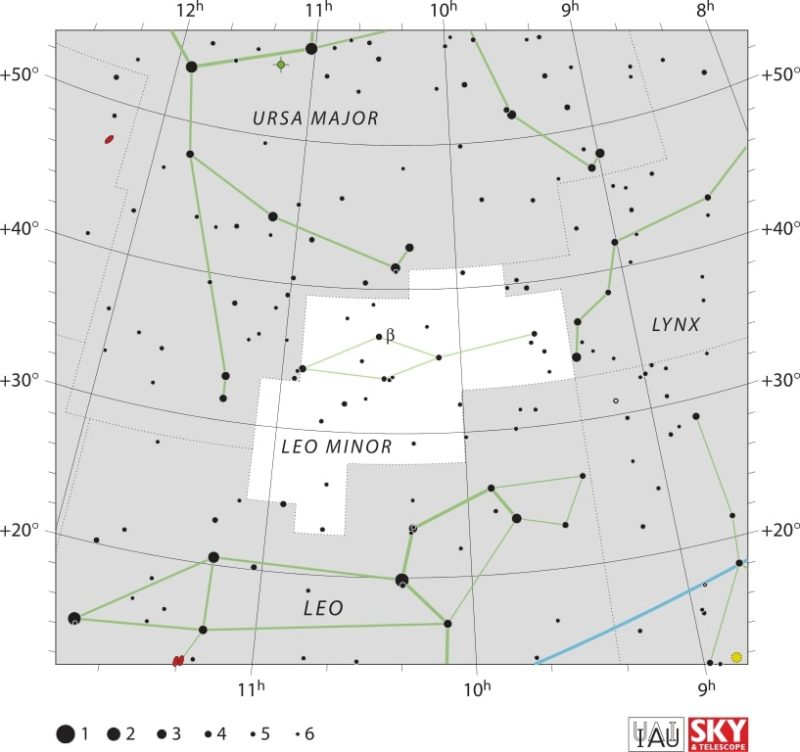
The December Leonis Minorids are a minor meteor shower that reaches its peak annually on December 20.
You can observe it most easily in the Northern Hemisphere. Rates are modest, peaking at no more than five meteors per hour in dark, clear skies.
To observe them, skywatchers should glance in the direction of the constellation Leo Minor. Though a more obscure shower, the December Leonis Minorids offers consistent action to alert skywatchers.
What Is the December Leonis Minorid Meteor Shower?
The December Leonis Minorids are a minor meteor shower that can be seen in the night sky every December. These meteors produce a pretty low-key display. They’re fainter and less frequent than the meteors from bigger name showers, such as the Perseids or Geminids.
Defining This Faint Shower
Northern hemisphere observers will be able to observe the December Leonis Minorid meteor shower from December 5 and 24. Every year, the shower is typically at its best on the peak on December 20. Unlike brighter meteor showers, the Leonis Minorids produce a low zenithal hourly rate—up to 5 meteors per hour at peak.
Shower Specifics: Speed and Brightness
Meteors from this shower zip through the atmosphere at 64 km per second! Due to their high velocity, they usually disintegrate quickly, without leaving enough time to create a luminous path. Most meteors are generally faint, especially in contrast to the slower, brighter meteors produced by other showers.
The Radiant: Pinpointing Leo Minor
The radiant sits in Leo Minor, a faint constellation north of Leo. Identifying the radiant is good practice to ensure you’re viewing Leonis Minorids and not rogue meteors from other showers.
Spotting These Elusive Meteors
Catching the December Leonis Minorids requires a little preparation and a little skill, but it’s within reach of most skywatchers. Since these meteors are particularly faint and fast, dark skies will be important to make the most of this show. City lights significantly reduce visibility, so people seek to escape urban glare.
Ideal Night Sky Conditions
Having clear, dark skies with very little to no light pollution helps. Because the moon washes out faint meteors, moonless nights or nights where the moon sets early in the night are ideal.
Open fields, hills, or national parks are ideal for this. Finding a location with a wide, clear view of the sky is very important. Be sure you don’t have tall trees or buildings blocking your view! A star chart or phone app will help you locate the constellation Leo Minor, where these meteors appear to originate from.
Elevation is an advantage as well. Higher ground means a bit less haze and often sharper views. Be sure to look at your local forecast for the clearest skies before going out.
Timing is important so watching your local forecast will help you avoid cloudy nights.
Gear Up: Simple Viewing Aids
Bring along a blanket or reclining chair to stay cozy. Binoculars or telescopes are not needed for meteor showers—your eyes are enough. Smartphone apps for meteor showers can help you find the peak time to view. Snacks and drinks are a great addition to long waits and unexpected delays.
Patience: The Stargazer’s Virtue
It requires some patience—make sure you’re prepared to watch for at least an hour or more. Don’t forget to take breaks and stay rested. Soak in the beauty and magic of the night sky.
Conclusion
The December Leonis Minorids may not be the most spectacular meteor shower, but they add an interesting flurry to our winter sky. These meteors are so speedy that it makes seeing one seem like winning the lottery.
You should plan to watch away from city lights to have the best chance of seeing them. Even if the shower does turn out to be rather uneventful, there’s something magical about these cold, dark nights illuminated by meteors. Sky fans and science buffs alike find something to love.
Tell us what you discover or inquire among friends for advice—every winter offers a new chance to catch these elusive streaks of light.
Frequently Asked Questions
What are the December Leonis Minorids?
The December Leonis Minorid meteor shower originates in the constellation of Leo Minor, and brings a handful of bright meteors to attentive skywatchers.
When is the best time to see the December Leonis Minorids?
The shower generally peaks on December 20 each year. As with most meteor showers, the best viewing will be after midnight, when Leo Minor is higher in the sky, and the night is darkest.
How many meteors can I expect to see during the Leonis Minorids?
This is a faint shower, typically only producing up to 5 meteors per hour at most during its peak. It takes some patience, and dark skies will definitely improve your chances.
What causes the December Leonis Minorid meteor shower?
These meteors happen when Earth travels through the debris trail of a comet. As these particles enter our atmosphere, they burn up, producing beautiful streaks of light across the sky.
Can I see the December Leonis Minorids with the naked eye?
You’ll be able to see them but they are quite faint. No, you don’t have to use a telescope. Simply allow your eyes to adjust to the darkness and observe carefully.
See also:
- Previous meteor shower: Comae Berenicid Meteor Shower
- Next meteor shower: Ursid Meteor Shower
Would you like to receive similar articles by email?

Paul Tomaszewski
Paul Tomaszewski is a science & tech writer as well as a programmer and entrepreneur. He is the founder and editor-in-chief of CosmoBC. He has a degree in computer science from John Abbott College, a bachelor's degree in technology from the Memorial University of Newfoundland, and completed some business and economics classes at Concordia University in Montreal. While in college he was the vice-president of the Astronomy Club. In his spare time he is an amateur astronomer and enjoys reading or watching science-fiction. You can follow him on LinkedIn and Twitter.


You May Also Like
Circumstellar Disc: Key Insights and Discoveries
How to Use a Planisphere: Stargazing Made Simple