Traditional Classroom Training vs Online Medical Career Training: Which Is Right for You?
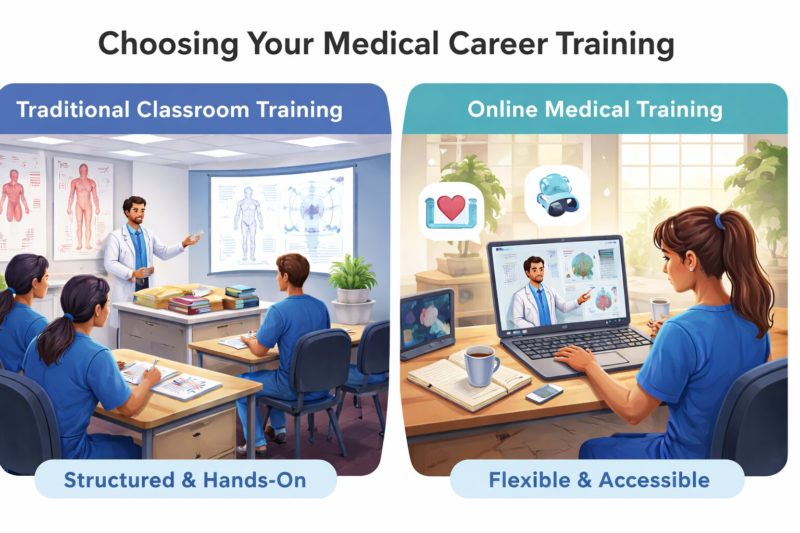
Choosing the right approach for your medical career training can be a pivotal decision in your professional journey. The debate between traditional classroom training and online medical career training has only intensified with advancements in technology and shifting educational paradigms. With unique benefits and potential drawbacks to each method, it’s essential to weigh both options carefully.
In this article, we delve into the key differences between traditional classroom and online medical career training to help you determine which path aligns best with your learning style, schedule, and career objectives. Whether you value hands-on training or the convenience of digital learning, your choice will shape your future in the healthcare industry.
Traditional Classroom Training for Medical Careers: A Closer Look
Traditional classroom training for medical careers offers an immersive experience with direct access to instructors and peers. Face-to-face interaction fosters networking opportunities and often results in strong professional relationships that can be beneficial throughout one’s career.
In-person learning environments also provide immediate feedback and clarification on complex topics, a key component when mastering intricate medical procedures and concepts. Moreover, many students find structured schedules and in-person accountability lead to better discipline and focus on their studies.
To make the most of traditional training, prospective students should medical career training seek programs with quality instructors, up-to-date equipment, and affiliations with healthcare facilities. This ensures a comprehensive learning experience that mirrors the realities of a medical career.
Online Medical Career Training: Flexibility and Accessibility
The appeal of online medical career training lies in its unparalleled flexibility and accessibility, which enables learners to balance education with other commitments like work and family. This mode of learning particularly benefits nontraditional students and those living in remote areas.
Digital platforms for medical training often feature a variety of multimedia tools such as videos, interactive simulations, and forums that enhance the learning process. This can translate to a deeper understanding of material as learners are able to progress at their own pace, revisiting complex subjects as needed.
When opting for online training, candidates should evaluate the program’s accreditation, the technological support offered, and the opportunities for practical experiences, such as virtual labs or partnerships with local healthcare providers for hands-on training.
Comparing Outcomes: Success Rates in Traditional Classroom Training vs Online Medical Career Training
Considering success rates is a tangible way to gauge the efficacy of traditional versus online medical education. Data on success rates, employment after graduation, and student satisfaction can be enlightening metrics when making your decision.
Studies have shown that, in many cases, online learners perform as well as or better than their peers in traditional settings, particularly when courses are well-designed and interactive. On the other hand, disciplines with a strong practical component may benefit from the direct mentorship and practice offered by traditional classrooms.
Prospective students should research and compare post-graduation outcomes provided by institutions for both classroom and online programs. This includes looking into continuing education opportunities and career support services that can contribute to long-term professional success.
Making the Choice: Factors to Consider When Selecting Medical Career Training Pathways
Selecting the right pathway for medical career training requires a careful assessment of your personal circumstances and professional goals. Consider factors such as learning style, financial implications, and the specific medical field of interest.
Learners who thrive in a structured environment might prefer traditional settings, whereas self-motivated individuals may excel in online courses. Additionally, the cost of training can differ significantly between these two options, with online programs often being less expensive due to fewer overhead costs.
Ultimately, weigh the importance of hands-on experience in your chosen field against the adaptability online courses provide. Research thoroughly, speak with admissions counselors, and potentially shadow professionals in the field to make an informed decision tailored to your career aspirations.
In conclusion, the debate between traditional classroom and online medical career training hinges on individual preferences and career objectives. By considering factors such as learning style, flexibility, success rates, and practical experience, you can choose a pathway that not only fits your life but also propels you towards a fulfilling career in healthcare. Your decision will shape the trajectory of your professional life, so take the time to choose wisely.
Would you like to receive similar articles by email?

Danuta Smoluk
Danuta Smoluk is a teacher with over three decades of experience teaching both children and adults. She specializes in teaching the Polish language to English-speakers. She has a master's degree in primary and early childhood education from WSP Słupsk (currently Pomeranian University in Słupsk) and had her degree validated by University of Toronto. Aside from education, she also has an interest in real estate and home improvement. She has planned and supervised many house renovations. She loves interior design, cooking, and gardening.


You May Also Like

How to Find an Apartment as a Student

How Students Can Find Affordable Housing Fast