Space
Embark on an astronomical journey. Explore the cosmos, study celestial objects, and unravel the mysteries of the universe through astronomy's fascinating realm.
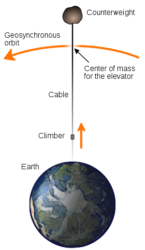
Non-Rocket Spacelaunch – Space Elevator
Why non-rocket spacelaunch? Because the current chemical rockets are really expensive. In order to further explore outer space and establish a permanent human presence in space we need more cost efficient spacelaunch methods.
Apus Constellation
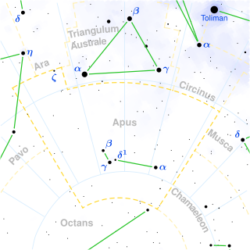
Apus is a faint constellation in the southern sky. Its name means “no feet” in Greek and it represents a bird-of-paradise, which were once believed to have no feet. It was one of the twelve constellations created by Petrus Plancius in the late 16th century. The first known depiction of the constellation in a celestial atlas was in Johann Bayer’s Uranometria of 1603. Bird-of-Paradise after which the Apus constellation was named. Credit & Copyright: Roderick Eime. For more constellations see the Constellations Guide.
Introduction to Astronomy – Apparent magnitude
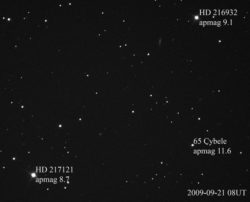
Yesterday I have used the term “apparent magnitude” in my article about the Antlia Constellation. Since some of you may be new to astronomy, I decided to start a new series of articles to introduce you to the topic. Each article of the series will focus on one scientific term used in astronomy. The series will not be a regular one: I will only write an article after using a complicated astronomy term that some of you would need me to explain. Definition The apparent magnitude (noted as m) of a celestial body is a measure of its brightness as seen by an observer on Earth. Since the apparent brightness…
Antlia Constellation
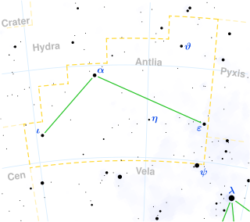
Antlia is a constellation in the southern sky and therefore has been unknown to the ancient Greeks and Romans. Its name means “pump” and it specifically represents an air pump. It was created by the French astronomer Abbé Nicolas Louis de Lacaille, who created fourteen constellations for the southern sky to fill some of the faint regions. He originally named it Antlia pneumatica to commemorate the air pump invented by the French physicist Denis Papin. It was later adopted by the International Astronomical Union as one of the 88 modern constellations under the shortened name of Antlia. Main Stars and Deep Sky Objects The Antlia constellation has no bright stars.…
Andromeda Constellation
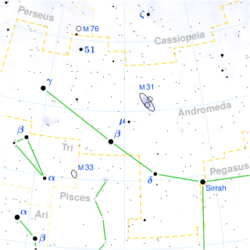
Andromeda is a constellation in the northern sky. It was one of the 48 constellations listed by the 2nd century astronomer Ptolemy, and it remains one of the 88 modern constellations today. The Andromeda Galaxy is named after the constellation, as it appears within its boundaries.
Hartley 2 Comet
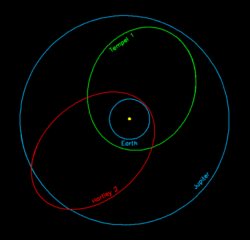
Comet Hartley 2 has made it to the news recently: first because of the comet's flyby near Earth and then due to it being visited by the Deep Impact spacecraft.
Did you know? The Moon has an Atmosphere
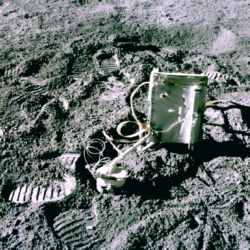
It is a common misconception that the Moon’s surface is a perfect vacuum. It is not! The Moon indeed has an atmosphere, a very tenuous one however. If you could capture the Moon’s entire atmosphere, it would weigh about 10,000 kg. In other words, it would weigh less than a large truck. Sources of the lunar atmosphere There are two main sources of the lunar atmosphere. One of them is outgassing, which is the release of gasses that originate from radioactive decay processes deep inside the crust and mantle of the Moon. The second source is through a process known as sputtering: atoms are ejected from solid materials on the…