Canadian Space Agency and Its Key Missions
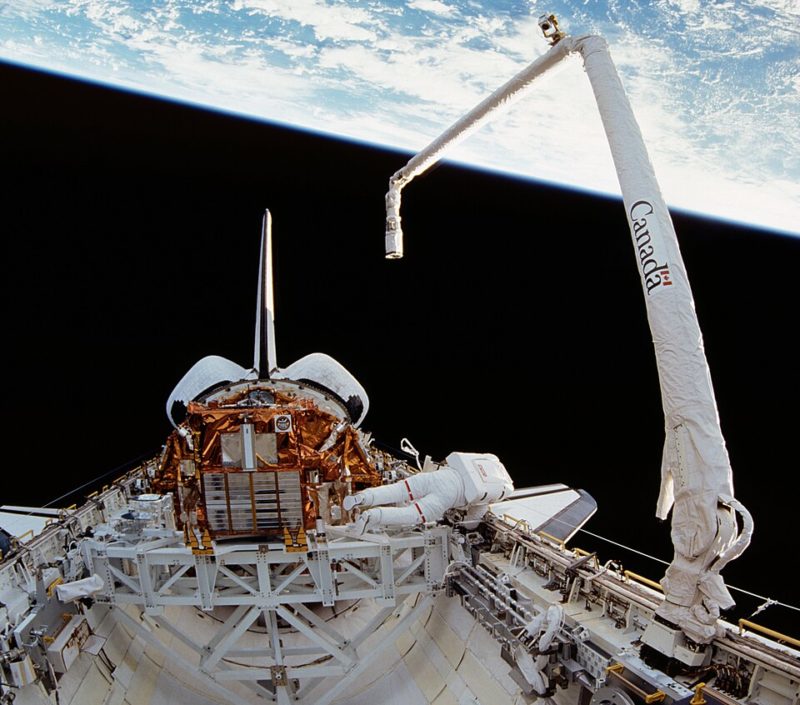
The Canadian Space Agency is Canada’s national space agency that operates the nation’s civil space program and collaborates with partners such as NASA and ESA. It oversees Earth observation satellites, robotics including Canadarm2 on the ISS, and science missions that investigate space weather and planetary science.
Core Functions
The Canadian Space Agency (CSA) was created to plan, fund, and conduct peaceful space activities on behalf of Canada. Core functions focus on space science, technology, and operations of social and economic value. They direct how the CSA prioritizes, spends money, and collaborates with industry and universities, and they shift as technology and public needs change.
Robotics
Robotics is one of the CSA’s most prominent core functions. Canada constructed the Canadarm for NASA’s Space Shuttle, then Canadarm2 and the Dextre “robotic handyman” for the ISS. They manage heavy payloads and accomplish delicate remote-controlled tasks in space.
On the ISS, Canadian robotics backstops assembly, upkeep and rendezvous capture for visiting vehicles such as SpaceX Dragon and Northrop Grumman Cygnus.
Canadian robotic arms have been instrumental in NASA’s shuttle program, servicing the Hubble Space Telescope, and ISS construction and operations to this day. This legacy fuels Canadarm3, the cutting-edge AI-enabled robotic system for the Lunar Gateway that will operate semi-autonomously in orbit around the Moon and tether Canada to future deep-space endeavors.
Satellites
Canada’s satellite work began with Alouette 1 in 1962, one of the planet’s earliest scientific satellites, and later the Anik series, which established a domestic geostationary communications network.
| Satellite | Primary function |
|---|---|
| Alouette 1 | Ionospheric science |
| Anik series | Communications across Canada |
| RADARSAT‑1 | Synthetic aperture radar (SAR) imaging |
| RADARSAT‑2 | High‑resolution SAR, data for industry |
| RADARSAT Constellation | Triple SAR satellites, near‑daily coverage |
Earth observation missions, such as RADARSAT, provide assistance for climate and sea-ice monitoring, agriculture, disaster response, and maritime domain awareness for national security.
Astronauts
The Canadian Space Agency operates astronaut recruitment, training and flight assignments as a core human spaceflight activity. Since 1983, four campaigns have nurtured a small but vibrant corps, including Marc Garneau, Roberta Bondar, Chris Hadfield, Julie Payette, Robert Thirsk, David Saint-Jacques, Jeremy Hansen, and Jenni Gibbons.
Canadian astronauts have flown 17 missions on the Space Shuttle, Soyuz and ISS, frequently leading science, robotics and medical experiments. Hadfield’s command of the ISS in 2013 made him the first Canadian to lead a space outpost and demonstrated that a small national program can still punch above its weight in key leadership roles.
Science
The CSA funds and coordinates space science as a core function, conducting experiments on the ISS and other platforms in areas such as human physiology, fluid physics, combustion, and materials. These studies fuel improved health understanding, novel materials, and safer long-term missions.
Canada heads missions including SCISAT, which monitors ozone and trace gases, and it provided the Fine Guidance Sensor and a near-infrared imager for the James Webb Space Telescope. Universities collaborate with the CSA via grants and mission teams.
Innovation
Innovation intersects all Canadian Space Agency core functions and connects directly to Canada’s economy. The agency supports emerging tech in robotics, satellite communications, optical sensors and vision systems, frequently in collaboration with companies such as MDA Space and Magellan Aerospace, which then market these systems globally.
Strategic investments in projects ranging from the Mobile Servicing System to advanced camera and lidar systems and autonomous robotics create high-skill jobs and keep Canada relevant in a fast-moving space sector. Youth programs, student rover contests, and startup-focused funding streams provide the next generation with distinct avenues into space careers and product markets.
The Quiet Giant
Canada’s space program is a quiet giant. It is decades old, scientifically deep, and easy to miss if you only track headline budgets. The Canadian Space Agency plays a primarily supporting role, but its hardware, data, and people are at the heart of a lot of marquee missions, from the ISS to leading Earth observation constellations. Despite a relatively modest annual budget of roughly CAD 500 to 700 million, CSA programs have produced mission-critical systems. This, in turn, gives Canada a larger voice than its spending alone would suggest in both technical standards and global space policy talks.
Economic Impact
The CSA’s annual budget, though tiny next to NASA or ESA, has a powerful multiplier effect in Canada’s high-tech economy. For every major program contract, jobs spin out in software, electronics, optics, and advanced manufacturing, often in areas that have aerospace and defense clusters.
- MDA (robotics, RADARSAT systems)
- Telesat (satellite communications fleets)
- Magellan Aerospace (satellite buses and components)
- Neptec / MDA Space Missions (vision systems and navigation)
CSA projects’ space tech feeds directly into telecom, farming, and resource sectors. Satellite communications keep remote communities and offshore operations connected. SAR data assists farmers in monitoring soil moisture and crop vitality over thousands of square kilometers. Mining and energy corporations leverage Earth observation solutions to schedule exploration, monitor tailings ponds, and evaluate pipeline corridors for encroachment or movement.
| Metric | Approximate Value |
|---|---|
| Direct space sector employment | 13,888 jobs |
| Indirect / induced employment | 12,592 jobs |
Global Influence
Canada brings this technical weight to bear to help forge rules and norms. CSA officials and Canadian diplomats participate in UN space committees, help author debris mitigation guidelines, and advocate for open data standards for climate and disaster monitoring.
CSA-developed robotics standards, grapple fixtures, and sensor packages appear in design baselines utilized by other agencies and private station concepts.
Astronauts like Chris Hadfield and Jeremy Hansen, along with scores of less visible engineers and scientists, give the program global cachet that exceeds its size.
Future Trajectory
Canada’s space agency will push deeper into lunar exploration, precision earth observation and sustainable use of orbit over the next 10 years and grows faster than at any point since the Cold War.
Canadian Space Agency priorities line up around three pillars: the Moon and deep space, data-rich services from orbit, and secure, sustainable infrastructure.
Lunar Gateway
Canada’s marquee pledge in human spaceflight is Canadarm3 for the NASA-led Lunar Gateway, a space station that will orbit the Moon and serve as a staging ground for Artemis missions. Canadarm3 will be an autonomous robotic system, made to inspect, repair, and reconfigure external modules with minimal crew involvement and to continue functioning even during communication blackouts with Earth, which drives new work in AI-based control, fault detection, and onboard decision software that finds application in ground-based robotics.
Gateway itself is key for long-term lunar logistics, science, and deep space tests. For the CSA, this platform morphs into secured astronaut seats on Artemis missions, including Canadian planned participation in Artemis II and possible subsequent surface sorties, as well as consistent chances to fly Canadian scientific payloads analyzing radiation, life support, and resource extraction methods. A growing group of Canadian firms and labs support this. MDA leads Canadarm3 design and integration. Honeywell Aerospace and Canadensys supply avionics and vision systems. Magellan Aerospace works on structures. Universities such as the University of Toronto Institute for Aerospace Studies and École Polytechnique run robotics, autonomy, and space medicine research tied to Gateway components and operations.
Earth Observation
The CSA’s Earth observation roadmap leverages the RADARSAT legacy, now borne by RADARSAT Constellation Mission (RCM) and follow‑on concepts aspiring for shorter revisit times and higher resolution with SAR. These satellites penetrate cloud, smoke and darkness, which is significant for a nation with sizable Arctic and forested territories and for global clients requiring consistent coverage for civil and security operations.
For example, Canadian radar and optical data powers flood maps, wildfire tracking, and oil spill detection for emergency agencies. Farmers and agri-tech firms use it for crop health indexes and soil moisture figures that reduce water and fertilizer consumption. Arctic and maritime operators use RCM for monitoring ice, tracking ship traffic, and assisting search and rescue across remote regions, which has defense value as well. CSA collaborates extensively with partners like the European Space Agency, NASA, and the Group on Earth Observations to exchange data and standards, thereby integrating national missions into a global sensor array.
Inspiring Canadians
Space in Canada is more than just hardware and budgets. It’s about people who demonstrate what diligent practice, collaboration and persistent inquisitiveness can do and how that can influence decision-making for students, educators and employees.
Canadian astronauts are the most tangible examples. Marc Garneau, who flew in 1984 as the first Canadian in space, demonstrated that a country with a relatively small population could still play in orbit. Roberta Bondar’s 1992 mission interested a young Jenni Gibbons so much that she created a scrapbook to record every news clip. She is now a Canadian astronaut.
Jeremy Hansen, who’s slated to fly NASA’s Artemis II mission around the Moon, carries that story into the deep-space era, while Joshua Kutryk’s upcoming Starliner-1 mission shows Canadians will continue to participate in new crewed vehicles. David Saint‑Jacques’ long‑duration stay on the ISS, with his timely reports on life support, robotics, and medical experiments, contributes a detailed day‑to‑day perspective of what living and working off Earth actually look like.
Through school programs, teacher toolkits, livestreams and citizen science projects tracking auroras or satellite signals, the CSA provides individuals concrete ways to connect their own abilities to this larger narrative.
Conclusion
The Canadian Space Agency flies under the radar. Its work digs deep. Robotic arms maintain the ISS. Satellites monitor sea ice, crops, smoke, and storms. Science missions and experiment with life support for extended orbital habitation.
Partners turn to Canada for sharp skills in robotics, radar and space health. That carries real weight in international projects and negotiations. Children in remote communities watch astronauts with maple leaf patches and begin to dream larger.
To stay in the game, Canada requires stable funding, well-defined objectives, and bold investments in emerging technology. Follow CSA missions, tell their stories, and advocate for space to remain on the national agenda.
Frequently Asked Questions
What does the Canadian Space Agency actually do?
The Canadian Space Agency (CSA) is responsible for Canada’s civil space program. It develops satellites, robotics, and science missions, supports astronauts, and provides space data for navigation, communications, climate monitoring, and disaster management.
How does the Canadian Space Agency work with other countries?
The CSA collaborates with the likes of NASA, ESA, and JAXA. It brings robotics, science instruments, and satellite data to combined operations. In exchange, Canada gets a piece of global projects, launch opportunities, and scientific return.
What space technologies is Canada best known for?
Canada is renowned for its space robotics, in particular Canadarm and Canadarm2. CSA is excellent in Earth observation satellites, communication, and space instruments for climate, environment, and resources monitoring.
What is the future direction of the Canadian Space Agency?
The CSA specializes in deep space exploration, new lunar missions, advanced robotics, and next-generation Earth observation. It is investing in commercial partnerships and innovation to grow Canada’s space economy and support long-term sustainability.
How does the Canadian Space Agency support education and outreach?
The CSA develops educational materials, student challenges, and outreach. It advocates for STEM education, provides educational resources, and showcases Canadian space heroes to motivate youth across Canada and around the world.
Would you like to receive similar articles by email?

Paul Tomaszewski
Paul Tomaszewski is a science & tech writer as well as a programmer and entrepreneur. He is the founder and editor-in-chief of CosmoBC. He has a degree in computer science from John Abbott College, a bachelor's degree in technology from the Memorial University of Newfoundland, and completed some business and economics classes at Concordia University in Montreal. While in college he was the vice-president of the Astronomy Club. In his spare time he is an amateur astronomer and enjoys reading or watching science-fiction. You can follow him on LinkedIn and Twitter.


You May Also Like
How Does the International Space Station Fulfill Its Energy Needs
1I/ʻOumuamua: the First Known Interstellar Object