NASA Astronaut Reid Wiseman: Artemis II Mission Commander
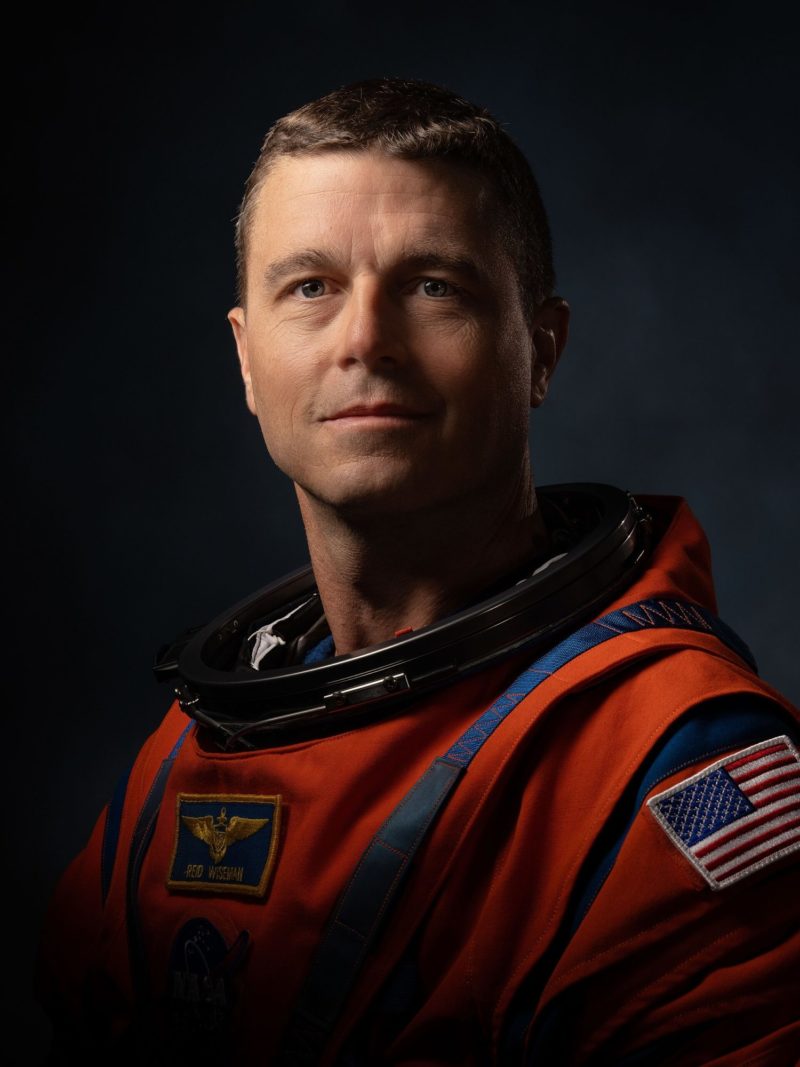
Gregory Reid Wiseman’s path to commanding NASA’s Artemis II mission reflects a rare blend of engineering rigor, naval aviation, and hands-on spaceflight experience. From his early education and test pilot career to long-duration service aboard the International Space Station and leadership within NASA’s astronaut corps, Reid Wiseman’s career traces how modern astronauts are trained for deep-space exploration beyond low Earth orbit.
Formative Years
Baltimore Roots
Born 11 November 1975, Wiseman was raised in Maryland and is a Baltimore native. Dulaney High School, where he graduated, sat in the middle of that environment. It provided him with access to solid math and physics courses. Also, he had teachers who encouraged logical thinking rather than rote memorization.
His initial pull to aviation and complicated machines aligned nicely with what Baltimore and the surrounding Maryland region had to offer. With military bases, aerospace contractors, and big universities within reach, the leap from “kid who likes airplanes” to serious engineering student never seemed far-fetched.
Engineering Education
Wiseman applied to only four universities and decided on Rensselaer as his home. At RPI, he obtained a BS in Computer and Systems Engineering in 1997. This discipline mixes hardware, software, and control theory—key for avionics and space systems.
The 1986 Challenger disaster had already sat like a stone in his 11-year-old mind. It demonstrated both the danger and the engineering burden of human spaceflight. He augmented that systems mindset with a Master’s in Systems Engineering from Johns Hopkins University in 2006. He piled on advanced techniques for requirements analysis, fault-tolerant design, and lifecycle management. These techniques would be crucial for his role as a mission specialist in future space missions.
Naval Service
Commissioned via NROTC, astronaut Reid Wiseman transitioned from theory to reality. NROTC locked his curriculum to the exigencies of the U.S. Navy early on. Leadership coaching and fleet immersion were embedded into his coursework.
He learned to fly jets in the T‑45, a process that took about a year and turned classroom aerodynamics into lived experience of high‑g flight and carrier patterns. In 1999 he was designated a Naval Aviator. This meant he had passed through not only flight academics but strict check rides and carrier qualifications. Then, he moved into front‑line platforms, flying the F‑14 Tomcat and later the F/A‑18F Super Hornet. These are aircraft that demand fast sensor fusion and constant systems monitoring from the cockpit.
This is where his systems background encountered real-time targeting, electronic warfare, and dynamic threat environments.
Graduating from the U.S. Naval Test Pilot School shifted him from user to developer-side operator. As a test pilot and project officer, he helped establish and fly test plans. He also characterized aircraft behavior and provided structured data to engineers.
Astronaut Career
The Selection
NASA selected Reid Wiseman as an astronaut candidate in 2009, choosing him from thousands of applicants worldwide. By that time, he was an experienced U.S. Navy F/A-18 and test pilot. He was well-acquainted with risk, strict procedures, and empirical choices.
While the selection pipeline favors candidates with advanced degrees, flight or research experience, and strong performance under stress, it also emphasizes teamwork and emotional control. Candidates undergo medical checks, psychological interviews, and technical panels that assess their time-pressured reasoning. Few make it to Houston for astronaut training.
Wiseman transitioned from squadron life to Johnson Space Center, where he needed to pivot from combat tactics to human spaceflight systems. He learned orbital mechanics, spacecraft subsystems, survival training, and emergency procedures. Like all new astronauts, he continued to adhere to a rigorous fitness regime and regular medical checkups.
Expedition 40/41
Wiseman’s inaugural mission launched in 2014 on Soyuz TMA‑13M. He traveled en route to the International Space Station as a flight engineer for Expeditions 40/41.
Aboard he assisted in operating a wide range of fluid physics, human physiology, combustion, materials science and Earth observation experiments. Much of this research helps improve spacecraft design or medical care on Earth. For example, it investigates how fluids shift without gravity or how bones lose density in orbit.
He took part in routine station operations: robotic arm work, cargo transfers from visiting vehicles, maintenance on life support systems, constant emergency drills and two spacewalks.
Undersea Training
Beyond orbit, Wiseman trained as an aquanaut with NASA Extreme Environment Mission Operations (NEEMO), residing in the Aquarius undersea habitat off Florida. A NEEMO crew works on the seafloor for days on end in EVA-style suits with limited consumables, noisy equipment, and real isolation.
On undersea missions, NASA can evaluate EVA tools, communication lag, and crew dynamics in an environment where a rapid escape is not easy, similar to space. Missions like ‘excursions’ on the seafloor bear a close resemblance to spacewalks. In both, there is a strong emphasis on checklists, tether safety, and consumables tracking.
The same skills, such as complex procedures, precise navigation in bulky suits, and calm work when something breaks, translate directly to future EVAs and even potential long stays on the Moon.
Chief of the Astronaut Office
NASA later appointed Reid Wiseman chief of the astronaut office, putting him in charge of the active astronaut corps in Houston. That position spans crew selection and training standards. It also involves schedule planning. All of this is in coordination with ISS, commercial crew, and Artemis program managers.
This was during ramp-up for lunar missions, so he had to mold training pipelines for Orion, new launch systems and future lunar surface work. At the same time, he kept ISS ops humming and safe.
Artemis II Command
Wiseman is commander of Artemis II, which launched successfully on April 1st, 2026. The mission is currently performing its lunar flyby as the first crewed Orion mission to the Moon in over fifty years. The last time was Apollo wrapped up lunar voyages in December 1972. The crew will not land but will instead fly a distant lunar trajectory. The goal is to stress-test systems in deep space.
Key goals involve inspecting Orion’s life support, communications, navigation, and heat shield on a high-energy reentry. The mission will also validate how a tiny crew lives and works in a tight capsule for more than a week.
Artemis II carries clear symbolic weight: it shows NASA, partner agencies, and industry can safely send people far beyond low Earth orbit again.
Deep space adds new risks, including longer communication blackouts behind the Moon, limited abort options, radiation exposure, and tighter margins on consumables. Wiseman’s combination of combat flying, extended ISS service, NEEMO stint, and leading NASA roles primes him to navigate those hazards while maintaining the team centered and calm.
Conclusion
Reid Wiseman’s trajectory seems giant and accessible at the same time. A kid who loved flight now helps lead a push back to the Moon. He trained hard, took real risks in orbit and still maintained an even sense of humor and team focus.
His narrative demonstrates that space isn’t about solo luminaries. It operates on crews, ground teams, and extended faith.
Got curious about your own ‘next mission’? Dive deeper into NASA’s Artemis plans, peruse more crew bios, or explore flight logs and mission briefings. Let those true tales steer your next giant leap.
Frequently Asked Questions
Who is Reid Wiseman?
Reid Wiseman, a NASA astronaut and naval aviator, participated in his first spaceflight during Expedition 40/41 in 2014. He later served as Chief of the Astronaut Office. He was also commander of NASA’s Artemis II lunar flyby mission, which launched on April 1st, 2026.
What shaped Reid Wiseman’s early life and career path?
Growing up in Maryland, NASA astronaut Reid Wiseman studied engineering, earning a bachelor’s degree in computer and systems engineering followed by a master’s in systems engineering. His experience as a U.S. Navy test pilot and combat aviator significantly influenced his path to becoming an astronaut. As Artemis II commander, he led the first crewed Orion mission around the Moon in more than fifty years.
What are Reid Wiseman’s key achievements as an astronaut?
NASA astronaut Reid Wiseman logged more than 165 days in space on the ISS, where he conducted two spacewalks and supported various scientific experiments. He would later lead the Astronaut Office, assisting with astronaut training and crew selection. As Artemis II commander, he is one of the first humans to return to the Moon.
What has Reid Wiseman done beyond his space missions?
Outside of spaceflight, NASA astronaut Reid Wiseman has guided junior astronauts, participated in outreach, and lectured on STEM education. He shares lessons from astronaut training and test flying to help make high-risk work safer and more collaborative.
Why is Reid Wiseman important to the Artemis program and its legacy?
As NASA astronaut Reid Wiseman, the Artemis II commander, he captained the first crewed lunar flyby in over half a century. His work aids in trialing deep space systems, laying the groundwork for lunar landings and long-term exploration to come, defining the new age of human spaceflight.
Artemis II Astronauts Article Series:
- Reid Wiseman: Artemis II Mission Commander
- Victor Glover: Artemis II Pilot
- Christina Koch: Artemis II Mission Specialist 1
- Jeremy Hansen: Artemis II Mission Specialist 2
Would you like to receive similar articles by email?

Paul Tomaszewski
Paul Tomaszewski is a science & tech writer as well as a programmer and entrepreneur. He is the founder and editor-in-chief of CosmoBC. He has a degree in computer science from John Abbott College, a bachelor's degree in technology from the Memorial University of Newfoundland, and completed some business and economics classes at Concordia University in Montreal. While in college he was the vice-president of the Astronomy Club. In his spare time he is an amateur astronomer and enjoys reading or watching science-fiction. You can follow him on LinkedIn and Twitter.


You May Also Like
Why More People Are Turning to Brazilian Jiu Jitsu for Fitness
Why Astronomy and Astrophysics Aren’t the Same Thing – And Why It Matters