What Is the Antihelion Source Meteor Shower?
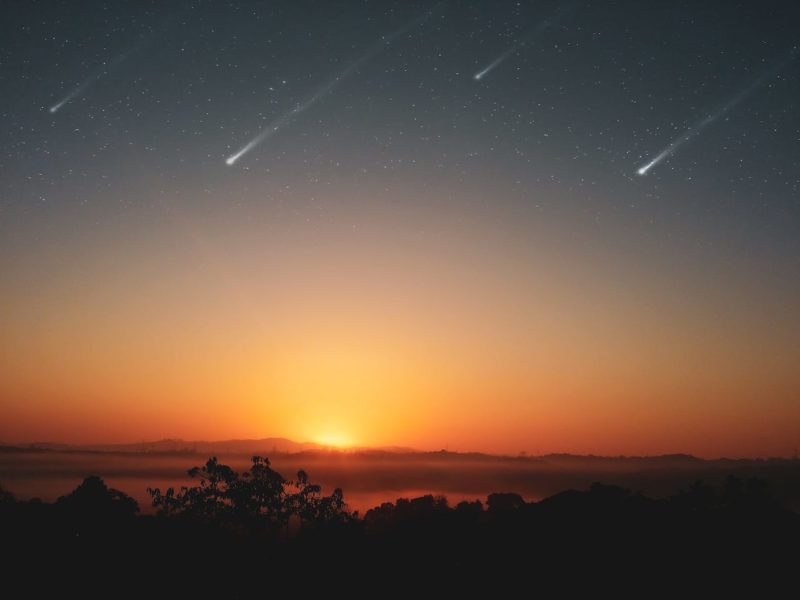
Discover the celestial wonder of the Antihelion source meteor shower, a stunning display of meteors originating from the direction opposite to the Sun. Learn about this unique cosmic event and its intriguing display across the night sky.
What Is the Antihelion Radiant
The antihelion radiant (also known as anthelion) is a point opposite of the Sun in the sky from the observer’s perspective. This point is just like planets at opposition, except for meteors.
When the Sun sets, the Antihelion radiant rises in the east and reaches its highest elevation approximately 1 a.m. local standard time (2 a.m. DST). It’s not at midnight because of Earth’s velocity through space. The radiant appears 15° east of its true position, peaking around 1 a.m. instead.
What Is the Antihelion Source Meteor Shower
The Antihelion is a sporadic meteor source, meaning it doesn’t originate from a single, well-defined cometary stream like the Perseids or Geminids. Instead, it represents a diffuse region of the sky where meteoroids influenced by Jupiter and other gravitational forces tend to appear. Observers may see meteors from this source at any time of year, but the rates are generally low and scattered, blending into the background of sporadic meteors rather than forming a concentrated, predictable shower. This makes the Antihelion a subtle yet fascinating feature of the night sky for patient stargazers.
The Antihelion source meteor shower is caused by the Earth passing through a trail of debris thought to originate from comets and asteroids under Jupiter’s influence. The radiant point of this meteor shower lies near the Antihelion point, which is the direction opposite to that of the Sun in our sky.
Although not as well-known as some other meteor showers, such as the Perseids or Geminids, the Antihelion source meteor shower can still produce up to 4 meteors per hour at its peak. This makes it an exciting event for those willing to search for sporadic meteors in any part of the sky during its active period from December 10 to September 10 each year.
This little stream of meteors used to have unique meteor shower names, such as the Chi Orionids in December or the Virginids in February and early spring. They are now classified under the single heading of the Antihelion source.
Difference Between Helion and Antihelion
Helion meteors are similar to Antihelion ones, but their radiant is the same direction as the Sun, making them practically impossible to spot. They are composed of meteoroids inbound from the direction of the Sun. Both categories are thought to originate from Jupiter-influenced comets and asteroids.
In short, the difference between Helion and Antihelion meteors is that the Helions radiate from the direction of the Sun, while the Antihelions radiate from a point opposite to the Sun in the sky.
Tips for Observing the Antihelion Source Meteor Shower
Observing meteor showers is a thrilling experience for any astronomy enthusiast. When it comes to the Antihelion source meteor shower, there are a few tips that can make your celestial experience even more unforgettable.
Firstly, find a location with minimal light pollution and an unobstructed view of the sky. The shower’s radiant point lies near the Sun’s Antihelion point, so look in the opposite direction of the Sun in the sky.
As this meteor shower is known for its sporadic nature, patience and persistence are key.
Conclusion
The Antihelion source meteor shower dazzles from the sky’s opposite side to the Sun. Earth passes through debris from comets and asteroids from December to September. Unlike other showers, its meteors emerge from a point opposite to the Sun.
For prime viewing, find a dark spot, look at the point opposite to the Sun in the sky, and pack binoculars for the best experience. Let the magic of the night sky ignite your curiosity and wonder, beckoning you to explore the infinite beauty above.
Frequently Asked Questions
What is the Antihelion source?
The Antihelion is a sporadic meteor source—a diffuse region in the sky where meteors tend to appear, opposite the Sun. It is not a single, coherent meteor shower.
Can I use a telescope or binoculars to see them?
No. Meteor watching is best with the naked eye because meteors streak across large portions of the sky. Binoculars or telescopes limit your field of view.
Where should I look to see Antihelion meteors?
Look in the direction opposite the Sun, ideally from a dark location with minimal light pollution. Unlike regular showers, meteors from this source can appear anywhere in the sky.
Are Antihelion meteors linked to any particular comet?
Not directly. They originate from a mix of meteoroids influenced by Jupiter’s gravity, rather than a single parent comet or asteroid.
See also:
- Previous meteor shower: Ursid Meteor Shower
- Next meteor shower: Quadrantid Meteor Shower
Would you like to receive similar articles by email?

Paul Tomaszewski
Paul Tomaszewski is a science & tech writer as well as a programmer and entrepreneur. He is the founder and editor-in-chief of CosmoBC. He has a degree in computer science from John Abbott College, a bachelor's degree in technology from the Memorial University of Newfoundland, and completed some business and economics classes at Concordia University in Montreal. While in college he was the vice-president of the Astronomy Club. In his spare time he is an amateur astronomer and enjoys reading or watching science-fiction. You can follow him on LinkedIn and Twitter.


You May Also Like

Does Space Tourism Have Health Risks?
November Orionid Meteor Shower Guide