Absolute vs Apparent Magnitude: Definitions and Formula
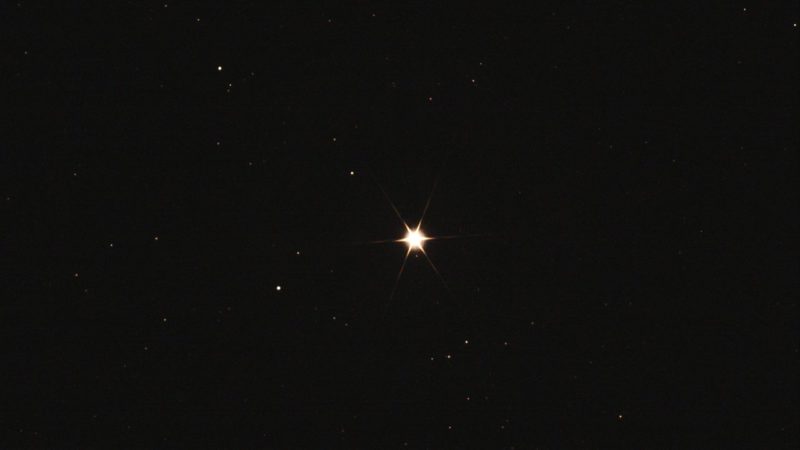
Look up at any clear night sky and you’ll notice some stars blaze while others barely register. That difference in how bright a star appears is what astronomers call apparent magnitude. But looks lie. A faint pinprick overhead might actually be a monster pumping out thousands of times more light than the dazzling star next to it, just sitting much farther away. Absolute magnitude fixes that illusion by measuring a star’s true, intrinsic brightness as if every object sat at the same standard distance.
Understanding both, and how they connect, is the key to unlocking cosmic distances and comparing the real power output of stars scattered across the universe.
What Is the Difference Between Absolute and Apparent Magnitude?
The short version: apparent magnitude tells you how bright a celestial object looks from Earth, while absolute magnitude tells you how bright it genuinely is. One is observational. The other is intrinsic. And distance is the sneaky variable that separates them.
Apparent Magnitude
Apparent magnitude, usually written as a lowercase m, is the brightness you actually perceive when you glance at a star. It bundles together two things that our eyes can’t separate: how much light the object truly emits, and how far away it sits. A nearby dim bulb can outshine a distant floodlight. That’s why apparent magnitude alone tells you almost nothing about a star’s real nature. It’s what we experience directly, night after night, but it’s context-blind.
Absolute Magnitude
Absolute magnitude, written as an uppercase M, strips distance out of the equation entirely. Astronomers imagine hauling every star to a fixed reference distance and then measuring how bright each one would appear from there. Suddenly the playing field is level. Two stars with the same absolute magnitude are genuinely pushing out the same amount of light, no matter where they actually live. This is the value that reveals true luminosity, the real brightness that lets you compare a red dwarf against a blue supergiant honestly.
Side-by-Side Comparison
| Feature | Apparent Magnitude (m) | Absolute Magnitude (M) |
|---|---|---|
| What it measures | Observed brightness from Earth | Intrinsic, true brightness |
| Depends on distance? | Yes | No |
| Reference point | Wherever the object actually is | Standardized to 10 parsecs |
| Symbol | Lowercase m | Uppercase M |
| Main use | Cataloging what we see | Comparing real luminosity |
How Does the Magnitude Scale Work?
Here’s where newcomers stumble. The magnitude scale is gloriously counterintuitive, and it trips up nearly everyone at first.
Reversed Numbering
Brighter objects get smaller numbers. A first-magnitude star outshines a sixth-magnitude one, which is roughly the faintest your naked eye can catch under dark skies. The system traces back to ancient Greek astronomer Hipparchus, who ranked the brightest stars as “first class” and the dimmest as “sixth.” That legacy stuck, quirks and all.
Logarithmic Steps
The scale is logarithmic, not linear. A difference of one magnitude corresponds to a fixed brightness ratio of about 2.512, a value known as the Pogson ratio described by the Australia Telescope National Facility. Stack five magnitudes together and you get a brightness ratio of exactly 100. So a first-magnitude star is 100 times brighter than a sixth-magnitude one. This compresses a huge range of brightnesses into manageable numbers.
Negative Values
Once you push past the brightest naked-eye stars, the numbers dip below zero. Sirius sits around magnitude −1.46. The full Moon lands near −12.7. The Sun, blazing overhead, clocks in at roughly −26.7 in apparent magnitude. Negative just means dazzling.
How Do Astronomers Measure Apparent Magnitude?
Photometry
Measuring the apparent magnitude of a star comes down to photometry, the careful measurement of the flux, or radiant energy, arriving from a celestial object. Modern detectors like CCD sensors count photons striking each pixel, and astronomers convert that raw signal into a magnitude by comparing it against selected stars whose brightnesses are already nailed down.
Filters and Bands
Stars don’t shine equally across all wavelengths, so measurement happens through standardized filters. The common UBV system isolates ultraviolet, blue, and visual bands. Visual magnitude, or mv, captures roughly what the human eye responds to. Different filters can hand you different magnitude values for the same star, which is why astronomers always specify the band.
Atmospheric Effects
Earth’s atmosphere meddles constantly. It scatters and absorbs light, dimming everything, and the effect worsens the lower a star sits toward the horizon. Astronomers correct for this atmospheric extinction, and for interstellar extinction from gas and dust along the line of sight, before trusting any figure.
How Is Absolute Magnitude Calculated?
The 10-Parsec Standard
Absolute magnitude uses a single agreed-upon rule: imagine the object placed exactly 10 parsecs away, which is about 32.6 light-years. Every star gets mentally relocated to that standard distance, and its apparent brightness from there becomes its absolute magnitude. Level playing field, achieved.
Required Inputs
To calculate absolute magnitude you need two things:
- The object’s apparent magnitude, measured through photometry
- The object’s actual distance, typically found through parallax measurements from missions like ESA’s Hipparcos or Gaia
With both in hand, the math falls out cleanly.
Bolometric Magnitude
Visual magnitude only counts light in a specific wavelength range. Bolometric magnitude, written mbol, accounts for radiant flux across the entire spectrum, including infrared and ultraviolet you’d never see. A bolometric correction bridges the two, and it matters enormously for very hot or very cool stars that dump most of their energy outside the visible band.
What Connects the Two Values? The Distance Modulus
The Formula
The elegant bridge between apparent and absolute magnitude is the distance modulus, the simple difference m − M. As laid out by the Las Cumbres Observatory, the relationship runs:
m − M = 5 log₁₀(d) − 5
Here d is the distance in parsecs. That single equation ties observed brightness, real brightness, and distance together.
Worked Example
Say a star shows an apparent magnitude of +7 and you know it sits 100 parsecs away. Plug in: 5 log₁₀(100) − 5 = 5(2) − 5 = 5. So m − M = 5, meaning M = 7 − 5 = +2. Flip it around, and if you know both magnitudes, you can solve for distance instead.
Why It Matters
That reversibility is the whole point. For certain objects like Cepheid variable stars, astronomers can figure out absolute magnitude independently, then use the distance modulus to compute distance. This is a foundational rung on the cosmic distance ladder, letting us map galaxies far beyond our reach.
Real Star Examples Compared
Numbers make this concrete. Notice how apparent and absolute magnitudes can diverge wildly for the same star.
| Star | Apparent Magnitude (m) | Absolute Magnitude (M) | Distance |
|---|---|---|---|
| The Sun | −26.7 | +4.83 | 1 astronomical unit |
| Sirius | −1.46 | +1.42 | 8.6 light-years |
| Betelgeuse | +0.5 (variable) | −5.85 | ~640 light-years |
The Sun
The Sun overwhelms our sky at −26.7, yet its absolute magnitude of +4.83 reveals a modest, ordinary star. Move it to 10 parsecs and it’d be a barely-visible speck.
Sirius
Sirius looks like the brightest star in the night sky, but that’s partly because it’s a close neighbor. Its absolute magnitude of +1.42 marks it as genuinely luminous, though hardly a titan.
Betelgeuse
Betelgeuse tells the opposite story. This red supergiant looks moderate from Earth, yet its absolute magnitude near −5.85 exposes a staggering true brightness, dimmed only by its enormous distance.
Why Astronomers Prefer Absolute Magnitude for Comparison
Comparing stars by apparent magnitude is like ranking runners by how loud their footsteps sound from where you’re standing. Distance corrupts everything. Absolute magnitude removes that variable, which is exactly why it anchors the Hertzsprung-Russell diagram, the plot that reveals stellar evolution by charting true luminosity against temperature. When you want to know which star is genuinely more powerful, absolute magnitude is the only honest metric.
How Magnitude Applies to Comets and Solar System Bodies
For asteroids and other non-self-luminous objects, the concept shifts. These bodies shine by reflected sunlight, not their own fusion. So astronomers define an absolute magnitude H based on a diffuse reflector model, imagining the object one astronomical unit from both the Sun and observer at zero phase angle. The value depends heavily on the object’s size and albedo, its reflectiveness. A large, dark asteroid and a small, bright one can share the same H, a reminder that magnitude always demands context.
FAQ
Can a star have a positive apparent magnitude and a negative absolute magnitude?
Absolutely. Betelgeuse does exactly this. It appears faint-ish from Earth (positive m) but is intrinsically brilliant (negative M) thanks to its great distance.
What is the faintest object the naked eye can see?
Roughly sixth magnitude under truly dark skies, though light pollution usually pushes that limit much brighter.
Why is 10 parsecs the chosen standard distance?
It’s a convenient, round agreement among astronomers that makes the distance modulus formula clean and lets everyone compare absolute magnitudes on identical footing.
Conclusion
Apparent magnitude is the story your eyes tell. Absolute magnitude is the truth behind it. One captures brightness as it happens to reach us, tangled up with distance, while the other equalizes every object at 10 parsecs to expose real luminosity. The distance modulus stitches them together, turning a pair of magnitudes into a measuring tape for the cosmos. Master that relationship and the night sky stops being a flat scatter of lights. It becomes a three-dimensional map, full of stars near and far, ordinary and extraordinary, waiting to be sorted out.
Would you like to receive similar articles by email?

Paul Tomaszewski
Paul Tomaszewski is a science & tech writer as well as a programmer and entrepreneur. He is the founder and editor-in-chief of CosmoBC. He has a degree in computer science from John Abbott College, a bachelor's degree in technology from the Memorial University of Newfoundland, and completed some business and economics classes at Concordia University in Montreal. While in college he was the vice-president of the Astronomy Club. In his spare time he is an amateur astronomer and enjoys reading or watching science-fiction. You can follow him on LinkedIn and Twitter.


You May Also Like

Dental Implants vs. Dentures: Long-Term Benefits Compared

Why Air Quality Matters for Employee Health