
What Are The Benefits of 3D Printing in Space?
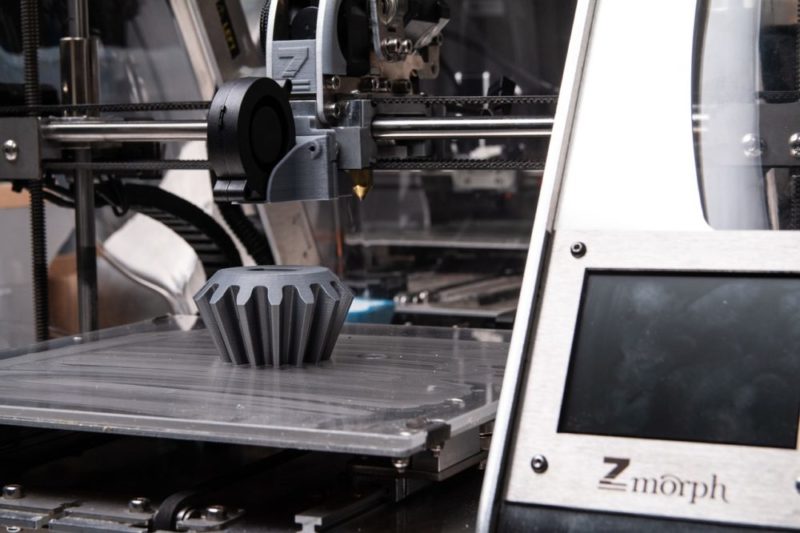
3D printing has moved from a hobbyist’s best friend to one of the most useful tools in nearly every industry. With a computer and a bit of heat, you can turn strings of plastic filament into nearly anything. More advanced types of 3D printers can even lay down layers of metal, glass, or cement. There are now multiple 3D printers in orbit above the Earth on the International Space Station. What are the benefits of 3D printing in space? Will we see more of it in the future?
Keeping Rocket Weight Low
That same gravity that keeps you from floating away from the Earth’s surface also makes it difficult for us to get into outer space. You need to move at more than 40,000 kilometers per hour to reach what’s known as escape velocity. This is how you break free of the Earth’s gravitational pull. Even missions that only travel to low Earth orbit require enormous amounts of energy. In addition, the more your rocket weighs, the more fuel and thrust are needed to get it there. Therefore, aerospace engineers are always looking for new ways to reduce the amount of weight we’re launching into orbit.
3D printing in space gives astronauts everything they need to make a massive variety of different items. This can be done without needing to ship each piece into orbit. If they need a bowl, they can print a bowl. All NASA has to do is send up a couple of rolls of 3D printing filament. Instead of launching huge inventories of spare parts, future missions may only need to carry raw materials and digital design files.
Forgot Your Tools?
If you forget your tools at home, you can usually just drive back and pick them up. What do you do if you’re an astronaut and home is 254 miles below your feet? You print a new one! Astronauts on the International Space Station have worked with engineers and designers on the ground to print specialized tools that they didn’t bring with them. In 2014, astronauts printed a wrench that they needed to carry out a repair.
Unlike printing here on Earth, the wrench needed to have moving parts but had to be completely enclosed. This was to prevent the small pieces from floating away in the station’s microgravity. It took four hours to print. When it was done, the astronauts could finish the job they’d started. More recently, astronauts and commercial partners have printed metal tools and components in space. As a result, they are expanding the possibilities even further.
The International Space Station has also hosted experiments involving metal additive manufacturing, helping researchers study how stronger and more durable parts can be produced in microgravity.
Building Spacecraft
We’ve been building spacecraft for decades, and as we’ve learned we’ve changed our manufacturing techniques. What started with hand-crafted pieces changed to assembly lines and robotic manufacturing. 3D printing isn’t a new concept either. When it debuted in 1986 it didn’t look much like the technology we know today. In the future, we may see spacecraft and orbital structures built with large numbers of 3D printed components. This is especially likely if we start designing them with pieces that are too complex to fabricate traditionally.
If we start building massive ships in space that aren’t designed for atmospheric flight, like many of those that we see in science fiction movies and stories, microgravity 3D printing could make a massive difference. It’s a lot easier to send a robotic printer out into the vacuum of space than it is to send a human astronaut in a spacesuit. NASA’s Artemis program is already exploring similar techniques for lunar construction. In particular, they are using regolith-based printing.
Researchers are studying how lunar soil could be turned into landing pads, habitats, and protective structures that shield astronauts from radiation and micrometeorites. Autonomous robotic systems may eventually begin building some of these structures before astronauts even arrive.
Recycling in Space
One problem with sending humanity into outer space is that we tend to generate trash wherever we go. The International Space Station is no exception. 3D printing gives astronauts a way to turn their plastic waste into something useful by recycling it into 3D printing filament.
Over the years, the International Space Station has hosted several additive manufacturing systems. These include the Additive Manufacturing Facility and recycling-focused experiments like the Refabricator. These systems help astronauts convert some waste materials into usable filament for future prints.
This means that there is less waste that needs to be discarded or returned to Earth, keeping things cleaner for everyone. Recycling systems like these could become especially important during long-duration missions. This is because resupply shipments from Earth are limited.
Printing…Meat?
Keeping astronauts fed and healthy can be challenging, especially during the kind of long-distance journeys we hope to undertake in the future. In Star Trek, they solved that problem with the invention of replicators—devices that could materialize nearly any food or drink you could imagine with nothing more than a voice command. While we haven’t quite figured out how to replicate food, 3D printing might make it a little bit easier.
In the future, 3D printers may be able to print anything from food to medicine and anything in between, using a limited store of base materials. While a 3D printed steak might not sound appetizing when you can just drive to the grocery store and buy one, if you’re a few million miles from the nearest cow, it might be the tastiest meal you could cook up. Scientists are also experimenting with bioprinting to produce tissues and proteins that could one day support long-duration space missions.
Some researchers have already tested cultured meat and tissue-printing technologies in microgravity to better understand how these systems might work during future missions to the Moon or Mars.
In-Flight Repairs
The last thing you want to contend with in outer space is a breach in your hull. Exterior damage is tricky to fix, even on Earth, and you don’t want to spend astronauts out unless you absolutely have to. Why not use a 3D printer on the end of a robotic arm to affect repairs if something goes wrong or punches through your hull?
Space agencies are already researching robotic repair systems and autonomous maintenance technologies that could one day handle external spacecraft repairs with minimal astronaut involvement. Robotic arms aboard spacecraft and stations have already demonstrated how remote operations can safely perform delicate tasks in orbit.
On-Demand Manufacturing
One of the biggest advantages of 3D printing in space is the ability to manufacture items exactly when they are needed. Instead of storing hundreds of spare parts that may never be used, astronauts could simply print replacement components on demand. This reduces storage requirements and gives crews greater flexibility during long missions.
Future spacecraft may rely heavily on digital inventories, where engineers on Earth send design files to astronauts instead of launching physical cargo. This could make deep-space missions safer, cheaper, and more self-sufficient.
Challenges of 3D Printing in Space
Despite its potential, 3D printing in space still comes with limitations. Printing systems in microgravity can be slower and more complicated than similar machines on Earth. Engineers also need to carefully test printed parts to make sure they are strong and reliable enough for use in critical systems.
There are also limits on the types of materials astronauts can currently print in space, and advanced printers require valuable power and resources to operate. As the technology improves, many of these challenges may become easier to overcome.
Looking Toward the Future
We’re not quite up to exploring the galaxy—at least not yet. As humanity expands beyond cislunar space and eventually pushes deeper into the solar system, 3D printing and its technological descendants will be there to help us build all the pieces we need to reach our destination safely.
Would you like to receive similar articles by email?

Emily Newton
Emily Newton is the Editor-in-Chief of Revolutionized as well as a contributor to CosmoBC. She specializes in writing in-depth articles and blog posts for the industrial and sci/tech sectors. You can follow her on LinkedIn.


You May Also Like

How to Reduce Mental Overload While Balancing Work and Family

Eta Aquariid Meteor Shower Guide
